The medicinal leech (Hirudo medicinalis) is a blood-feeding leech of ponds and tarns in northern and central Europe.[1] It feeds mostly on the blood of amphibians, and also on fish, water birds and mammals that come to the water.[1] This page covers H. medicinalis in the strict sense. Most leeches used in medicine today are a different species, Hirudo verbana.[2][3] The IUCN lists the medicinal leech as Near Threatened.[4][5]
Quick facts
Description
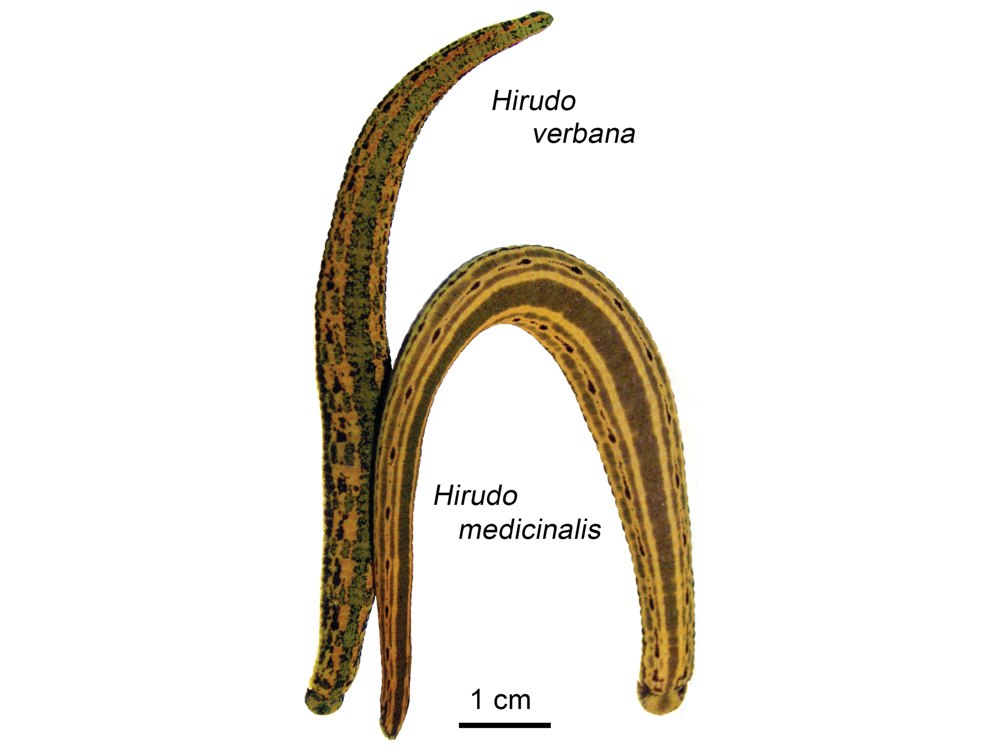
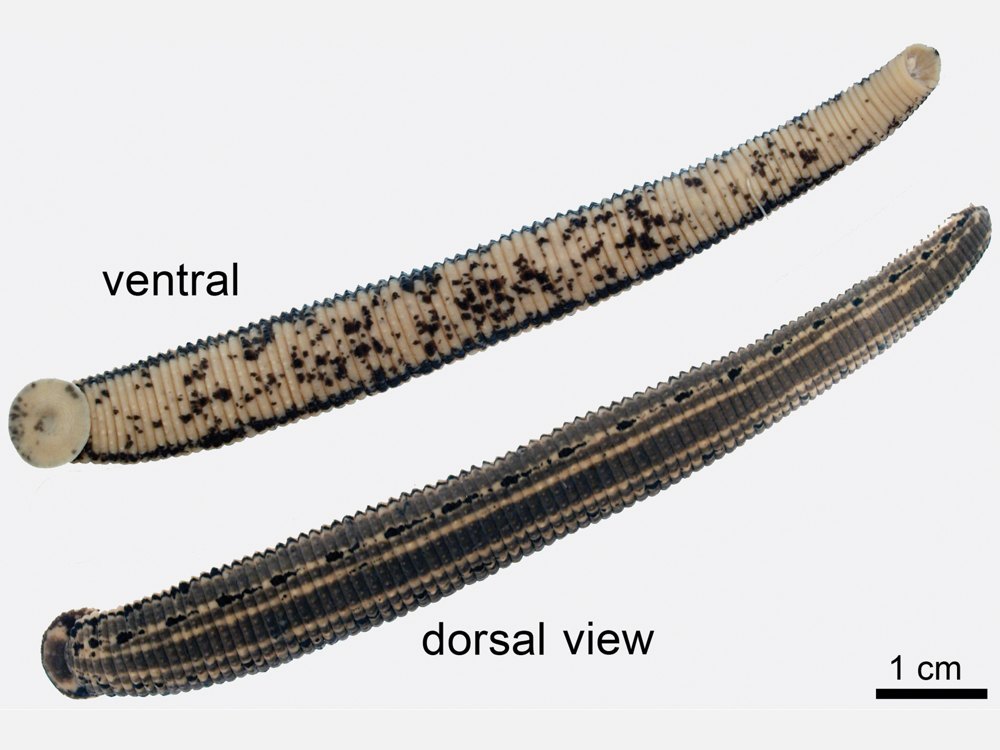
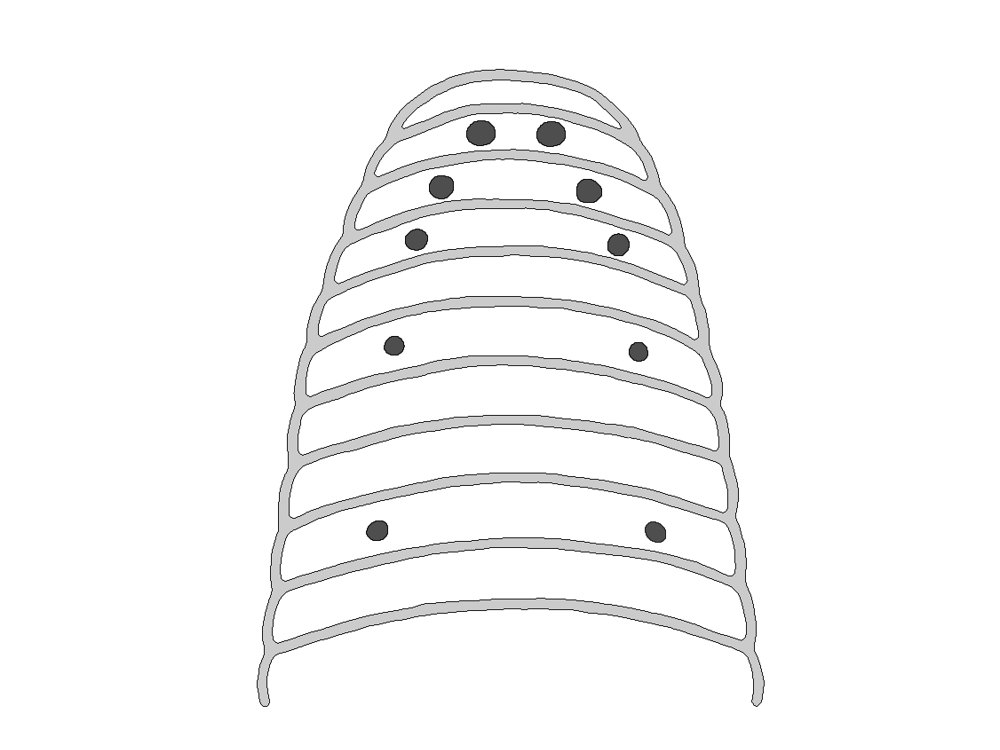
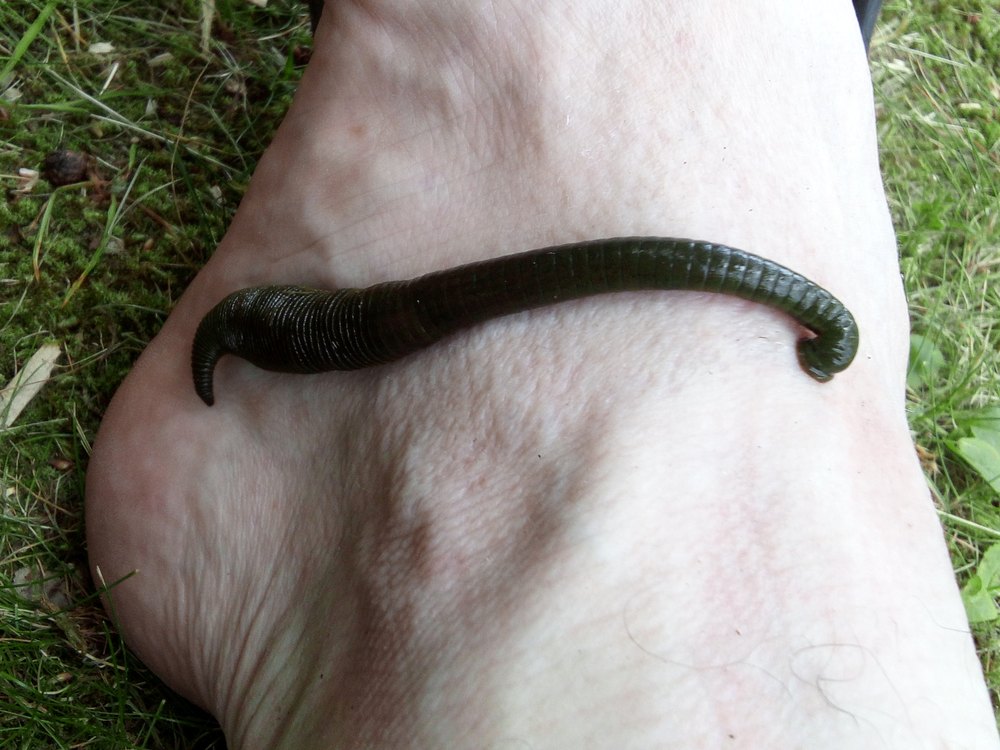
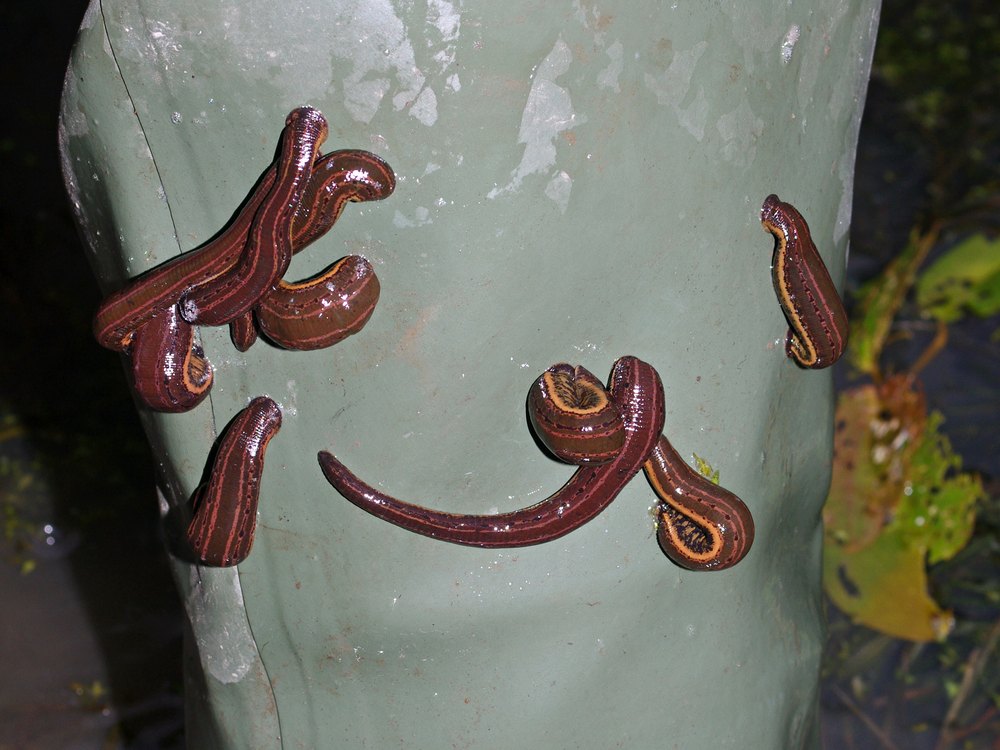
The medicinal leech is a flattened, segmented worm with a small sucker at the front end and a disc-shaped sucker at the rear. Each segment is divided into five rings, called annuli, that look much alike from outside. On the middle ring of each segment are small sensory bumps, often marked by light spots.[1] On the first segments, some of these bumps are replaced by black eye spots: five pairs of eyes, arranged in a crescent.[1] The pattern of colour on the back and belly separates it from H. verbana, which is why the two were mixed up for so long. Young leeches look like the adults but have less pigment on the belly.[1] Colour alone is not a reliable way to tell the Hirudo species apart: a key to the genus uses body details such as the shape of the female opening, and notes that H. verbana has broad, pale orange, blurred stripes while H. orientalis has thin, deep orange ones.[6]
The horse leech (Haemopis sanguisuga) is often taken for the medicinal leech. In England, a suspected population turned out to be horse leeches when it was surveyed, and in Spain some old records of the medicinal leech were this species.[5][7]
Jaws and mouth
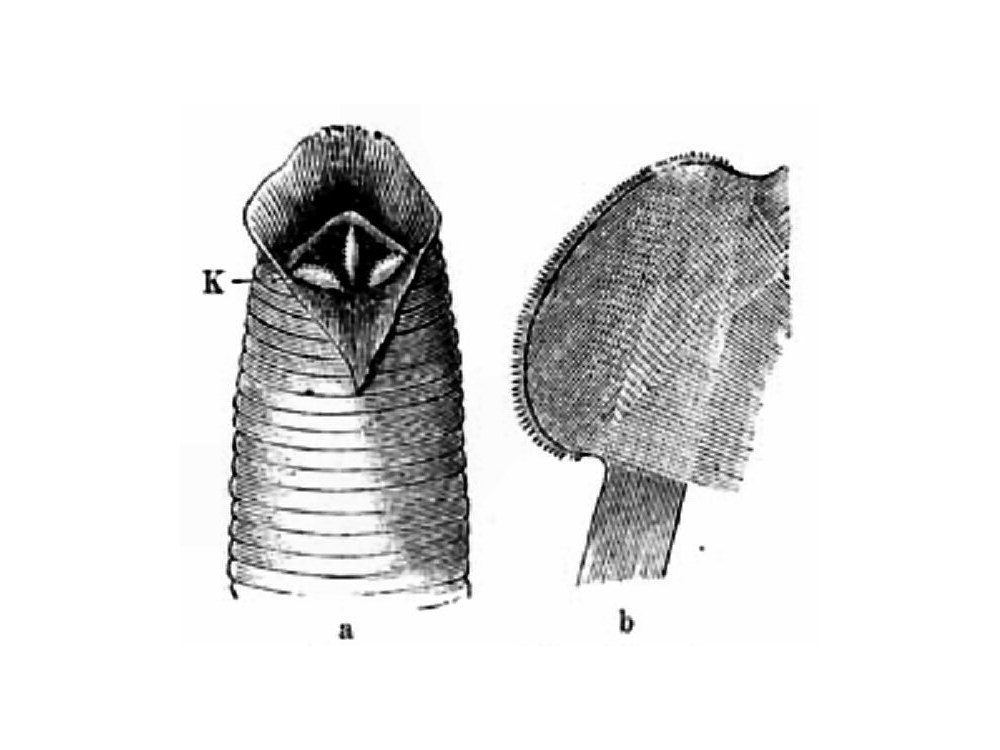
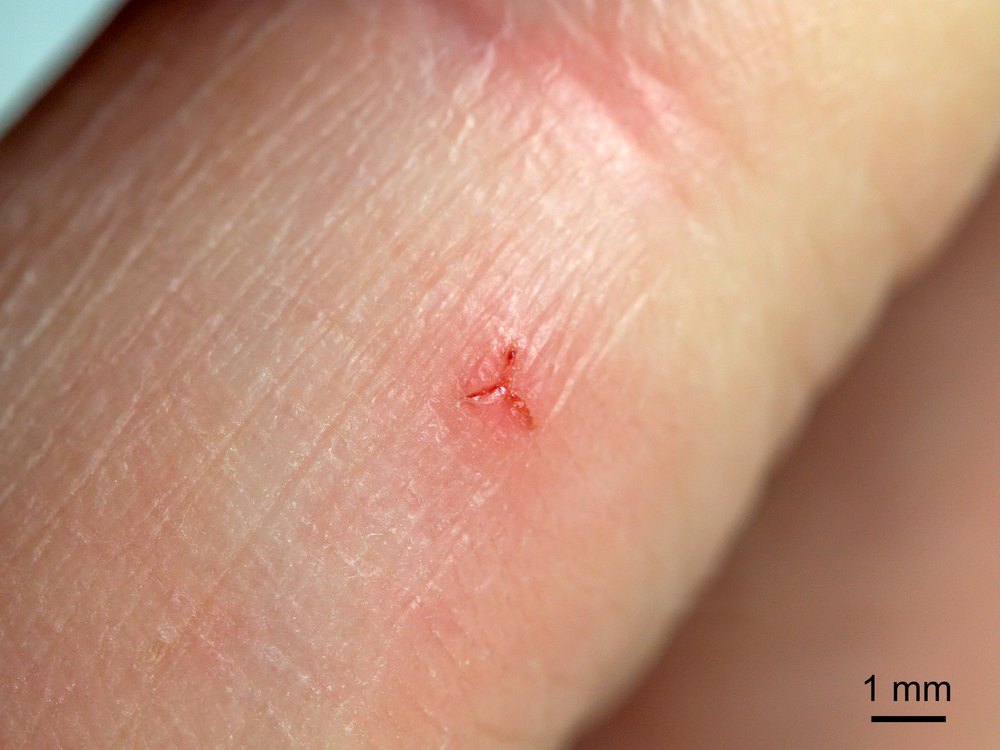
The mouth is a wide opening that fills the whole front sucker. Inside, the mouth cavity is lined with muscular ridges topped with tiny teeth of hard outer skin. The leech presses against the skin of its host and cuts it with three jaws armed with many sharp teeth, then sucks blood.[1] Behind the throat is the crop, a part of the gut stretched for storing food. In the blood-feeding medicinal leech it is drawn out into side pouches.[1]
Reproductive organs
Each adult has both a male and a female opening on the underside, so every leech is a hermaphrodite. The male opening is single and in the middle, with a tube-like organ that can be pushed out of the body. The female opening lies behind it. A band of thickened skin called the clitellum sits towards the front of the body.[1]
Name
Linnaeus described the species as Hirudo medicinalis in 1758, in the tenth edition of Systema Naturae.[8][9] It is the type species of the class Hirudinea, which Lamarck named in 1818.[1] In English it is called the medicinal leech or the European medicinal leech.[1]
The same name was used for every European medicinal leech for more than two centuries. In 1822 Savigny gave the name Hirudo officinalis to a form that was later shown to be H. verbana.[1] Because of this, many records, laws and books written before about 2005 do not say which species they mean. The only other synonym listed in GBIF is Sanguisuga medicinalis.[9]
In other languages
| Language | Name | Meaning |
|---|---|---|
| Latvian local | mediciniska dele | — |
| German | Medizinischer Blutegel | medicinal blood leech |
| French | sangsue médicinale | medicinal leech |
| Dutch | medicinale bloedzuiger | medicinal blood-sucker |
| Swedish | blodigel | blood leech |
| Danish | lægeigle | doctor leech |
| Polish | pijawka lekarska | medical leech |
These names come from national species lists collected by GBIF.[9] The Latvian name is from the EUNIS biodiversity database, as listed by GBIF.
Body
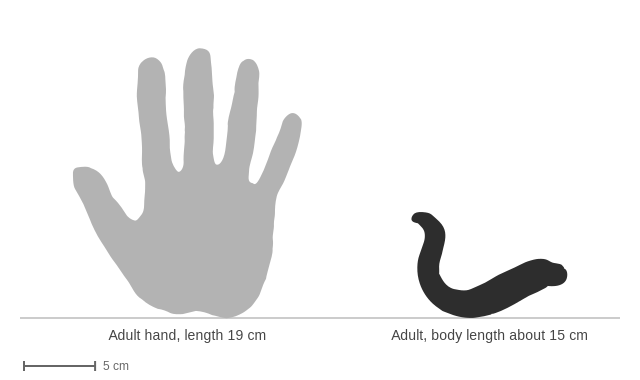
A stretched adult is about 15 cm long and 1.5 cm wide in a French species sheet, and up to about 15 cm long and a little over 1 cm wide in a Dutch field guide.[10][11] Wild leeches weigh much less than people expect. In a population in a tarn in north-west England, immature leeches weighed 0.4–3.4 g and mature leeches 2.5–5 g. Only about 1% of the population weighed more than 5 g.[12] A newly hatched leech is 8–12 mm long and weighs 12–60 mg.[1] Leeches fed in a laboratory reached 0.5–0.6 g by the end of their first year, about 1.4 g in the second year and about 2.4 g in the third.[1]
Size ranges
| Weight (mature) | 2.5–5 g |
| Length (adult) | up to about 15 cm |
Behavior
Seasons and temperature
The medicinal leech needs warm water to be active. For much of the year the water is cold, and the leeches stay still, buried in the mud or under objects at the pond edge. As the water warms they become very responsive to disturbances in the water and swim towards the source.[1] In a Lake District tarn, most leeches swam and looked for a host only when the water was above 19 °C, and the water passed that mark on only 100–120 days between April and September.[1] In laboratory tests the preferred temperature was 21 °C in a gradient from 7 to 43 °C. Growth was best at 22–25 °C and breeding at 25.5–27.5 °C, and temperatures of 39–43.5 °C were deadly.[1] Leeches could not breed or survive in many water bodies simply because the water was too cold.[1]
Sensing a host
In a laboratory test, 86% and 95% of unfed leeches swam in response to small surface waves about 1 mm high, while only about 60% of fed leeches reacted.[1] The leech finds a feeding site by exploring the outer skin layer of its host.[1] When adults of H. medicinalis and H. verbana were kept in aquaria, their behaviour looked the same.[1]


Diet
The medicinal leech feeds on blood. Reviews often describe it as feeding mostly on mammals such as cattle, horses, deer and humans, but it also takes blood from fish and water birds, and especially from amphibians, both adults and larvae.[1] At Dungeness in England, a blood test of 128 leech meals showed that most were amphibian blood, fewer were from fish and birds, and only one was from a mammal.[1] Young leeches cannot pierce mammal skin for their first two feedings, so tadpoles and young newts matter most to them.[1]
| Host | Where | Notes |
|---|---|---|
| Frogs, toads, newts and their larvae | England, the Netherlands, Luxembourg | The main source of blood in several studies[1][13] |
| Horses and other mammals | A Lake District tarn, England | Only leeches over 3.5 g had taken mammal blood[1] |
| Fish and water birds | Dungeness, England | Fewer meals than from amphibians[1] |
Feeding on a host
A 1960 study in Luxembourg saw adult leeches feeding on common toads in April when the toads returned to ponds to breed. They attacked both sexes, often a male clasping a female, and large numbers of toads died of blood loss.[1] In De Meinweg National Park in the Netherlands, leeches fed on common toads and common frogs in early spring, and dead frogs and toads with a leech attached were found in traps. A spadefoot toad and a pool frog were also found with leeches.[13] In a Lake District tarn, leeches were seen feeding on horses that had waded in. They never fed to fullness, and soon after a horse left the water the leech let go and crawled back into the water.[1]
Wild leeches were never found completely full, so they probably feed a little and often.[1] In the tarn, the share of leeches with blood in the gut rose from 38–44% in the smallest size group to 100% in the largest.[12] Hatchlings can survive up to 100 days without a meal.[1]

Saliva
Leech saliva contains hirudin, a small protein of 64–66 amino acids that blocks thrombin, a key enzyme in blood clotting.[14] Leech saliva holds many other active substances, so hirudin alone does not explain how a leech keeps blood flowing. Leeches from suppliers are mostly H. verbana, so studies of them may describe that species and not H. medicinalis.[2]

Life cycle
| Stage | Age / time | Notes |
|---|---|---|
| Egg in cocoon | Develops 4–10 weeks | Usually 12–16 eggs per cocoon in the wild; the time depends on temperature[1] |
| Hatchling | 8–12 mm, 12–60 mg | Can survive up to 100 days without feeding[1] |
| Juvenile | About 0.5–1.4 g in the first two years | Laboratory-fed leeches; wild immature leeches weigh 0.4–3.4 g[1][12] |
| Adult | Mature at 2.5–5 g | Breeds from at least 2 years old in the wild[1][12] |
Cocoons and hatching
A leech cocoon is a small, brown, sponge-like case that holds the eggs.[1] Mature leeches leave the water to lay their cocoons in a moist place on the bank just above the waterline, mainly in July and August. Over one to 12 days, each leech lays 1–8 cocoons, usually with 12–16 eggs each and sometimes more, and some eggs are infertile.[1] In the laboratory, each adult laid 1–7 cocoons with 3–30 eggs each and produced two broods a year in the best conditions.[1] In one laboratory study at 20 °C with bovine blood, a leech produced 2–41 cocoons (12 on average), a cocoon gave 0–14 hatchlings (4 on average), and a leech left 13–97 offspring (45 on average).[1]
Growth and maturity
The young look like small adults. In the wild, H. medicinalis and H. verbana are generally thought to need at least two years to reach breeding age, and slow-growing leeches may not breed until they are three or four years old. Fast-growing laboratory leeches at a constant 20 °C matured after only 289 days.[1]
Ecology
Predators and other leeches
Fish are the most likely cause of losses at some sites in Scotland, and introduced fish have affected a leech lake in Wales.[5] Other leeches sometimes feed on it. In the laboratory, young Glossiphonia complanata often take their first meal from the body of a medicinal leech. In a tarn in north-west England, medicinal leeches carried the small leech Helobdella stagnalis feeding on them, which did not kill the host.[1]
Role in the pond
The medicinal leech is a blood-feeding parasite, mostly of amphibians. In spring it can kill adult frogs and toads.[1][13] In south-east Poland, adults and cocoons were found in the nests of water birds, including the western marsh harrier, and the nests may be an important secondary habitat.[1]
Population sizes
The tarn in north-west England held 248–288 leeches in June and July, found by removing and counting leeches in four samples a year (1986, 1988, 1990 and 1992). Mature leeches were 19–20% of the total.[12] At Dungeness in Kent, a study published in 1991 counted more than 10,000 leeches, about 0.1 per square metre.[13] In De Meinweg National Park in the Netherlands, only four leech records were made in 2012, and 36 in 2014 from 15 fens and pools, with 1–8 animals at each. The number of records rose more than tenfold with similar survey effort.[13]
Habitat and range
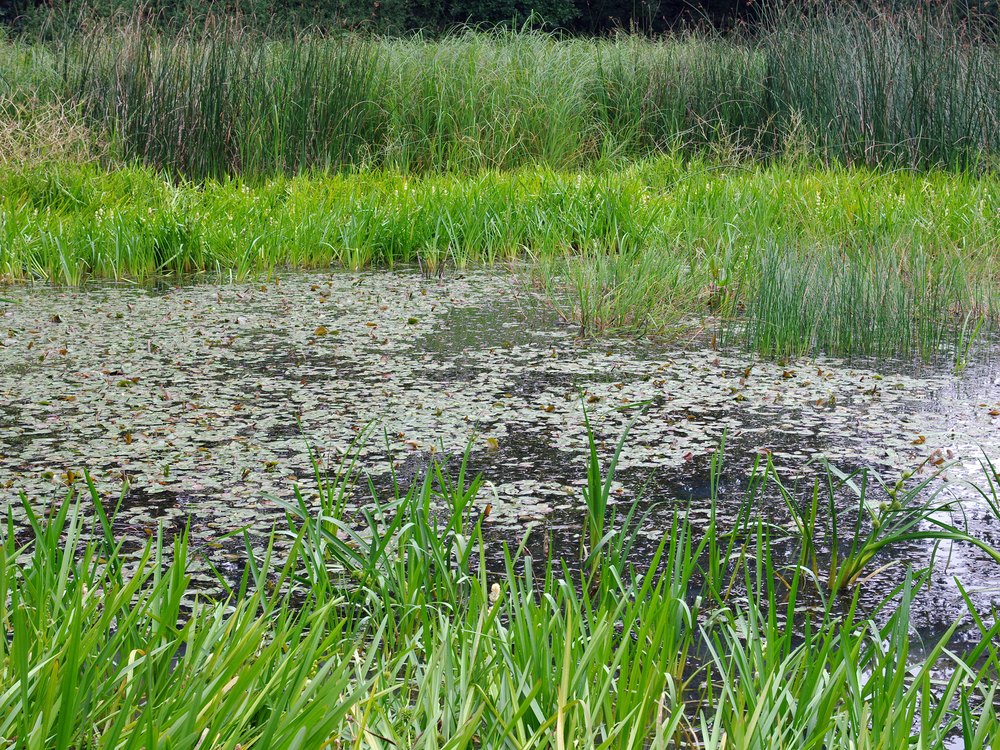
The typical natural habitat is a rich, muddy pond with plants along the edge and warm water in summer. It should also be a breeding place for amphibians such as frogs, toads and newts.[1] Small shallow ponds are often ideal, and many have been lost in western Europe.[1] In the Netherlands it lives mostly in weakly buffered fens on sandy soils, in water with dense plants for shelter and gently sloping banks, which let animals come to drink, give moist spots for cocoons and let the water warm quickly. It is not found in acid fens.[13] In the United Kingdom, it lives in ponds in the New Forest, in ditches at Dungeness, in tarns in Cumbria and in fen ditches on Anglesey.[5]

Range
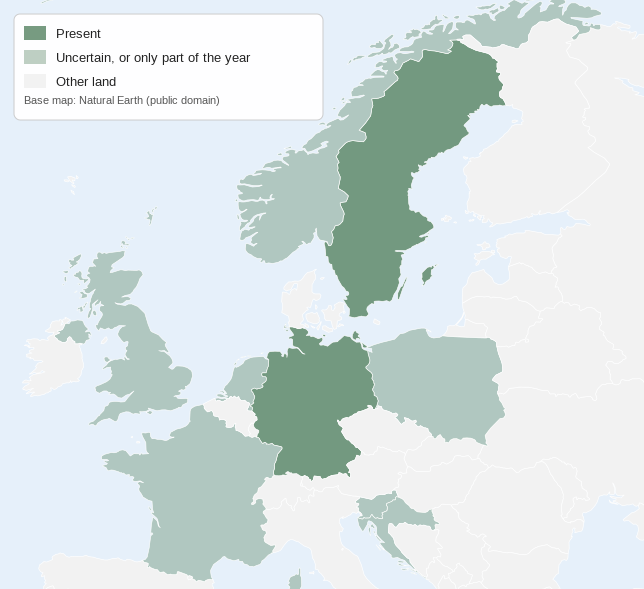
Leeches from eastern Germany had a DNA barcode identical to those of leeches from France and Sweden, including the Swedish neotype.[1] A 2010 review of the genus, quoted in a 2021 paper, gives the range of H. medicinalis as from Britain and southern Norway to the southern Ural Mountains.[7] A 2026 study found it in Slovenia, Croatia and Germany, with a pattern suggesting that it spread north from refuges near the Adriatic Sea after the last ice age.[3] In Poland, adults and cocoons were found in water-bird nests.[1] It is the northern species of the genus. H. verbana lives in the south, and the two overlap very little and share only a few habitats.[1] Leeches from the Saratov region of Russia that were first labelled H. medicinalis turned out to be H. verbana.[3]
The Iberian species are H. verbana and H. troctina, and records of the medicinal leech in Spain and Portugal are doubtful.[7] It does not occur naturally in North America. Large numbers were imported from Europe in the 18th and 19th centuries, and attempts to rear it in the United States had no positive result.[1]
In the United Kingdom
The UK range was 2,245 km² in 2007–2018, an estimate based mainly on extrapolation from a limited amount of data. England holds about 51% of the UK population.[5] There are three main English centres: the Kent coast near Dungeness, the New Forest, and the Cumbria tarns, and the species is also found on Anglesey and at other sites in Wales. The central belt of England appears to be free of it.[5] In Wales, 11 grid squares of 1 km were occupied from 1998 on.[5] In Scotland there are 23 sites with historical evidence, and some may come from released animals.[5]
Evolution
Leeches have almost no fossil record because they are soft-bodied. The oldest known leech fossil, Macromyzon siluricus, is about 437 million years old and comes from the Silurian rocks of Wisconsin. It is a stem leech, an early relative of the living leeches, and its authors argue that the first leeches were marine and did not feed on the blood of vertebrates.[15] Molecular-clock studies give much younger dates for the living groups: 444–359 million years ago for the origin of the clitellate worms, 300–200 million years ago for the split between leeches and earthworm-like worms, and 230–140 million years ago for the true leeches.[15]
Leeches are clitellate worms, the group that also holds earthworms, and they sit inside it as the sister group of the lumbriculid worms. The crayfish worms (Branchiobdellida) are the sister of a group made of the fish worm Acanthobdella and the true leeches. The proboscis leeches and the leeches without a proboscis, which include the medicinal leech, are each a single natural group.[16] The old leech family Hirudinidae is not a single natural group: two unrelated groups of medicinal leeches each arose from ancestors that lived on land.[17]
The medicinal leech and its closest relatives
H. medicinalis and H. verbana differ by 9.4% in the DNA of a mitochondrial gene, which one study reads as a split about 10 million years ago.[1] A newer analysis dates the split of H. verbana from the line leading to H. medicinalis and H. troctina at about 5.4 million years ago, and the radiation of H. medicinalis itself to the late Pleistocene, about 276,000 years ago, with a south-to-north pattern of recolonisation.[3] The genus Hirudo may not be a single natural group, because the East Asian H. nipponia groups with Whitmania, a leech that does not feed on blood.[17][6]
Forms and variants
No colour forms or subspecies of the medicinal leech are recognised today; WoRMS, GBIF and ITIS accept Hirudo medicinalis as one valid species.[8][9][18] Its colour pattern is one of the features that separate it from H. verbana.[1] In the 1800s, many “varieties” were described and some authors treated all colour forms as one variable species, but later work showed that some of these forms are separate species. H. orientalis, for example, had been known as a colour form of the medicinal leech, and H. verbana had been treated as a subspecies (see Taxonomy).[1][19]
Conservation
The medicinal leech is listed as Near Threatened on the IUCN Red List, in an assessment from 2014 by Utevsky, Zagmajster and Trontelj.[4][5][3] The reasons given are habitat degradation, drained wetlands and past over-collecting.[3] It is on Appendix III of the Bern Convention, which asks countries to regulate its exploitation.[20] It is in Annex V of the EU Habitats Directive, which allows member states to manage its taking from the wild,[5] and on Appendix II of CITES, which controls trade.[21] In these lists the name Hirudo medicinalis is used for all the European Hirudo species.[21] In the UK, the medicinal leech is protected under Schedule 5 of the Wildlife and Countryside Act 1981.[22] In the Netherlands, it is protected only through the EU Directive.[13]
In the UK in 2019, the species was reported as in favourable condition overall, with an improving trend and no evidence of a real decline in the recent period.[5]
Threats
Habitat lossOver-collectionPollutionLoss of preyIntroduced fishClimate change[1][5]Over-collection. Over-collecting for bloodletting in the 19th century is often blamed, but used leeches were regularly thrown into the nearest pond or stream, which may have helped the species survive in the countryside. Today, collecting for research, medicine and drug production is probably a serious threat, because the leeches are killed, often in large numbers. Leech farms only help if they breed their own leeches and do not import them.[1]
Habitat loss. The loss of ponds and wetlands is the other major cause. Cattle and horses now drink from troughs instead of ponds, and the remaining ponds have been cut off even from wild animals such as deer, so there are fewer mammal blood meals.[1] In the UK, 80% of ponds were in poor or very poor condition in a 2007 survey.[5]
Loss of prey. Declines of frogs, toads and newts remove the main hosts of young leeches. Cold water also keeps leeches from breeding in many ponds.[1][5]
Pollution and introduced fish. Other pressures in the UK include diffuse farm pollution, introduced fish, drying-out of ditches in drought, and an invasive plant, New Zealand pigmyweed, that covers leech ditches at Dungeness and four New Forest ponds.[5] Specialists say the causes of decline should all be considered together.[1]
Conservation work
In the UK, the Medicinal Leech Recovery project, run by the Freshwater Habitats Trust with the Zoological Society of London, bred more than 40 young at London Zoo in 2024. The partners are looking at releasing some to sites across the country. The charity says only four main populations remain: Kent, Hampshire and Dorset, Cumbria, and Wales.[23] In Wales, most current populations are within protected sites.[5] In De Meinweg National Park in the Netherlands, banks were cleared to shallow slopes and pools were dug out again in 2012–2014, and the number of leech records rose in the same period.[13]
History and culture
Leeches in medicine
The medicinal leech was described by Linnaeus in 1758 and was long thought to be the only European medicinal leech. By 1827, at least five other species had been recognised. Leeches have been used for bloodletting since the time of Galen.[2] The leech trade and medical use described below come from times when the species were not told apart, so they refer to medicinal leeches in the old, wide sense.
The leech trade
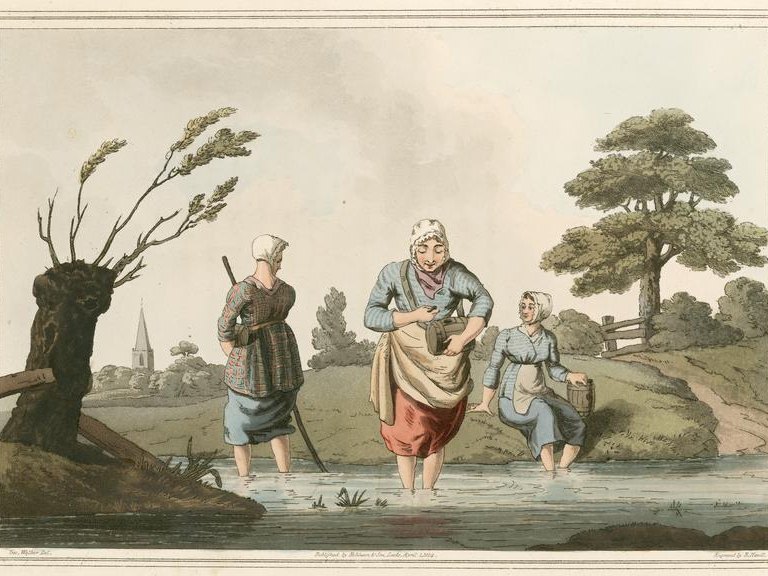
Demand grew in the 1820s, when the theories of the French physician Broussais made bloodletting fashionable, and the trade in leeches from Spain to France ran from 1821 into the 1860s. France imported over 57 million leeches in 1832, and 63.5 million in total in 1850–1856.[24] Patients typically received three to five leeches, sometimes ten or twenty, and one pneumonia patient was given eighty.[24] Leech finders in Spain were paid by French buyers, and the animals travelled in damp cloth sacks or in boxes of wet clay.[24] Use in Europe peaked between 1825 and 1850, when supplies ran short.[25] Ireland was the first European country to use up its native supply.[26] In the Ottoman Empire, the state taxed leech collecting after 1838, and over-collecting pushed the population to collapse by the end of the century.[27]
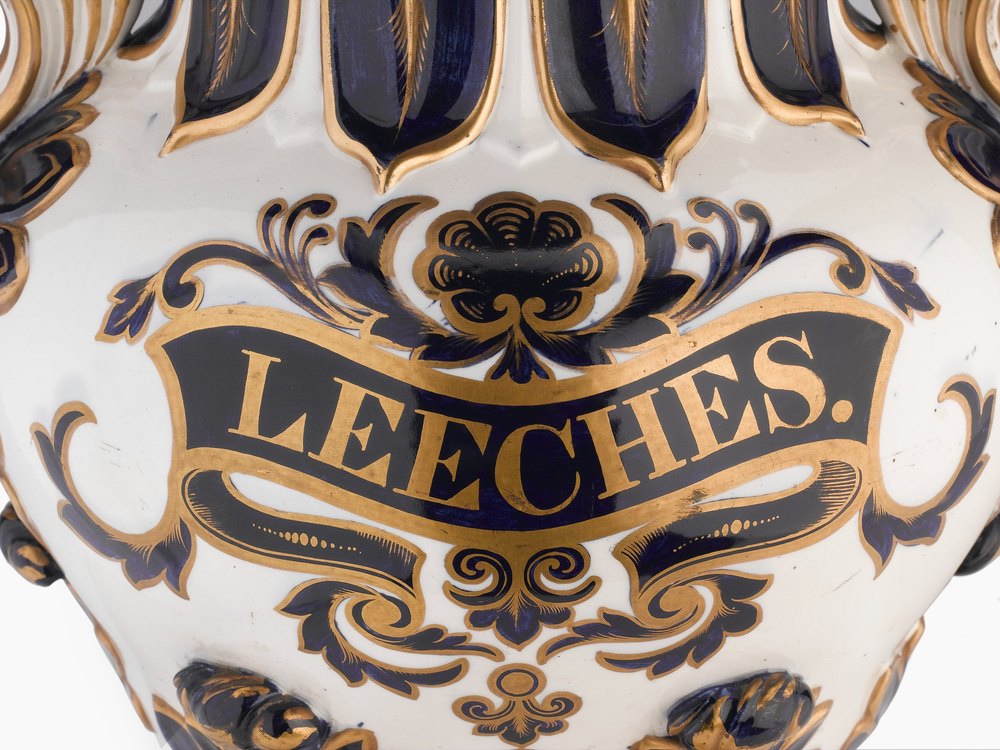

Leech farms appeared in France and Germany. One near Hildesheim in Germany was still breeding between three and four million leeches a year in 1890.[1] Doubts about bloodletting grew in the later 19th century, and use fell.[25]

Medical use today
Leeches came back into medicine from the 1980s: the first medicinal leech farm, Biopharm, opened at Swansea in 1981. They are now used in reconstructive microsurgery, mostly H. verbana (see below).[25] Their main use is to relieve blood that pools in veins in flaps of skin and in re-attached fingers.[2] In 2004, the US Food and Drug Administration allowed the sale of the “European medicinal leech, H. medicinalis” as a prescription medical device.[2] A review of 277 cases found that leech therapy succeeded in 77.98% of them (216 of 277), with a complication rate of 21.8%.[28] In a group of 35 patients, 7 had an infection, 5 of them with Aeromonas bacteria.[29]
Which species is sold
Most leeches used in medicine today are H. verbana, not H. medicinalis. In 2007, genetic tests of 10 leeches bought from four suppliers, plus two laboratory colonies, found that none was H. medicinalis. They grouped with wild H. verbana (about 1.81% different on average) and were about 9.03% different from wild H. medicinalis.[2] The sample was small and from 2007, but a later study of leech farms in France, Lithuania, Poland and Turkey also found only H. verbana.[3] Farms often rely on leeches imported from south-eastern Europe and Turkey, and these are often H. verbana.[1] A 2014 study named the leeches from one major worldwide supplier as H. orientalis.[30] The authors of the 2007 study noted that the US rules do not clearly cover H. verbana.[2]
Taxonomy
| Rank | Name |
|---|---|
| Kingdom | Animalia |
| Phylum | Annelida (segmented worms)[9] |
| Class | Clitellata |
| Subclass | Lumbriculata[18] |
| Order | Arhynchobdellida (leeches without a proboscis) |
| Infraorder | Hirudiniformes[18] |
| Family | Hirudinidae |
| Subfamily | Hirudinariinae[18] |
| Genus | Hirudo |
| Species | Hirudo medicinalis (Linnaeus, 1758)[8][9][18] |
The split from H. verbana and H. orientalis
For more than two centuries, Hirudo medicinalis was the name for all the European medicinal leeches. In the mid-1800s, naturalists and doctors described many “varieties”, and well into the 20th century some authors argued that all colour forms belonged to one variable species. Work on colour patterns and DNA showed instead that it is a group of separate species.[1] A molecular study in 2005 showed that the genus Hirudo holds several species.[31] The same year, Hirudo orientalis was described from Transcaucasia, Iran and Uzbekistan; it had been known as a colour form of H. medicinalis.[19] Hirudo verbana was first described from Lake Maggiore in Italy in 1820 and was later treated as a subspecies of the medicinal leech.[1] The three species also differ in their chromosomes: the haploid number is 14 in H. medicinalis, 13 in H. verbana and 12 in H. orientalis.[32] A 2022 key to the genus lists seven species.[6]
The 2007 genetic study showed that leeches sold as H. medicinalis were H. verbana. Most medical leeches today are H. verbana (see History and culture).[2] A neotype, a new reference specimen, for H. medicinalis was chosen from Sweden in 2010 on the grounds of its form and its place of origin, so that the name stays with the northern leech.[33][1] WoRMS, GBIF and ITIS accept Hirudo medicinalis Linnaeus, 1758 as a valid species.[8][9][18]
Sources
- Kutschera & Elliott 2014, “The European medicinal leech Hirudo medicinalis L.: morphology and occurrence of an endangered species”, Zoosystematics and Evolution 90(2): 271–280
- Siddall et al. 2007, “Diverse molecular data demonstrate that commercially available medicinal leeches are not Hirudo medicinalis”, Proceedings of the Royal Society B 274: 1481–1487
- Lombardo et al. 2026, “Blood relatives: linking evolutionary history and conservation of medicinal leeches (Hirudo spp.)”, Evolutionary Applications
- IUCN Red List, Hirudo medicinalis (Utevsky, Zagmajster & Trontelj 2014)
- JNCC / UK Government 2019, Fourth UK report under Article 17 of the Habitats Directive, species S1034 (medicinal leech), with the England, Scotland and Wales sheets
- Wang et al. 2022, ZooKeys 1095: 83–96
- Arias et al. 2021, Biology 10(4): 315
- WoRMS, Hirudo medicinalis Linnaeus, 1758
- GBIF, Hirudo medicinalis Linnaeus, 1758
- INPN (French national natural heritage inventory), species sheet for Hirudo medicinalis
- Naturalis, field guide entry “Medicinale bloedzuiger”
- Elliott 2008, Freshwater Biology 53(8): 1502–1512
- Lenders 2015, “De Medicinale bloedzuiger terug in Nationaal Park De Meinweg”, Natuurhistorisch Maandblad 104(4): 61–67 (in Dutch)
- “Pharmacological activities and mechanisms of hirudin and its derivatives”, Frontiers in Pharmacology 12: 660757 (2021)
- de Carle et al. 2025, PeerJ 13: e19962
- Phillips et al. 2019, Genome Biology and Evolution 11: 3082–3093
- Phillips & Siddall 2009, BMC Evolutionary Biology 9: 246
- ITIS, Hirudo medicinalis Linnaeus, 1758
- Utevsky & Trontelj 2005, Parasitology Research 98: 61–66
- Council of Europe, Bern Convention, Appendix III: protected fauna species (in force since 6 March 2025)
- Liuzzo, Utevsky & Marrone 2025, Ecology and Evolution
- Wildlife and Countryside Act 1981, Schedule 5 (UK)
- Freshwater Habitats Trust, 23 October 2024, “Medicinal leech breeding success could save species from extinction”
- Copena & Gómez-Martín 2024, “Spanish-French leech trade and its consequences”, Medical History 68(1): 42–59
- Whitaker et al. 2004, British Journal of Oral and Maxillofacial Surgery 42(2): 133–137
- Sawyer 2013, “History of the leech trade in Ireland, 1750–1915”, Medical History 57: 420–441
- Arabaci 2023, Medical History 67(2): 128–147
- Systematic review of leech therapy in 277 cases, Microsurgery, 2012
- Leech therapy in 35 patients, Microsurgery, 2011
- Study of leeches from a major supplier, Plastic and Reconstructive Surgery, 2014
- Trontelj & Utevsky 2005, Molecular Phylogenetics and Evolution 34: 616–624
- Chromosome numbers of Hirudo species, Systematic Parasitology
- Kvist et al. 2010, Mitochondrial DNA 21(6): 198–205