The African Savanna Elephant (Loxodonta africana) is the largest living land animal.[1] It lives in sub-Saharan Africa in family herds led by an older female.[2][3] Since 2021 it has been treated as a separate species from the forest elephant.[4] The IUCN lists it as Endangered.[3]
Quick facts
Description
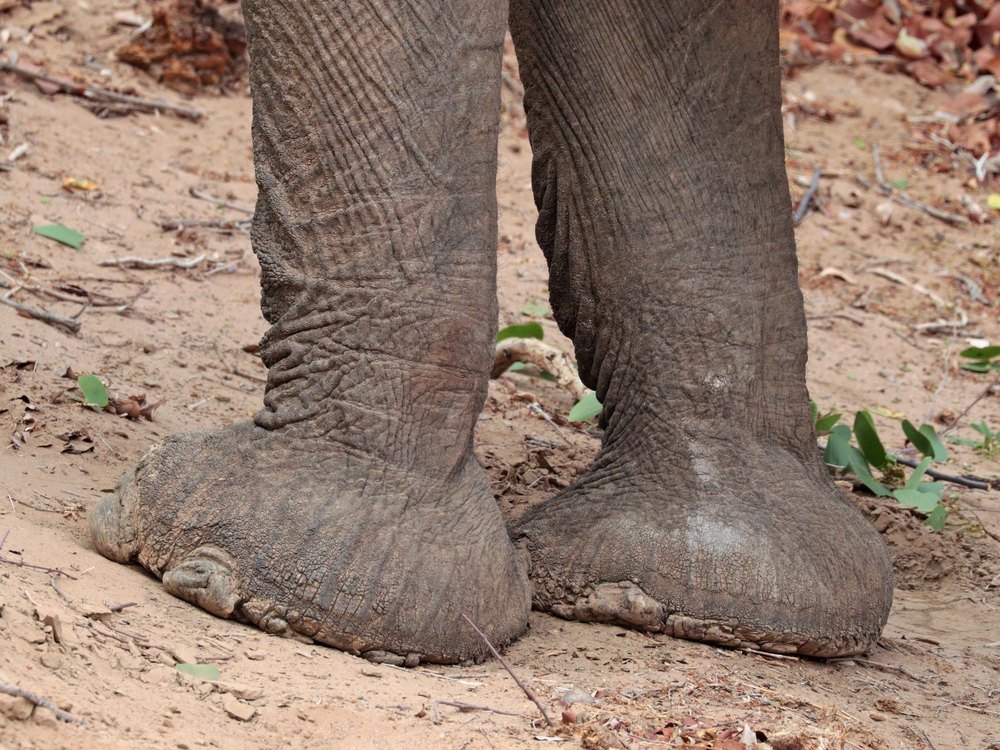
The African Savanna Elephant is a huge grey animal with a long trunk, two tusks and very large ears. The Animal Diversity Web describes the ears as sizable and triangular, and the skin as creased and grey and covered with small bumps (papillae), thick over most of the body and smooth on the delicate parts.[5] Hair is sparse: dark, flattened hair grows along the back and tail, and long hair grows around the eyes. Calves have softer, lighter hair, red or brown.[5]
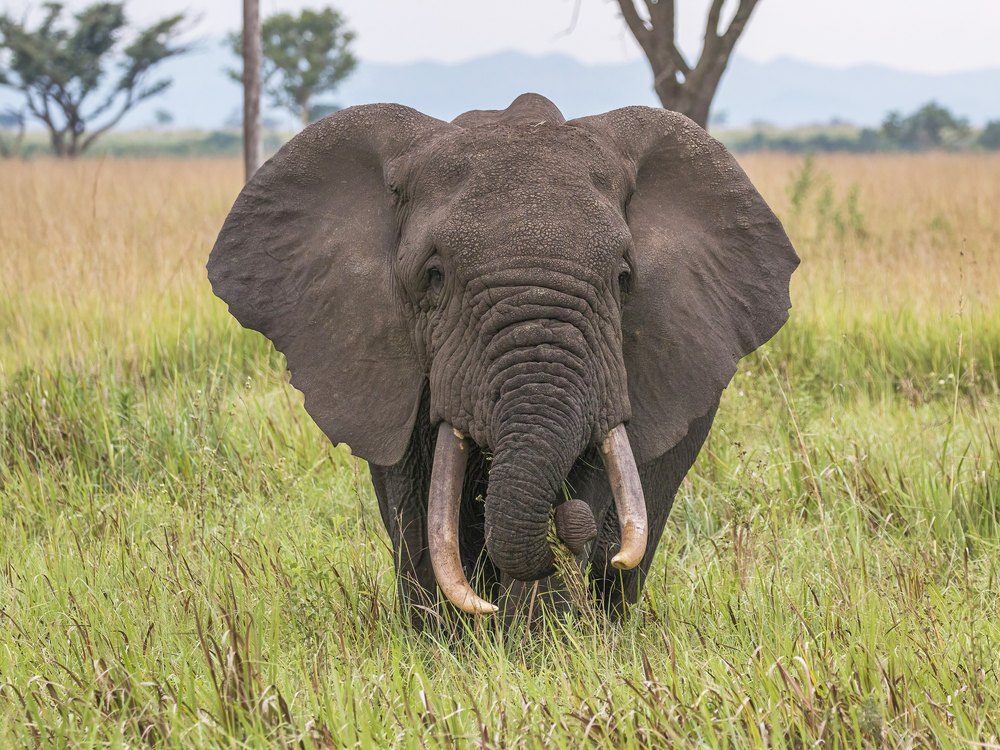
The tip of the trunk has two fingers, one above and one below, that pinch small objects between them.[6] Both sexes carry curved, ivory-coloured tusks (see Body, Tusks).[7] Size, trunk, ears and skin are described under Body.
Name
The IUCN and the Mammal Diversity Database call the species the African Savanna Elephant, and the Mammal Diversity Database gives African Bush Elephant as the other name in use.[4][8] ITIS lists both names as well, together with the spelling “savannah” and the older name “African elephant”.[9] That older name covered all African elephants: before 2021 the IUCN assessed them as one species called the African Elephant, and in 2021 it split them into the African Savanna Elephant and the African Forest Elephant.[4]
The forest elephant, Loxodonta cyclotis, is a different animal that lives in the forests of West and Central Africa. It has its own name and its own page in the databases, and its facts do not apply to the savanna elephant.[10][11] Both species belong to the genus Loxodonta, and the species name africana is Latin for “of Africa”. The history of the scientific names is told under Taxonomy.
In other languages
| Language | Name | Meaning |
|---|---|---|
| Shona local | nzou | — |
| Tswana local | tlôu | — |
| Northern and Southern Sotho local | tlou | — |
| Xhosa local | indlovu | — |
| Tsonga local | njovu | — |
| Chichewa local | njobvu | — |
| Herero local | ondjou | — |
| Wambo (Ovambo) local | ondjamba | — |
| Khoekhoe local | ǂkhòàb | — |
| Juǀ’hoan local | ǃxó | — |
| Afrikaans | Savanne-olifant | savanna elephant |
| German | Afrikanischer Savannenelefant | African savanna elephant |
| French | Éléphant de savane | savanna elephant |
| Dutch | Savanneolifant | savanna elephant |
| Italian | Elefante africano di savana | African elephant of the savanna |
| Spanish | Elefante de sabana | savanna elephant |
| Portuguese | Elefante-africano-de-savana | African elephant of the savanna |
| Swahili | Tembo | — |
| Zulu | iNdlovu | — |
| Japanese | サバンナゾウ | savanna elephant |
| Russian | Саванный слон | savanna elephant |
The names in other languages come from the vernacular-name lists of the Global Biodiversity Information Facility, which take them from the Catalogue of Life.[10][11] Most of these names are from Tsammalex, a database of African animal names that cites printed dictionaries; the Chichewa name is from the IUCN Red List and the Tsonga name from a Kruger Park names list.
Body
Size
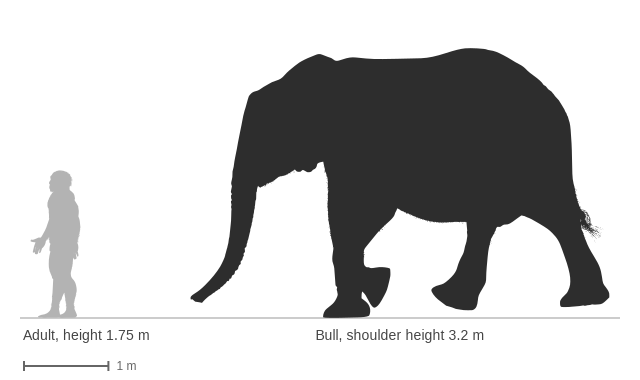
The African Savanna Elephant is the largest living land animal. Fully grown bulls in good condition average 3.2 m at the shoulder and 6 t; about 90% of bulls fall between 3.04 and 3.36 m and between 5.2 and 6.9 t. Cows average 2.6 m and 3 t, with about 90% between 2.47 and 2.73 m and between 2.6 and 3.5 t.[1] The masses are estimates calculated from shoulder height, not weighings.[1] Elephants in poorer condition weigh less at the same height: Murchison Falls elephants of 300 cm averaged 4,450 kg, against 5,000 kg for elephants of the same height at Mkomasi.[1]
Larramendi (2016) sorts bulls into grades by how rare they are. Grade 1, the ordinary bulls above, makes up about 90% of the population. Grade 2 stands about 337 to 352 cm and weighs 6.9 to 7.7 t. Grade 3, the very large bulls, stands 353 to 383 cm and weighs 7.7 to 9.5 t. Grade 4, the world-record class, stands 384 to 400 cm and weighs 9.5 to 10.6 t; fewer than 0.001% of bulls belong to it.[1] Cows of the largest grades reach about 3.2 to 3.5 t.[1]
Males keep growing for much longer than females. In Amboseli, measurements of 431 males and 436 females showed growth over 50 or more years in males and 30 or more years in females.[12] The long bones stop lengthening (the growth plates at their ends fuse) at about 40 years in bulls and about 25 years in cows.[1]
The record claims are disputed. The largest accurately measured bull was shot in Angola in 1974; its forefoot circumference of 180 cm gives a shoulder height of 396 cm, and its mass is estimated at 10.4 t. Shoulder height is taken as twice the forefoot circumference plus 10%, because a body measured lying on its side comes out about 5% taller than the animal standing.[1] Mass figures of up to 12 t for the biggest elephants are extrapolations that Larramendi regards as probably too high.[1] The bull “Fénykövi” (shot in Angola in 1955) measured 401 cm along its side, which was taken to mean 381 cm at the shoulder. Its long bones, however, indicate about 350 cm and 7.5 t in life.[1]
| Female | Male | |
|---|---|---|
| Weight (average) | 3 t | 6 t |
| Shoulder height (average) | 2.6 m | 3.2 m |
Tusks
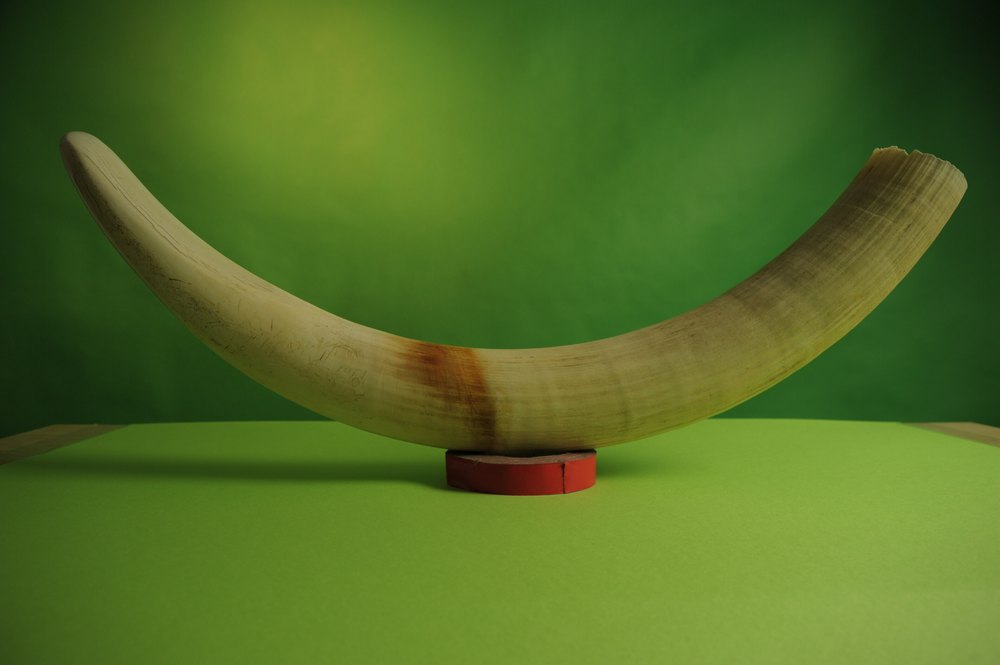
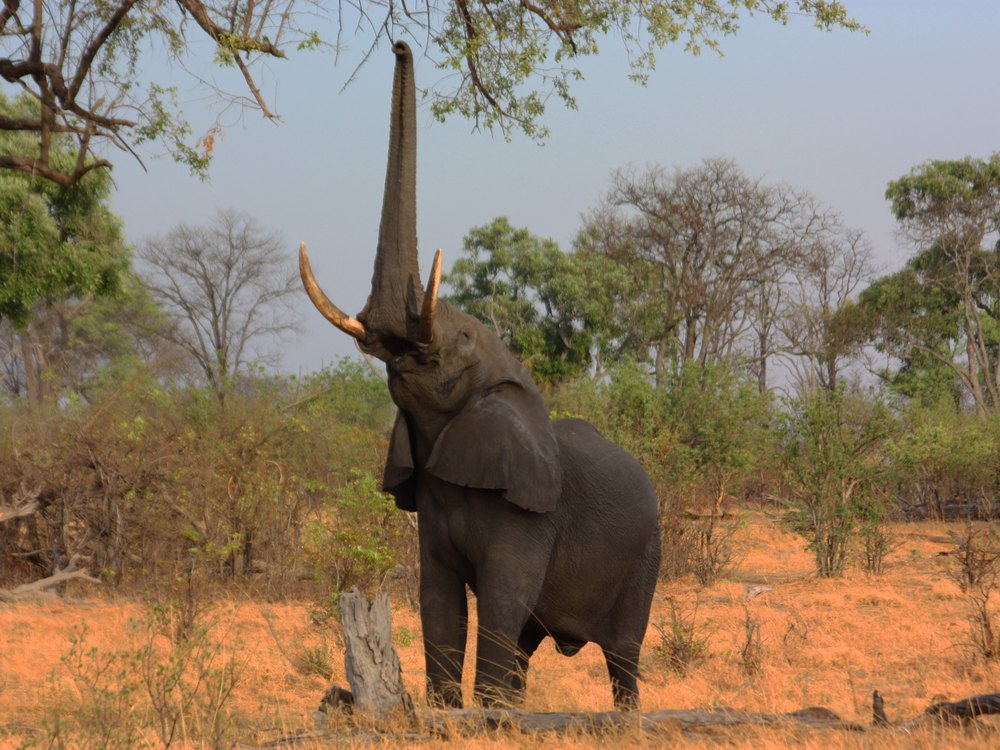
Both sexes have tusks. A tusk is a modified upper incisor tooth.[7] The best measurements come from 1,555 elephants of known age culled in Kruger National Park (South Africa), analysed by Whyte and Hall-Martin (2018).[7]
In males the tusks grow longer throughout life, quickly between 2 and 6 years of age and more slowly after that, until at least 55 years, the age of the oldest male. The longest male tusk in the sample, 264 cm, came from a 55-year-old; the thickest, 48 cm round, from a 38-year-old.[7] Female tusks stop lengthening at 40 to 45 years. They average 113.7 cm at their full length and 24.7 cm round; the longest female tusk was 144 cm (from a 45-year-old) and the heaviest weighed 8.7 kg (from a 37-year-old).[7]
Some elephants lack one or both tusks. Of 1,340 elephants, 15 (1.1%) had none, all of them females aged 9 to 52 years. Single-tusked elephants were 15 of 605 males and 35 of 720 females. The authors conclude that tusklessness in Kruger was mostly caused by injury, not inherited.[7] Slightly more elephants were right-tusked than left-tusked, and the left tusk was the heavier.[7]
Tusklessness can also be driven by hunting. In Gorongosa National Park, Mozambique, ivory poaching during the civil war (1977 to 1992) strongly favoured elephants without tusks while the population fell fast. Survey data fit a trait carried on the X chromosome that is dominant and lethal to males, and a genome scan pointed to two genes known to act in tooth development, AMELX and MEP1a.[13]
Trunk, ears and skin
The trunk has no bones: it is a muscular hydrostat, moved by muscle alone. In micro-CT scans of the trunk tips of three savanna elephants, about one third of the muscle bundles ran lengthwise and two thirds ran across or outwards from the middle. The tip has a finger above and a finger below, and elephants pinch objects between them.[6] In a study of captive female savanna elephants, the trunk tip pulled with a force of at least 86.3 N, and a female was reported to lift at least 63 kg by wrapping her trunk around a dumbbell.[14] In wild elephants the skin at the tip of the trunk wears down to a smooth surface and the whisker-like hairs seldom grow longer than 1 cm; captive elephants keep skin folds and hairs several centimetres long (6 wild and 6 captive adults).[15]
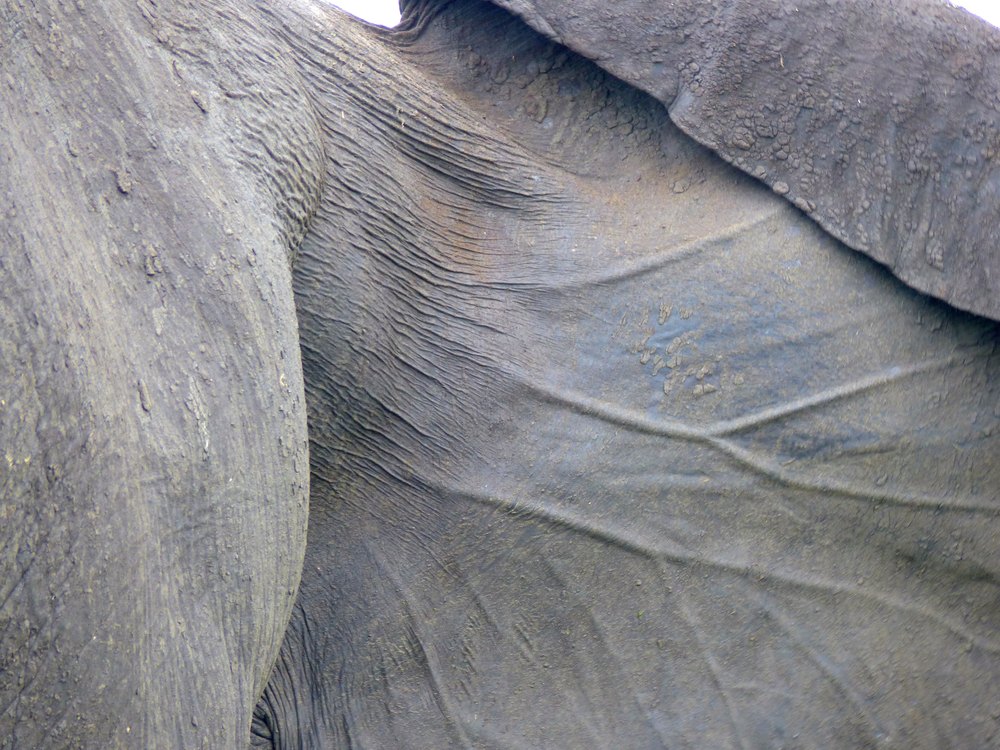
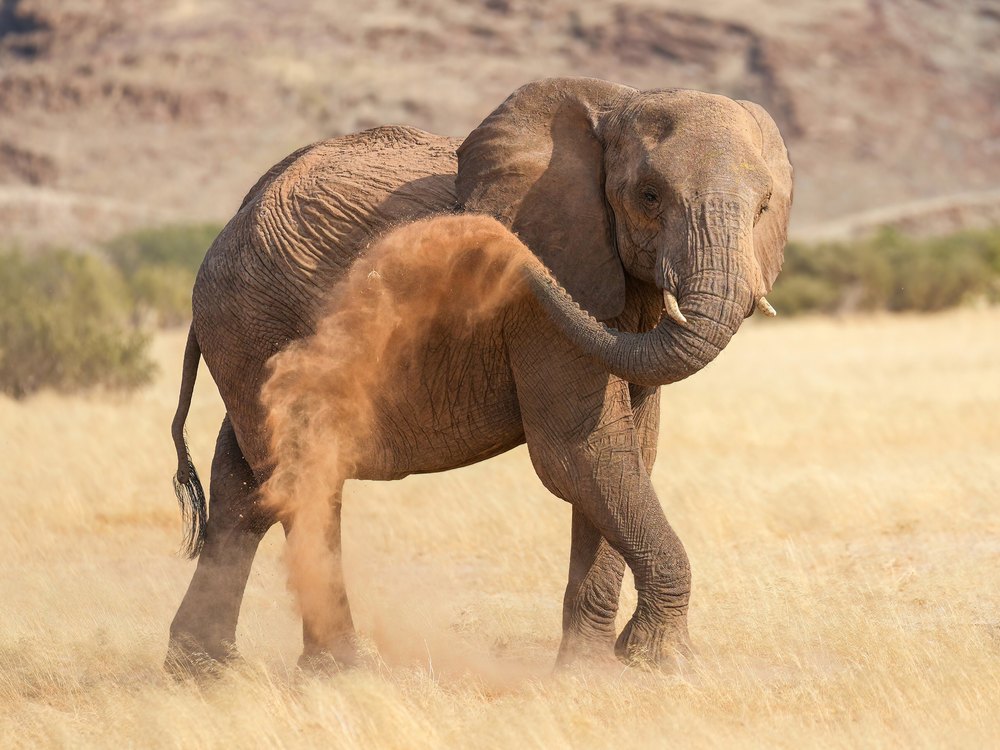
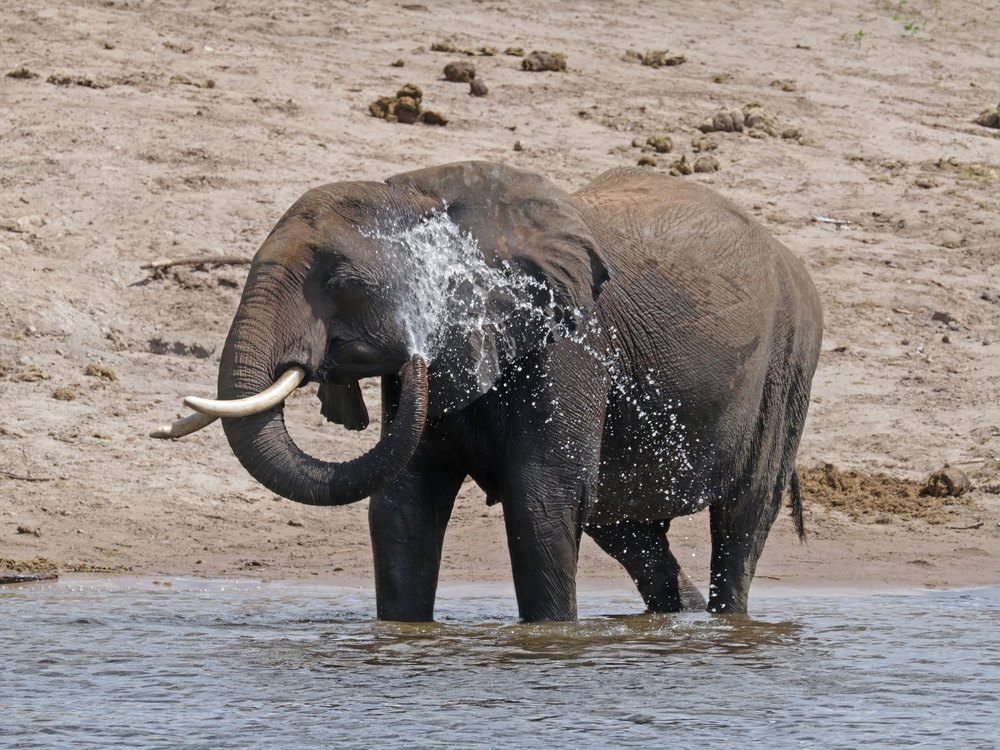
The ears work as radiators. Infrared pictures of the ears of four captive female African elephants, taken at air temperatures of 14 to 32 °C, showed heat loss of 10.67 to 76.2 W from one side of one ear. The authors concluded that up to 100% of the heat an elephant needs to lose could be shed by moving the ears and widening their blood vessels.[16]
The skin has no sweat glands and no oil glands, so cooling by evaporation depends on keeping the skin wet. Elephants hydrate the skin by bathing, spraying water and wallowing in mud. A network of crevices about 100 micrometres wide holds the water, and mud sticks in it, which protects against parasites and strong sunlight.[17] The skin is up to 30 mm thick.[5]
Teeth
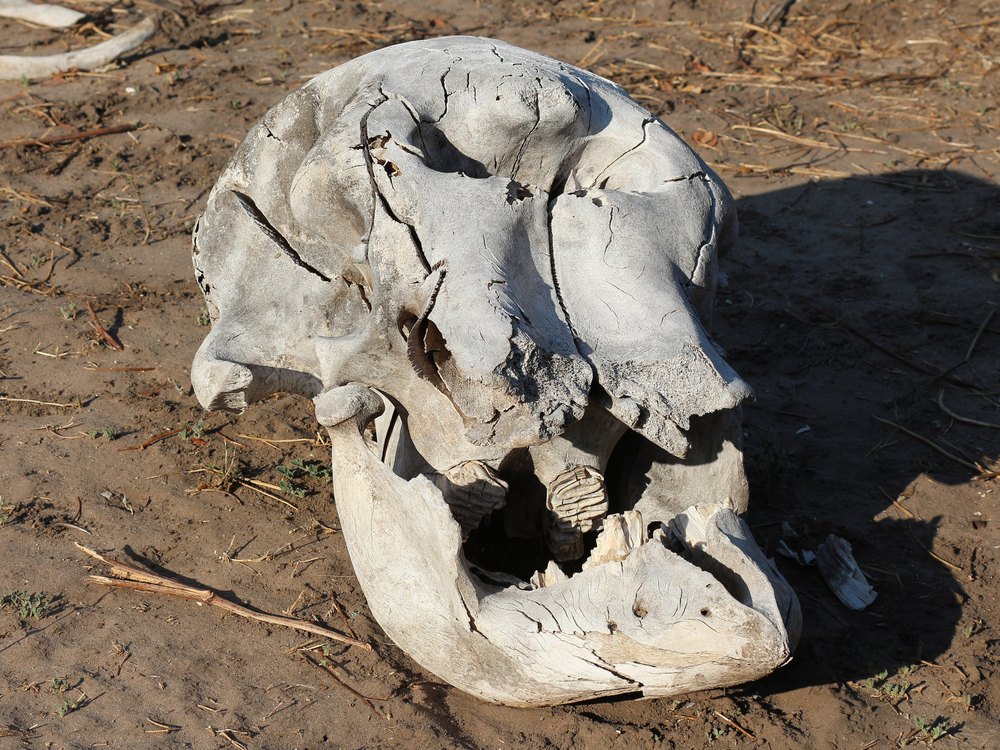
A calf is born without tusks but with temporary incisors, which are replaced at about a year of age.[5] An adult has six cheek teeth in each side of each jaw, but they do not all appear at once: they grow in and move forward like a conveyor belt, and when the sixth is worn down no more teeth follow, so the elephant can no longer chew its food.[5]
The state of the teeth is used to age elephants. A study of 385 lower jaws from Uganda described thirty age groups from the eruption and wear of the six teeth on each side of the lower jaw. Growth layers in the roots indicated an upper age limit of about 60 years, and four jaws had an extra seventh molar.[18] A study of 323 mandibles from Zimbabwe estimated age from the movement of the molars through the jaw.[19]
Senses
Smell is very sharp. The African elephant genome has about 2,000 working olfactory receptor genes, against 1,000 to 1,200 in mice and rats and about 400 in humans.[20]
Elephants hear low-frequency calls from far away. In Etosha National Park, Namibia, wild elephants answered recorded calls played from 1.2 and 2.0 km: they called back, lifted and spread their ears, froze, and scanned with the head, and males walked a kilometre or more towards the loudspeaker. The authors estimated that these calls can be heard by elephants at least 4 km away.[21] Low-frequency calls also travel through the ground. Wild breeding herds detected and responded to warning calls played into the ground as seismic signals, and the authors suggest that the feet may be sensitive to such vibrations.[22]
Colour vision has been tested in only four semi-tame elephants, which could tell colour differences apart at close range (10 m or less) but not beyond.[23]
Behavior
Herds
Females live in family groups led by an older female, the matriarch. Her age matters for how well the group copes with other elephants and with danger. In playback experiments at Amboseli, in Kenya, family groups led by older matriarchs were better at telling the calls of familiar and unfamiliar elephants apart, and the authors suggest that such groups raise more young per female.[2] Matriarchs therefore build up social knowledge over a lifetime; this has been tested only for calls, not as a general memory.[2]
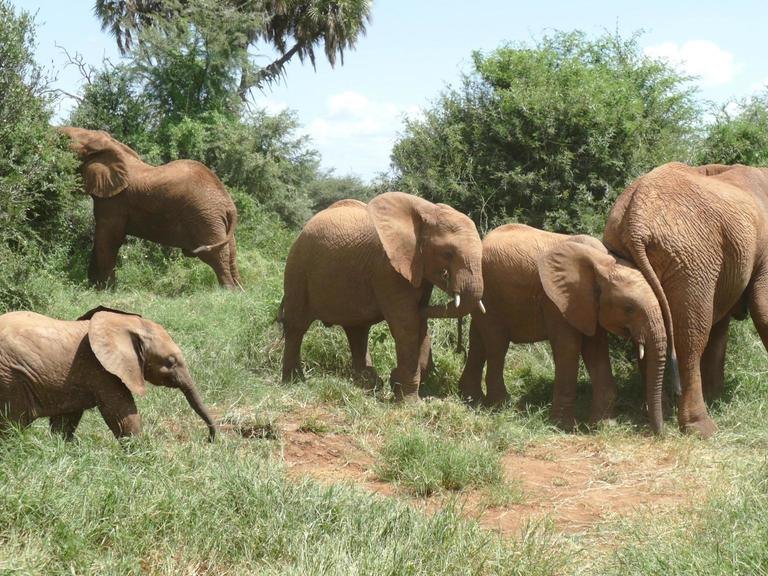


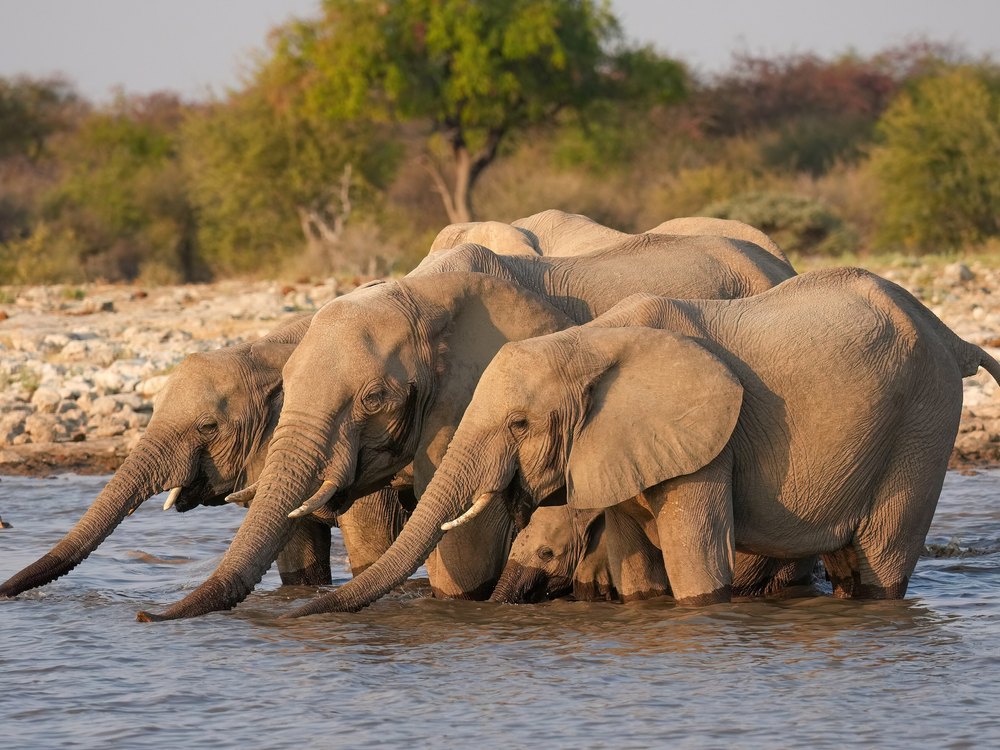

The same line of work shows that experience counts when a threat appears. Elephants in Amboseli tell the voices of Maasai men, who sometimes spear elephants, from those of Kamba men, and from the voices of Maasai women and boys. They bunch up defensively and investigate by smell when they hear the voices judged most dangerous.[24]
The elephants of a population are organised in tiers. A mother and her young form the smallest unit, several related mothers and their young form a core group led by the oldest female, core groups form bond groups, and bond groups form a clan. In Samburu, northern Kenya, the averages were 7.46 elephants per core group, 2.0 core groups per bond group and 3.25 bond groups per clan.[25] Groups split and merge: in Amboseli, among 236 elephants in 45 core groups, relatedness predicted which groups split, and ties between core groups lasted for decades after the original maternal relatives had died.[26] Poaching breaks up these kin-based ties.[27]
Matriarchs in Amboseli were a median of 39 years old when they took over a family and led it for almost 20 years. When one died, the family tended to become less cohesive for a time, but it did not consistently break up.[28] Age gives an advantage: in playbacks of roaring lions, families with younger matriarchs under-reacted to the roars of male lions, and sensitivity to this threat was greatest for the oldest matriarchs.[29]
Males and musth
Young bulls leave their family. In Amboseli the average age at independence was 13.9 years in a drought year and 14.6 years otherwise.[30]
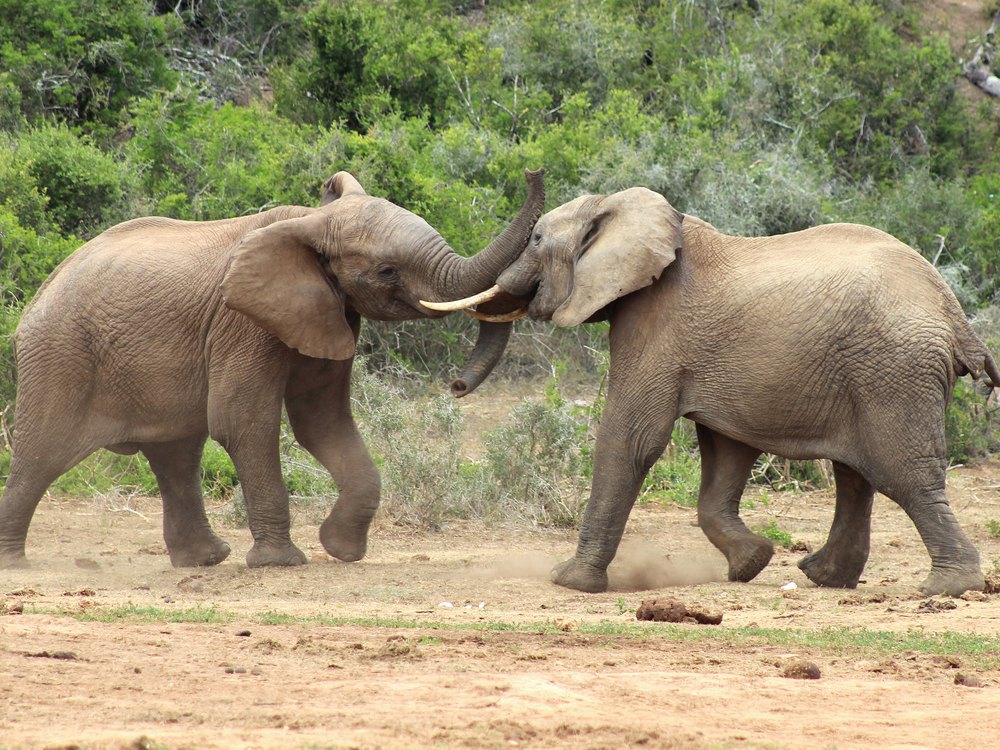
Adult bulls come into musth, a recurring period of high testosterone and aggression. A bull in musth discharges urine continually, has swollen temporal glands (on the side of the head) that leak a thick secretion, and walks with the head held high and the chin tucked in. He is very aggressive and looks for females instead of staying in areas where bulls gather.[31] Musth went with raised male-hormone levels and was not a sign of stress.[32]
Each bull has his own months: at Amboseli one bull came into musth from June to August each year for seven years, and another from March to May for six years. Some bulls were in musth for a day or two, others for more than five months, and the timing depended on rainfall, vegetation, the number of females and the bull’s rank.[31] Bulls in musth spent more time with females.[33] In Tsavo East, a population disturbed by poaching, musth bulls were seen all year round.[34]
Musth starts late. No male under 24 years was seen in musth in a ten-year study at Amboseli,[33] and the average age of a bull’s first musth there is 28.2 years (n = 109). Bulls that first came into musth after 26 years were more than 40 cm taller than those that started earlier.[12]
Females sometimes behave as if in oestrus when they are not. At Amboseli, mothers that had already borne calves simulated oestrus in 19 of 999 oestrus events (2%), mostly when young relatives came into oestrus.[35]
Communication
Elephants recognise one another by voice alone. In the playback experiments at Amboseli described under Herds, family groups answered recorded calls of companions differently from those of strangers.[2] In the wild, elephants also call each other with individually specific, name-like calls. A machine-learning model could predict who a call was addressed to, and elephants responded more strongly to recordings of calls addressed to them than to calls addressed to another elephant. The study was done on elephants in Samburu and Amboseli.[36]
Elephants show interest in the bodies of dead elephants. At carcasses in Samburu National Reserve they came close, touched the body and examined it, even when they had not been close to that elephant in life.[37]

Sleep
Sleep has been measured in only two wild elephants: two adult females, about 30 and 37 years old, followed for 35 days in Chobe National Park, Botswana. They slept about 2.0 hours a day (2.3 and 1.8), which the authors call the shortest daily sleep of any mammal recorded to date.[38] The sleep came in about five episodes a day, the longest about 1.1 hours, and 95% of it fell between sunset and sunrise. The females lay down on only 10 of the 35 days, and lying sleep was 12 to 15% of the total.[38] On 5 of 70 recording days they did not sleep at all, and during stretches of up to about 46 hours without sleep they moved about 30 km.[38] Sleep was counted from trunk movement: five or more minutes without movement counted as sleep, so the true figure could be lower.[38]
Movement and home range
Home ranges differ by several orders of magnitude between populations, depending on how productive the land is and how much people use it. The species is resident, migratory or semi-migratory depending on the region.[3] In Samburu and Buffalo Springs in Kenya, GPS collars on females gave an average annual home range of 1,690.5 km² (95% of locations; standard deviation 2,660.9) and an average core area of 396.2 km² (50% of locations; standard deviation 688.2). Older generations used smaller ranges (1,326.2 and 285.4 km²) than younger ones (3,267.2 and 811.7 km²).[39] The two matriarchs in Chobe slept at sites that were on average 7 km apart in a straight line, and travelled 16 to 17 km between them.[38]
Diet
What it eats
The African Savanna Elephant is a plant eater that takes both grass and browse (leaves, twigs and bark from trees and shrubs). A study of carbon isotopes in dung from Kruger National Park, South Africa, described it as a large generalist that eats both.[40] In the wet season the diet held more grass, and in the dry season it shifted towards browse.[40]
The dry-season shift was smaller in mopane woodland and in grassland, where grass stayed the preferred food even in the dry season.[40] The Animal Diversity Web lists tree foliage, fruits, herbs and grasses, and wood including roots, twigs and bark, as food.[5]
The share of grass changes from place to place and from season to season. A review quoting a study of Kruger National Park found that in the dry season grass was about 40% of the diet in the north of the park and about 10% in the south, and that in the wet season it was about 50% throughout the park.[41] Elephants also look for minerals: in Kitum cave on Mount Elgon, Kenya, they eat cave salts rich in calcium, sodium, magnesium and phosphorus, and in Tsavo they were seen to choose bark rich in calcium. Sodium in dry-season browse is low, and may be too low for the animals.[41]

Life cycle
| Stage | Age / time | Notes |
|---|---|---|
| Pregnancy | About 22 months | Amboseli, Kenya[35][12] |
| Birth | One calf, about 100 kg (90 to 120) | Twins are rare[5][42] |
| Nursing | Average lactation 57 months | Weaned at about 5 years in Amboseli[12] |
| First calf | Median 13.6 years | Cows in Amboseli[12] |
| First musth | Average 28.2 years | Bulls in Amboseli[12] |
Mating and birth
A cow is pregnant for about 22 months.[35][12] In Amboseli a cow is receptive for about a week in a cycle of about 16 weeks.[35] A newborn weighs about 100 kg (90 to 120 kg) according to the Animal Diversity Web.[5]
One calf is the rule, and twin births are rare. In Tarangire National Park, Tanzania, 14 of 291 births were twins (5%), most of them a male and a female.[42] In Amboseli a full-term pair born in April 2018 was only the second successful one out of 2,687 births since 1972 (0.2 per hundred births), and the female twin died at six months.[43]
Calves
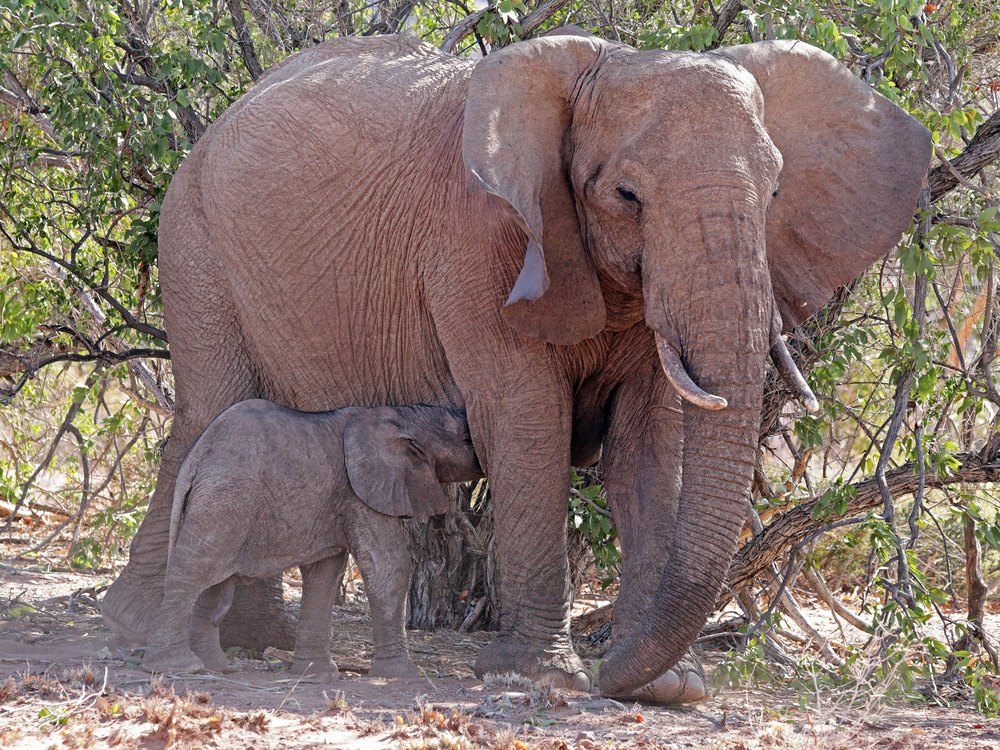
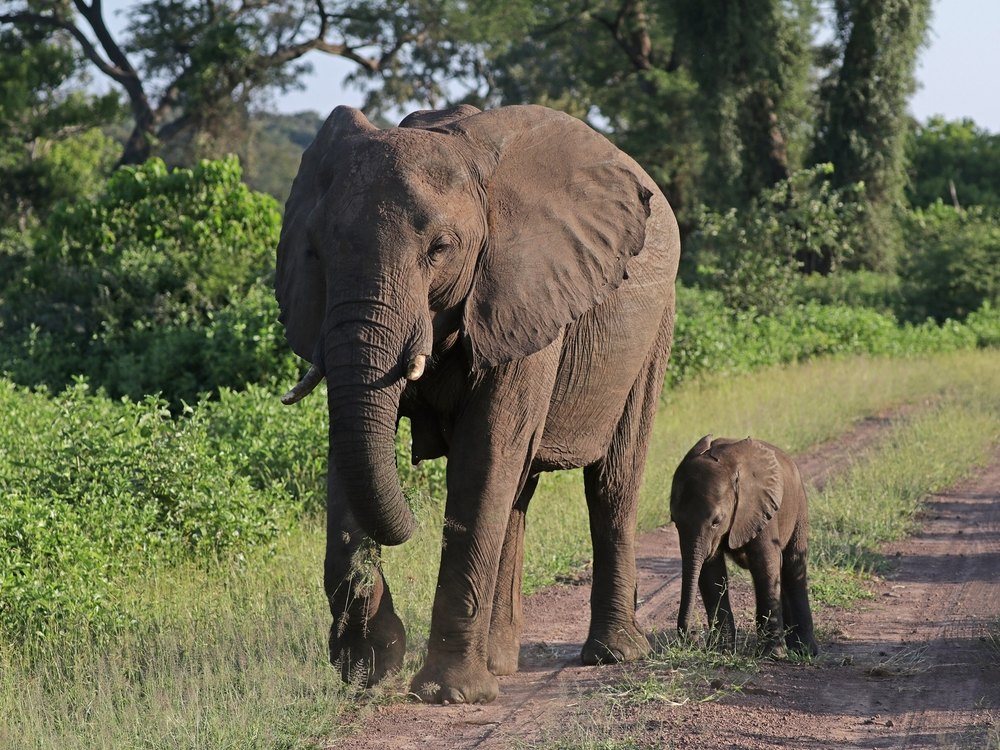
Calves in Amboseli suckle for a long time: average lactation was 57 months, and weaning came at about 5 years.[12] A calf's first years are risky. Of the calves born in Amboseli, 29% died before 24 months in drought years, against 16% in other years.[12] In the first year 25% of firstborn males died, against 17% of firstborn females.[12]


Growing up
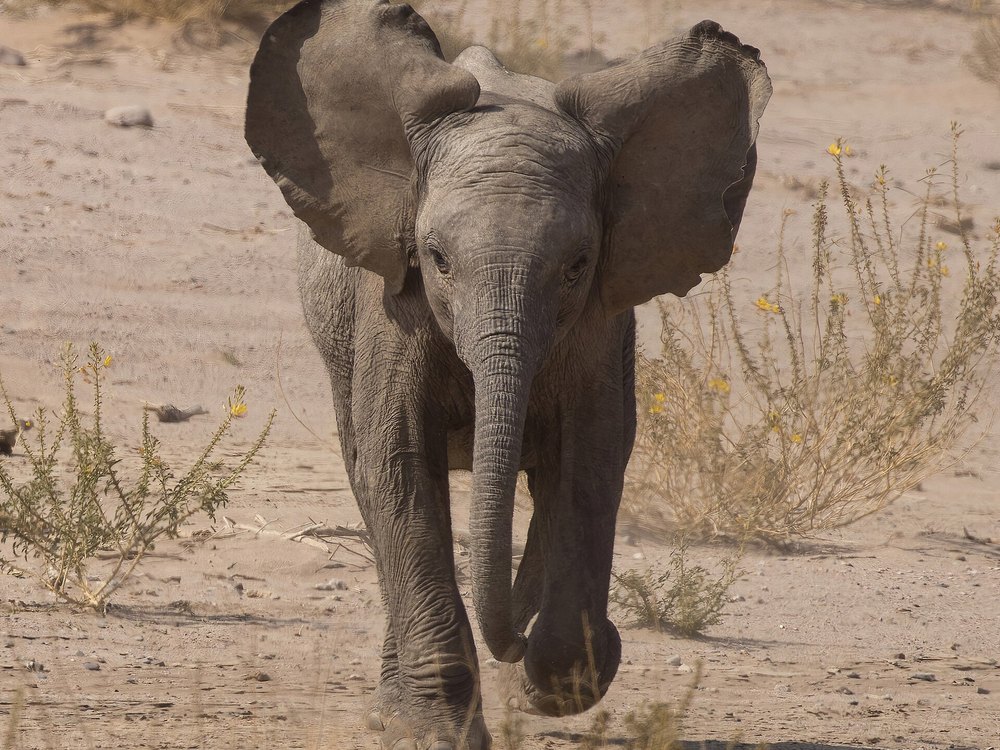
Cows in Amboseli had their first calf at a median age of 13.6 years.[12] The average age at first conception was 12.9 years, and a cow's first oestrus (the first time she is ready to mate) came at about 11.4 years in the group studied.[35]

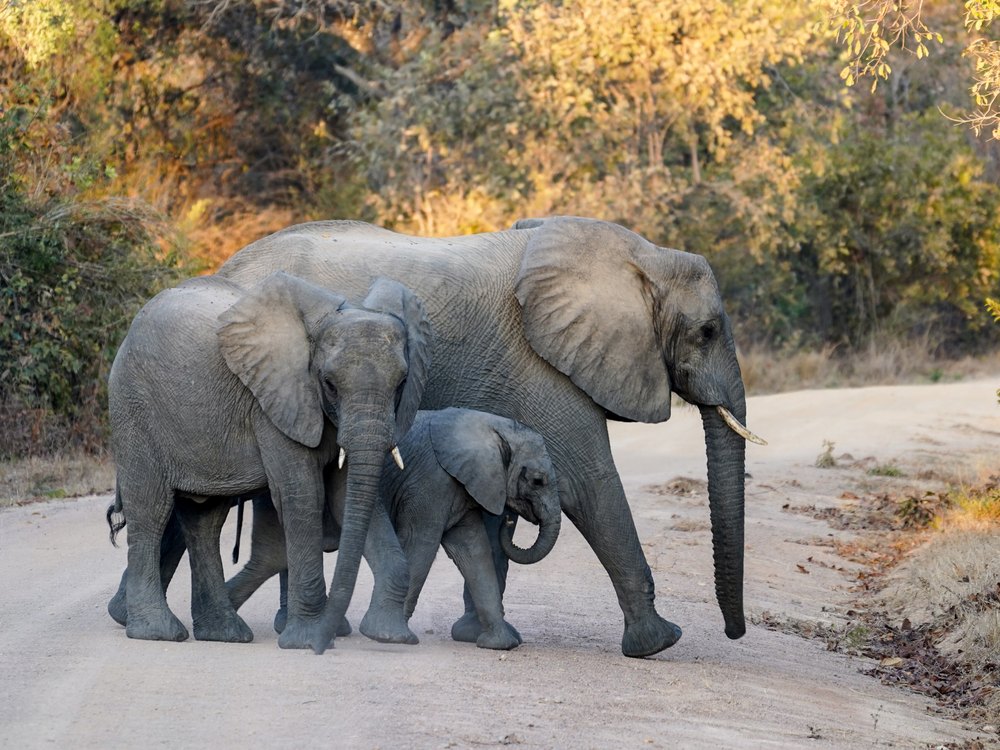

Between calves, the shortest interval in Amboseli was 26 months, and after a calf that survived, conception came at a median of 31 months.[35] In Tsavo East National Park, Kenya, where poaching disturbed the population, the average interval between calves was 5.0 years, against 6.8 years earlier, and no cow under 15 years was known to have a newborn.[34]
Bulls grow for longer than cows. In Amboseli, growth went on for more than 50 years in males and more than 30 years in females.[12] The long bones stop lengthening at about 25 years in females and about 40 years in males.[1]
Another Amboseli study, of 546 cows of known age, gave an average age at first birth of 14.1 years and an average interval of 4.5 years between births (732 intervals from 255 cows). More than 80% of births fell between November and May, and the numbers of male and female calves did not differ.[44]
Lifespan
The oldest elephants in Amboseli reached 70 years or more.[12] The IUCN gives a generation length of 25 years.[3]
Drought raises the risk for adults too. In Amboseli, adult cow mortality about doubled in drought years, from 1.8% to 3.8%.[12]
Ecology
Role in the ecosystem
In savannas the African Savanna Elephant is a bulk processor of plant material and a manipulator of woody vegetation. By knocking down and damaging trees it changes the ratio of trees to grass, which in turn affects the fire regime and potentially the mix of plant species.[3] Where elephants live along wetlands, they help keep channels and open waterways clear.[3] They also move nutrients from rich sources, such as flood-plain soils and termite mounds, to poorer soils such as upland miombo woodland.[3]
The effect on other species has been tested in a systematic review of elephant impact across Africa, covering 68 years and 367 peer-reviewed papers, 51 of which had data suitable for a meta-analysis. Elephants changed the structure and abundance of trees, but the review found no overall negative cascading effects on the other species that share their space.[45] Elephant density, rainfall, tree cover, artificial water and fences did not explain the pattern of impact, and the authors concluded that the evidence does not support managing elephant numbers by artificial means.[45]
The role of savanna elephants as seed dispersers is weaker than that of the African forest elephant, which is the most fruit-eating of the elephants, according to a review.[46]
See Diet for what the elephant eats and Behavior for how it moves between water and food.
Predators
Adult elephants have almost no natural enemies, and calves are the usual targets. In Chobe National Park, Botswana, lions in the Savuti area turn to elephants in the late dry season, from August to November. A study there reported that the frequency of these kills rose between 1985 and 2005. The authors suggested that other prey becomes scarce after the annual migration and that artificial water has made elephants more sedentary, and proposed that weaned young elephants, less dependent on their mothers, may be more vulnerable.[47]
In Hwange National Park, Zimbabwe, Salnicki and colleagues (2001) saw spotted hyenas feeding on or killing newborn and very young elephant calves on several occasions in the dry season of 1999 (September to November). The authors described this as unusual prey for the hyena.
Parasites and disease
Elephant endotheliotropic herpesvirus (EEHV) is the best-known elephant virus. The lethal haemorrhagic form is mostly seen in young Asian elephants. In African elephants, EEHV types 2, 3, 6 and 7 occur commonly as quiescent infections without disease; two culled wild South African elephants carried EEHV3, or EEHV2 together with EEHV3, in lung nodules (Zong and colleagues). The few clinical cases reported in African elephants were in zoos, all caused by EEHV3. How common these infections are in free-ranging savanna elephants is poorly understood.
Tuberculosis is rare in wild savanna elephants. Miller and colleagues (2021) described two incidental cases of Mycobacterium bovis in free-ranging elephants in Kruger National Park, where bovine tuberculosis is endemic and has been recorded in more than 20 wildlife species. Only one earlier case of human-type tuberculosis was known in a Kruger elephant, among hundreds examined from 1967 to 1994.
In 2020 about 350 elephants died in a small unprotected area of northern Botswana. The cause was not settled: van Aarde and colleagues (2021) judged poaching and deliberate poisoning unlikely because the tusks were intact and other species were unaffected, called poisoning by blue-green algae in the pans “not supported by evidence”, and thought a contagious disease more probable.[48] Botswana’s authorities attributed the deaths to an unspecified cyanobacterial toxin.[49] In Zimbabwe 35 elephants were found dead between August and November 2020 over an area of about 40 by 25 km. Foggin and colleagues (2023) found bacterial septicaemia associated with Bisgaard taxon 45, a close relative of Pasteurella multocida, and no evidence of poisoning by blue-green algae or other toxins.[49]
Habitat and range
Where it lives
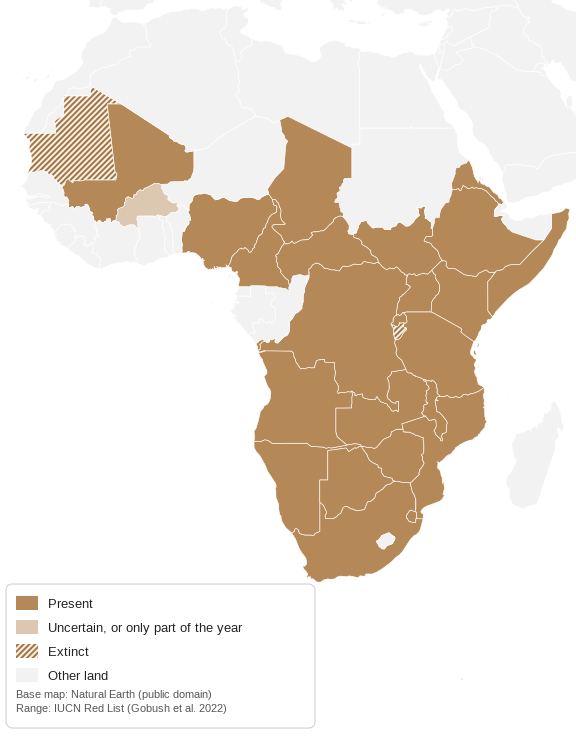
The African Savanna Elephant once occurred across all of Africa and now lives in 24 countries.[3] The IUCN lists it as present and resident in 22: Angola, Botswana, Cameroon, the Central African Republic, Chad, the Democratic Republic of the Congo, Eritrea, Ethiopia, Kenya, Malawi, Mali, Mozambique, Namibia, Nigeria, Rwanda, Somalia, South Africa, South Sudan, Tanzania, Uganda, Zambia and Zimbabwe.[3] Eswatini is counted as well: its elephants died out there and the population was re-established through reintroductions that began in the 1980s.[3] In Burkina Faso the species is recorded only as passing through.[3] It is regarded as extinct in Burundi and Mauritania.[3]
The occupied range is about 15 percent of the historic pre-agricultural range, and it is retracting and becoming more fragmented.[3] Range has recently expanded in Kenya and Botswana.[3] The range spans a wide span of latitude, from Mali at 16 degrees north to South Africa at 34 degrees south.[3]
Some elephants live in the Namib Desert of Namibia, along the Hoanib and Hoarusib rivers. A genetic study of eight of them found them not distinct from Etosha elephants; the authors concluded that a high capacity for learning and long-distance movements let Namibian elephants shift their range as climate and hunting pressure changed.[50] The desert elephants are therefore a population, not a separate form.
Habitat
The IUCN describes the habitat as ranging from montane forest, miombo and mopane woodland, thicket, savanna and grassland to arid desert.[3] It is found from mountain slopes to ocean beaches, with an upper elevation limit of 2,500 m.[3] The habitats listed as major are dry forest, dry and moist savanna, shrubland, grassland, river wetlands and hot and cold desert.[3] Savannas as a whole cover 13.5 million km², almost half of the continent, and 2.2 million km² of them (16 percent) sustain savanna elephants.[51]
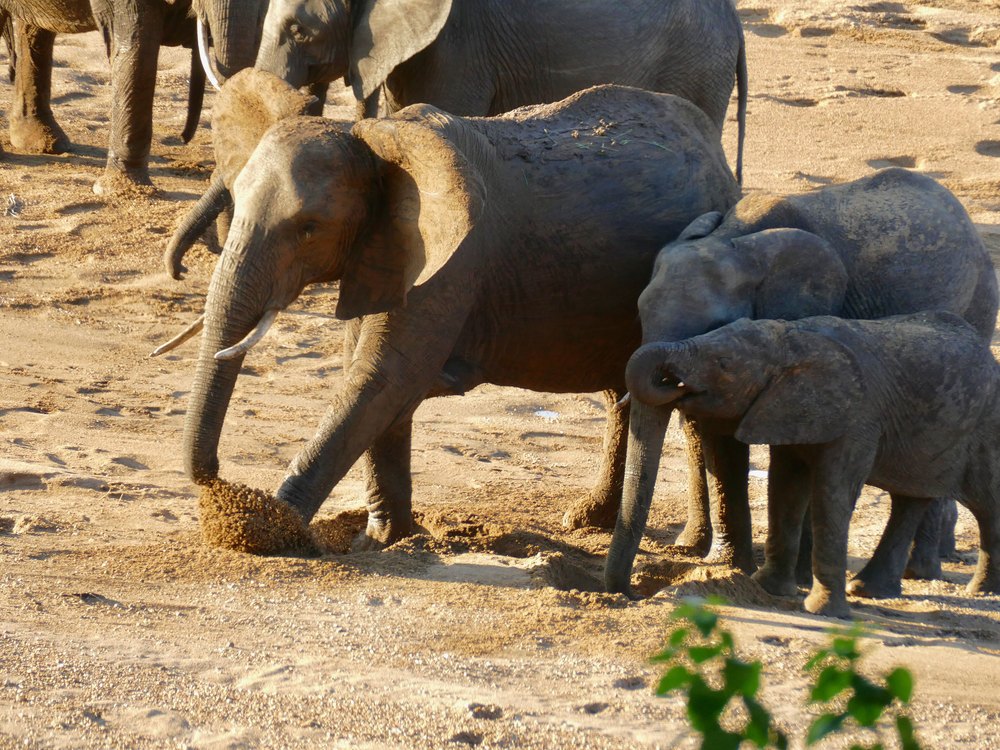

Depending on food and water, elephants are resident in one range, migratory, semi-migratory or near-nomadic, and home ranges vary by several orders of magnitude.[3] Water ties them to particular places in the dry season: in Hwange, Kavhu and colleagues (2025) found that most natural deaths in 2020 to 2022 occurred within 6 km of water points.

Protected areas
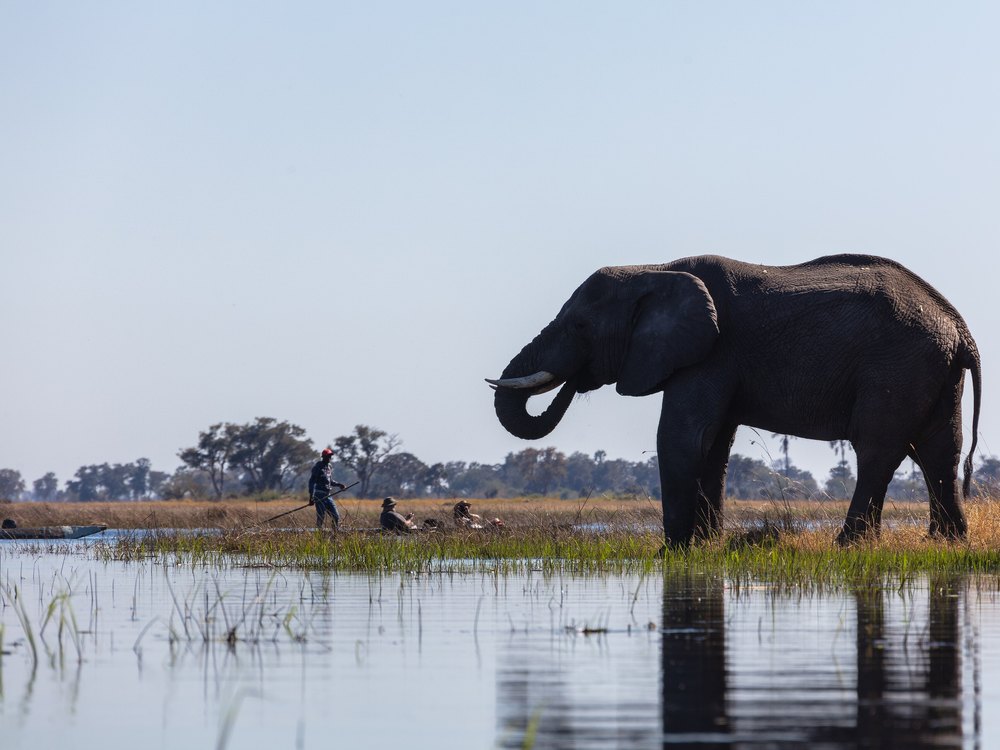
Thirty subpopulations, eight of them with more than 1,000 elephants, span international borders.[3] The largest transboundary area is the Kavango-Zambezi Transfrontier Conservation Area (KAZA), covering 519,912 km² in Angola, Botswana, Namibia, Zambia and Zimbabwe under a treaty signed in 2011. It holds 19 national parks, 60 forest reserves, 47 communal conservancies and forests, and 110 game or wildlife management areas, and is home to over half of the remaining African savanna elephants.[52]
Protection matters but does not settle everything. The Great Elephant Census found 84 percent of the elephants it counted inside protected areas, at a density of 0.44 elephants per km² against 0.23 outside, yet the share of carcasses did not differ significantly between the two.[53] The IUCN notes that over half of the species’ range may lie beyond protected-area boundaries.[3]
Chobe National Park in Botswana is the setting of the Savuti lion study and Kruger National Park in South Africa of the tuberculosis cases (see Ecology). See Conservation for the numbers in each country.
Evolution
The African Savanna Elephant belongs to Loxodonta, one of three genera of living and recently extinct elephants together with Elephas (the Asian elephant) and Mammuthus (the mammoths). Molecular dating puts the split between the African lineage and the lineage of the Asian elephant and the mammoths at 4.2 to 9.0 million years ago, from fossil-calibrated nuclear DNA.[54] A later study of ancient genomes used a calibration of 6.6 to 8.6 million years for the same split. That figure was an input to the analysis, not a result, and the two ranges overlap.[55]
The two living African elephants separated long before modern humans existed, but the date depends on the method. A study of 375 stretches of nuclear DNA, from one savanna and one forest elephant among other species, gave 1.9 to 7.1 million years ago, or 2.6 to 5.6 million years when only fossil calibration was used.[54] The authors found the two African elephants at least as different from each other as the Asian elephant and the woolly mammoth, and concluded that they should be ranked as separate species.[54] An earlier study of four nuclear genes in 24 forest and 75 savanna elephants had also found two clearly separate groups and put their divergence at more than 3 million years.[56]
The same genetic work shows that the separation was not complete. A shared maternal DNA type suggests that the two species exchanged genes within the last half million years, and the authors do not rule out later contact.[54] An analysis of 14 genomes of elephants, mammoths and mastodons found nearly complete isolation between the ancestors of the forest and savanna elephants for about 500,000 years, and described hybridisation as a recurring feature of elephant evolution.[57] The living hybrids are described under Forms and variants.
Ancient DNA has also changed the family tree. In 2017, researchers sequenced four mitochondrial genomes and two partial nuclear genomes of the extinct European straight-tusked elephant (Palaeoloxodon antiquus) from two sites in Germany, from about 120,000 years ago and from 216,000 to 250,000 years ago.[55] It proved to be a close relative of the African forest elephant, not of the Asian elephant, and the authors wrote that the picture of elephant evolution needs substantial revision.[55] Its nuclear genome is a mixture: most of it comes from a lineage related to the ancestor of the African elephants, with a large share from a forest-elephant-related lineage and a small mammoth-related share.[57] The savanna elephant is therefore not the closest living relative of the straight-tusked elephants.
Forms and variants
Subspecies
No living subspecies of the African Savanna Elephant is recognised. The Mammal Diversity Database lists every trinomial name as a synonym of Loxodonta africana, and GBIF lists only Loxodonta africana africana, the automatic nominate form, as a synonym.[8][10]
One name belongs to an extinct population. The North African or Carthaginian elephant, Loxodonta africana pharaohensis (Deraniyagala, 1948, according to the Mammal Diversity Database), was named for elephants that once lived north of the Sahara. The Mammal Diversity Database treats the name as a synonym of Loxodonta africana, so it is debated rather than accepted.[8] Whether these elephants were a separate subspecies, a small savanna population or something else is open.
Hybrids
The African forest elephant (Loxodonta cyclotis) was long counted as a subspecies and is now a separate species (see Taxonomy). Where the two species meet, they interbreed. A study of 46 hybrids found only two in Garamba National Park, in the Democratic Republic of the Congo (DRC), the area where hybrids were first known. Most of the others lived in a major hybrid zone on the border between the DRC and Uganda, with a possible second zone in the Central African Republic and a smaller group in the Pendjari-Arli complex of West Africa.[58] Many of these hybrids showed interbreeding over more than one generation, and hybridisation ran in both directions.[58] The authors suggested that poaching and habitat change may have helped to create the zones.[58] Despite this gene flow, the two species have been genetically distinct for a very long time: about 500,000 years of near-complete isolation are reported.[57]
Conservation
Status
The IUCN Red List lists the African Savanna Elephant as Endangered under criteria A2bd. The assessment dates from 13 November 2020, was published in 2021 and was amended in 2022, when a sub-criterion (A2a) was removed after a petition.[3] It rests on estimates from 334 localities across the range, which show a reduction of more than 50 percent of the continental population over three generations, a period of 75 years, with a generation length of 25 years.[3] The decline is understood to be continuing and likely irreversible, and the population trend is listed as Decreasing.[3] The assessors note that some subpopulations are stable or increasing while others are falling much faster than the continental rate, and that a Vulnerable listing is a plausible outcome given the uncertainties in the data.[3]
This was the first IUCN assessment of the savanna elephant as a species of its own. In March 2021 the IUCN split the African elephant into two species and rated the savanna elephant Endangered and the forest elephant Critically Endangered.[4] Before that, the African elephant was assessed as one species (see Taxonomy).
CITES, the treaty on trade in wild species, still lists the African elephant as one species. All African elephants are in Appendix I, except the populations of Botswana, Namibia, South Africa and Zimbabwe, which are in Appendix II with an annotation that keeps their ivory under the Appendix I rules.[59] All commercial international trade in the ivory of African elephants is therefore prohibited under CITES.[59]
Numbers
The Great Elephant Census, an aerial survey in 2014 and 2015, counted 352,271 savanna elephants on survey sites in 18 countries, about 93 percent of all savanna elephants in those countries.[53] Of these, 84 percent lived in protected areas.[53] In survey areas with earlier data, numbers fell by an estimated 144,000 from 2007 to 2014, about 4 percent a year from 2005 to 2014 and about 8 percent a year from 2010 to 2014.[53] The IUCN quotes this study as a 30 percent decline over about 90 percent of the range, and gives the range as about 15 percent of the historic one.[3]
The African Elephant Status Report of 2016 gave 415,428 elephants (plus or minus 20,111) in surveyed areas, but that figure covers both African species together, and it recorded a continental decline of about 111,000 elephants since 2006, also for both species.[60] It is not a count of savanna elephants alone.
The Kavango-Zambezi area (KAZA), shared by five countries, holds more than half of the remaining savanna elephants. Its 2022 aerial survey estimated 227,900 elephants, and its authors describe the population as stable overall.[52] A later analysis found no significant change between 2014–2015 and 2022, with an estimated growth of 1.2 percent a year.[61] Botswana held 130,451 elephants in the 2014 census and 131,909 in its KAZA part in 2022.[53][52] The 65,028 elephants counted in 2022 in the KAZA part of Zimbabwe are not a national total; the 2014 census gave 82,304 for the whole country.[52][53]
Modelling suggests that protected-area populations hold about 75 percent of what current conditions allow, but less than a quarter of what they would hold with no poaching.[62] Across southern Africa, numbers grew by 0.16 percent a year over the past quarter century; large, connected and strictly protected areas did best, while ten buffer populations had no elephants left at the latest estimates.[51]
Threats
Illegal killingHabitat lossKilling in conflict with peopleClimate changeDisease
Illegal killing. Poaching for ivory is a major cause of death and decline.[3] Wittemyer and colleagues found that illegal killing was unsustainable from 2010 to 2012, peaking at about 8 percent of elephants in 2011, and that at Samburu in Kenya it rose after 2008 and followed the black-market ivory price.[63] Hauenstein and colleagues put the peak at over 10 percent in 2011 and found the rate had fallen to under 4 percent by 2017 across 53 monitored sites; poaching rates tracked local poverty, national corruption and the global ivory price.[64] In south-east Angola, poaching and human settlement pushed the population down by 21 percent from 2005 to 2015.[65]
Habitat loss. Conversion of land to farming and other uses is the second main threat, and it fragments the range.[4] The IUCN also lists roads and railways, and snares set for other animals, as threats.[3]
Killing in conflict with people. The IUCN lists growing conflict with people as a threat.[3]
Climate change. The IUCN lists droughts as a threat and notes that climate change may reduce reproductive success.[3] After the 1993 drought in Tarangire, Tanzania, fewer calves survived.[66]
Disease. In 2020 about 350 elephants died in northern Botswana, in a die-off whose cause is still debated (see Ecology, Parasites and disease).[48]
Protection
Where anti-poaching and site management have worked, populations have been re-established or have recovered; where protection failed, a population fell by 70 percent or more within a decade.[3] Hauenstein and colleagues conclude that more law enforcement helps, but will not succeed without action on ivory demand, corruption and poverty.[64] Over half of the range may lie outside protected areas.[3]
The CITES programme for Monitoring the Illegal Killing of Elephants, set up in 2002, has 66 sites, 39 of them in 18 countries with savanna elephants.[3] China closed its legal domestic ivory market in 2017.[3]
Culling, done mainly in southern Africa until the late 1980s or early 1990s, has largely stopped. Managers now try to control density with translocation, contraception and closing artificial waterholes.[3] A model of rotating immunocontraception for the Munyawana population in South Africa found that it could lower population growth, age the population and change its age structure.[67] It was a model, not a field trial, and it suits small enclosed reserves.[67]
Protected-area networks matter: the degree of protection predicts where elephants occur and how dense they are.[3] Large, connected and strictly protected areas kept populations stable in southern Africa.[51]
History and culture
First description
Johann Friedrich Blumenbach first described the African elephant in 1797, as Elephas africanus (see Taxonomy for the name and its later history).[8]
Ivory trade
In 1989 CITES banned the international commercial trade in ivory.[3] Afterwards two CITES-approved sales of national ivory stockpiles took place, the second in 2008, when Botswana, Namibia, South Africa and Zimbabwe sold ivory to China and Japan; the CITES Standing Committee approved 108 tonnes in total.[3][59] A nine-year pause on new sale proposals from these four countries ended in 2017.[3]
Prices and poaching are linked: Hauenstein and colleagues found that poaching rates followed the global ivory price.[64] The IUCN notes that Chinese demand greatly exceeded Japan’s in the 2000s, that prices rose steeply, and that illegally traded ivory increased substantially after 2006, mostly bound for Asia.[3]
Culling and management
From 1967 to 1994 the policy for Kruger National Park in South Africa was to hold the elephant population at about 7,000, letting it vary between 6,000 and 8,500.[68] A moratorium on culling followed in 1995, after a public debate raised by an animal-rights group in late 1994.[68]
In Tsavo, Kenya, the drought of 1970 to 1971 killed over 5,000 elephants, mostly breeding females and young animals, as quoted from Corfield (1973) in a study of Tsavo East.[34] Tsavo East elephants then fell by almost 80 percent between 1976 and 1989, a figure the same study quotes from unpublished work by Douglas-Hamilton and colleagues.[34]
Records
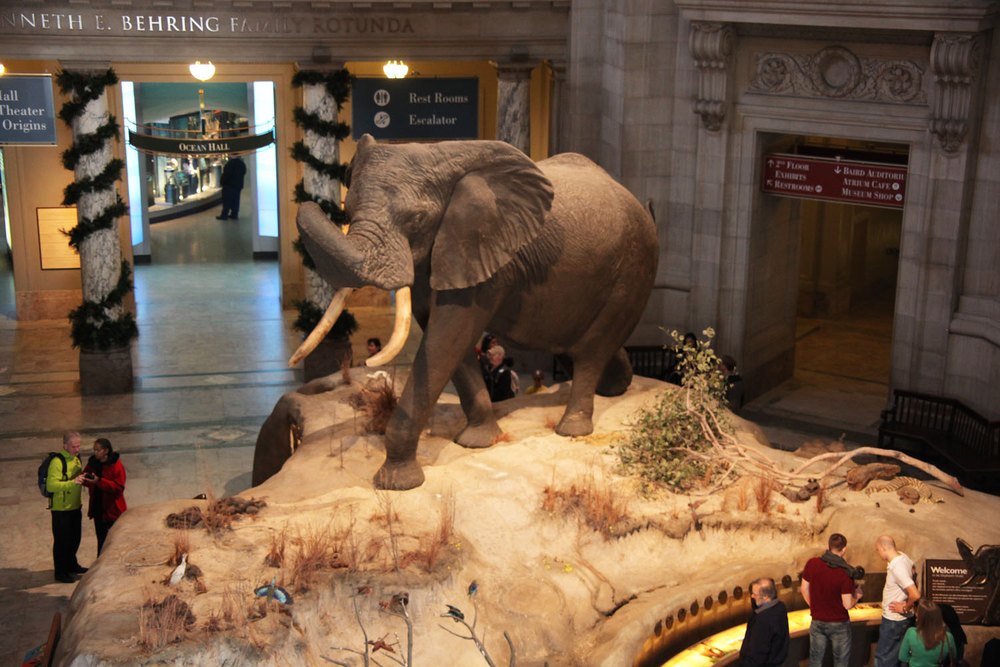
The bull shot in Angola in November 1955 by Josef Fénykövi is mounted at the Smithsonian’s National Museum of Natural History. How big it really was is discussed under Body, Size.[1]
Long-term records from Amboseli, Kenya, have followed individual elephants for about 40 years, which allowed a study of how early-life experience affects survival and success later on.[12]

Taxonomy
| Rank | Name |
|---|---|
| Kingdom | Animalia |
| Phylum | Chordata |
| Subphylum | Vertebrata |
| Superclass | Tetrapoda[72] |
| Class | Mammalia |
| Subclass | Theria[72] |
| Infraclass | Eutheria[72] |
| Order | Proboscidea (elephants and their extinct relatives) |
| Family | Elephantidae (elephants and mammoths) |
| Genus | Loxodonta |
| Species | Loxodonta africana (Blumenbach, 1797)[10][9][8] |
Synonyms (2)
| Name |
|---|
| Elephas africana (Blumenbach, 1797) |
| Elephas capensis (Cuvier, 1798) |
From the GBIF backbone.[71]
Higher classification
The savanna elephant belongs to the family Elephantidae, which holds the living elephants and the mammoths, in the order Proboscidea, the group of animals with a trunk.[55] The genus Loxodonta holds the African elephants. Current lists give it two living species: the savanna elephant and the forest elephant, Loxodonta cyclotis (Matschie, 1900).[9][10] The other living elephant genus, Elephas, holds the Asian elephant (see Evolution).
One species or two
Until the early 2000s the African elephants were counted as one species, with the forest form treated as a subspecies. Grubb and colleagues (2000) argued for two species, Loxodonta africana and Loxodonta cyclotis, and skull measurements of 295 elephants separated the forest and savanna types.[56][69] Genetic studies later supported ranking them as two species.[54][56] The IUCN assessed them as two species for the first time in March 2021, listing the savanna elephant as Endangered and the forest elephant as Critically Endangered.[4] GBIF and ITIS also list both as valid species.[9][10] The Mammal Diversity Database accepts the split, but notes that some authorities still treat the two as one.[8] The dating of the split and the hybrids between the two species are described under Evolution and Forms and variants.
Sources
- Larramendi, A. 2016. Proboscideans: shoulder height, body mass and shape. Acta Palaeontologica Polonica 61: 537–574
- McComb, K., Moss, C., Durant, S. M. et al. 2001. Matriarchs as repositories of social knowledge in African elephants. Science 292: 491–494
- Gobush, K. S., Edwards, C. T. T., Balfour, D., Wittemyer, G., Maisels, F. and Taylor, R. D. Loxodonta africana (African Savanna Elephant). The IUCN Red List of Threatened Species (assessed 2020, published 2021, amended 2022)
- IUCN, “African elephant species now Endangered and Critically Endangered” (press release, 25 March 2021)
- Animal Diversity Web, Loxodonta africana (African elephant)
- Eigen, L., Ladenburger, P. et al. 2025. Elephant trunk tip musculature reflects species differences in grasping behavior. Communications Biology 8: 1779
- Whyte, I. J. and Hall-Martin, A. J. 2018. Growth characteristics of tusks of elephants in Kruger National Park. Pachyderm 59: 31–40
- Mammal Diversity Database, Loxodonta africana (taxon 1000522)
- ITIS, Loxodonta africana (Blumenbach, 1797) (TSN 584939)
- GBIF Secretariat, Loxodonta africana (Blumenbach, 1797), GBIF Backbone Taxonomy (species 2435350)
- Catalogue of Life, Loxodonta africana (Blumenbach, 1797) (ChecklistBank)
- Lee, P. C., Bussière, L. F., Webber, C. E. et al. 2013. Enduring consequences of early experiences: 40 year effects on survival and success among African elephants. Biology Letters 9: 20130011
- Campbell-Staton, S. C., Arnold, B. J., Gonçalves, D. et al. 2021. Ivory poaching and the rapid evolution of tusklessness in African elephants. Science 374: 483–487
- Costes, P., Delapré, A. et al. 2024. Maximum trunk tip force assessment related to trunk position and prehensile ‘fingers’ implication in African savannah elephants. PLOS ONE 19: e0301529
- Heise, O., Pottek, T. et al. 2025. Trunk Tip Wear in Wild African Savanna Elephants. Integrative and Comparative Biology 65: 1358–1365
- Phillips, P. K. and Heath, J. E. 1992. Heat exchange by the pinna of the African elephant (Loxodonta africana). Comparative Biochemistry and Physiology A 101: 693–699
- Martins, A.F., Bennett, N.C. et al. 2018. Locally-curved geometry generates bending cracks in the African elephant skin. Nature Communications 9: 3865
- Laws, R.M. 1966. Age criteria for the African elephant. African Journal of Ecology 4: 1–37
- Stansfield, F. 2016. Assessment of African elephant (Loxodonta africana) molars and mandibles and their association with estimated age and sex. Pachyderm 57: 68–77
- Niimura, Y., Matsui, A. and Touhara, K. 2014. Extreme expansion of the olfactory receptor gene repertoire in African elephants and evolutionary dynamics of orthologous gene groups in 13 placental mammals. Genome Research 24: 1485–1496
- Langbauer, W.R., Payne, K.B. et al. 1991. African Elephants Respond to Distant Playbacks of Low-Frequency Conspecific Calls. Journal of Experimental Biology 157: 35–46
- O’Connell-Rodwell, C.E., Wood, J.D. et al. 2004. Elephant low-frequency vocalizations propagate in the ground and seismic playbacks of these vocalizations are detectable by wild African elephants (Loxodonta africana). The Journal of the Acoustical Society of America 115: 2554–2554
- Peinke, C.L. and Shrader, A.M. 2025. Can African elephants use leaf colour as a visual cue when making foraging decisions? Animal Cognition 28: 46
- McComb, K., Shannon, G., Sayialel, K. N. and Moss, C. 2014. Elephants can determine ethnicity, gender, and age from acoustic cues in human voices. Proceedings of the National Academy of Sciences 111: 5433–5438
- Pardo, M.A., Lolchuragi, D.S. et al. 2024. Female African elephant rumbles differ between populations and sympatric social groups. Royal Society Open Science 11: 241264
- Archie, E.A., Moss, C.J. and Alberts, S.C. 2006. The ties that bind: genetic relatedness predicts the fission and fusion of social groups in wild African elephants. Proceedings of the Royal Society B: Biological Sciences 273: 513–522
- Archie, E.A. and Chiyo, P.I. 2012. Elephant behaviour and conservation: social relationships, the effects of poaching, and genetic tools for management. Molecular Ecology 21: 765–778
- Moss, C.J., Lee, P.C. et al. 2026. Savannah elephant family dynamics: short- and long-term responses to environmental and social changes. Animal Behaviour 241: 123733
- McComb, K., Shannon, G. et al. 2011. Leadership in elephants: the adaptive value of age. Proceedings of the Royal Society B: Biological Sciences 278: 3270–3276
- Lee, P.C., Moss, C.J. et al. 2021. Cohort consequences of drought and family disruption for male and female African elephants. Behavioral Ecology 33: 408–418
- Poole, J. H. and Moss, C. J. 1983. Musth discovered in the African elephant. Pachyderm 1: 8
- Ganswindt, A., Rasmussen, H.B. et al. 2005. The sexually active states of free-ranging male African elephants (Loxodonta africana): defining musth and non-musth using endocrinology, physical signals, and behavior. Hormones and Behavior 47: 83–91
- Poole, J.H. 1987. Rutting Behavior in African Elephants: the Phenomenon of Musth. Behaviour 102: 283–316
- McKnight, B. 2000. Changes in elephant demography, reproduction and group structure in Tsavo National Park (1966–1994). Pachyderm 29
- Bates, L. A., Handford, R., Lee, P. C. et al. 2010. Why do African elephants (Loxodonta africana) simulate oestrus? An analysis of longitudinal data. PLoS ONE 5: e10052
- Pardo, M.A., Fristrup, K. et al. 2024. African elephants address one another with individually specific name-like calls. Nature Ecology & Evolution 8: 1353–1364
- Goldenberg, S.Z. and Wittemyer, G. 2020. Elephant behavior toward the dead: A review and insights from field observations. Primates 61: 119–128
- Gravett, N., Bhagwandin, A., Sutcliffe, R. et al. 2017. Inactivity/sleep in two wild free-roaming African elephant matriarchs: does large body size make elephants the shortest mammalian sleepers? PLOS ONE 12: e0171903
- Goldenberg, S. Z., Douglas-Hamilton, I. and Wittemyer, G. 2018. Inter-generational change in African elephant range use is associated with poaching risk, primary productivity and adult mortality. Proceedings of the Royal Society B 285: 20180286
- Codron, J., Codron, D., Lee-Thorp, J. A. et al. 2011. Landscape-scale feeding patterns of African elephant inferred from carbon isotope analysis of feces. Oecologia 165: 89–99
- Sach, F., Dierenfeld, E.S. et al. 2019. African savanna elephants (Loxodonta africana) as an example of a herbivore making movement choices based on nutritional needs. PeerJ 7: e6260
- Foley, C. A. H. 2002. High incidence of elephant twin births in Tarangire National Park, Tanzania. Pachyderm 32: 64–66
- Moss, C. J., Fishlock, V. and Lee, P. C. 2019. Twinning in the Amboseli elephant population. Pachyderm 60: 118–119
- Moss, C.J. 2001. The demography of an African elephant (Loxodonta africana) population in Amboseli, Kenya. Journal of Zoology 255: 145–156
- Guldemond, R. A. R., Purdon, A. and van Aarde, R. J. 2017. A systematic review of elephant impact across Africa. PLOS ONE 12: e0178935
- Campos-Arceiz, A. and Blake, S. 2011. Megagardeners of the forest – the role of elephants in seed dispersal. Acta Oecologica 37: 542–553
- Power, R. J. and Compion, R. X. S. 2009. Lion predation on elephants in the Savuti, Chobe National Park, Botswana. African Zoology 44: 36–44
- van Aarde, R. J., Pimm, S. L., Guldemond, R. et al. 2021. The 2020 elephant die-off in Botswana. PeerJ 9: e10686
- Foggin, C. M., Rosen, T., Henton, M. et al. 2023. Pasteurella sp. associated with fatal septicaemia in six African elephants. Nature Communications 14
- Ishida, Y., Van Coeverden de Groot, P. J., Leggett, K. E. A. et al. 2016. Genetic connectivity across marginal habitats: the elephants of the Namib Desert. Ecology and Evolution 6: 6189–6201
- Huang, Y., Maré, C., Guldemond, R. et al. 2024. Protecting and connecting landscapes stabilizes populations of the Endangered savannah elephant. Science Advances 10
- Chase, M. J., Schlossberg, S., Landen, K. et al. 2023. KAZA Elephant Survey 2022, volume 1: results and technical report. KAZA Secretariat
- Chase, M. J., Schlossberg, S., Griffin, C. R. et al. 2016. Continent-wide survey reveals massive decline in African savannah elephants. PeerJ 4: e2354
- Rohland, N., Reich, D., Mallick, S. et al. 2010. Genomic DNA sequences from mastodon and woolly mammoth reveal deep speciation of forest and savanna elephants. PLoS Biology 8: e1000564
- Meyer, M., Palkopoulou, E., Baleka, S. et al. 2017. Palaeogenomes of Eurasian straight-tusked elephants challenge the current view of elephant evolution. eLife 6
- Roca, A. L., Georgiadis, N. and O’Brien, S. J. 2007. Cyto-nuclear genomic dissociation and the African elephant species question. Quaternary International 169–170: 4–16
- Palkopoulou, E., Lipson, M., Mallick, S. et al. 2018. A comprehensive genomic history of extinct and living elephants. Proceedings of the National Academy of Sciences 115
- Mondol, S., Moltke, I., Hart, J. et al. 2015. New evidence for hybrid zones of forest and savanna elephants in Central and West Africa. Molecular Ecology 24: 6134–6147
- CITES, rules on commercial international trade in elephant ivory, and the Appendices (cites.org)
- Thouless, C. R., Dublin, H. T., Blanc, J. J. et al. 2016. African Elephant Status Report 2016. IUCN SSC Occasional Paper 60
- Chase, M. J. 2024. Elephant population trends in KAZA. Elephants Without Borders report (April 2024)
- Robson, A. S., Trimble, M. J., Purdon, A. et al. 2017. Savanna elephant numbers are only a quarter of their expected values. PLOS ONE 12: e0175942
- Wittemyer, G., Northrup, J. M., Blanc, J. et al. 2014. Illegal killing for ivory drives global decline in African elephants. Proceedings of the National Academy of Sciences 111: 13117–13121
- Hauenstein, S., Kshatriya, M., Blanc, J. et al. 2019. African elephant poaching rates correlate with local poverty, national corruption and global ivory price. Nature Communications 10
- Schlossberg, S., Chase, M. J. and Griffin, C. R. 2018. Poaching and human encroachment reverse recovery of African savannah elephants in south-east Angola despite 14 years of peace. PLOS ONE 13: e0193469
- Foley, C., Pettorelli, N. and Foley, L. 2008. Severe drought and calf survival in elephants. Biology Letters 4: 541–544
- Druce, H. C., Mackey, R. L. and Slotow, R. 2011. How immunocontraception can contribute to elephant management in small, enclosed reserves: Munyawana population as a case study. PLoS ONE 6: e27952
- Whyte, I. J. 2004. Ecological basis of the new elephant management policy for Kruger National Park and expected outcomes. Pachyderm 36: 99–108
- Grubb, P., Groves, C. P., Dudley, J. P. and Shoshani, J. 2000. Living African elephants belong to two species: Loxodonta africana (Blumenbach, 1797) and Loxodonta cyclotis (Matschie, 1900). Elephant 2(4): 1–4
- Rohland, N., Malaspinas, A.-S., Pollack, J. L., Slatkin, M., Matheus, P. and Hofreiter, M. 2007. Proboscidean mitogenomics: chronology and mode of elephant evolution using mastodon as outgroup. PLoS Biology 5: e207
- GBIF backbone, Loxodonta africana, synonyms
- ITIS, Loxodonta africana, classification