The Giant Barrel Sponge (Xestospongia muta) is a large, barrel-shaped sponge of Caribbean and western Atlantic reefs.[1][2] It feeds by filtering water through its body.[1] Growth models put the largest sponge tracked in Florida at about 127 years old, and two giants in the Bahamas at more than 240 years.[3] The IUCN has not evaluated the species.[4]
Quick facts
Description
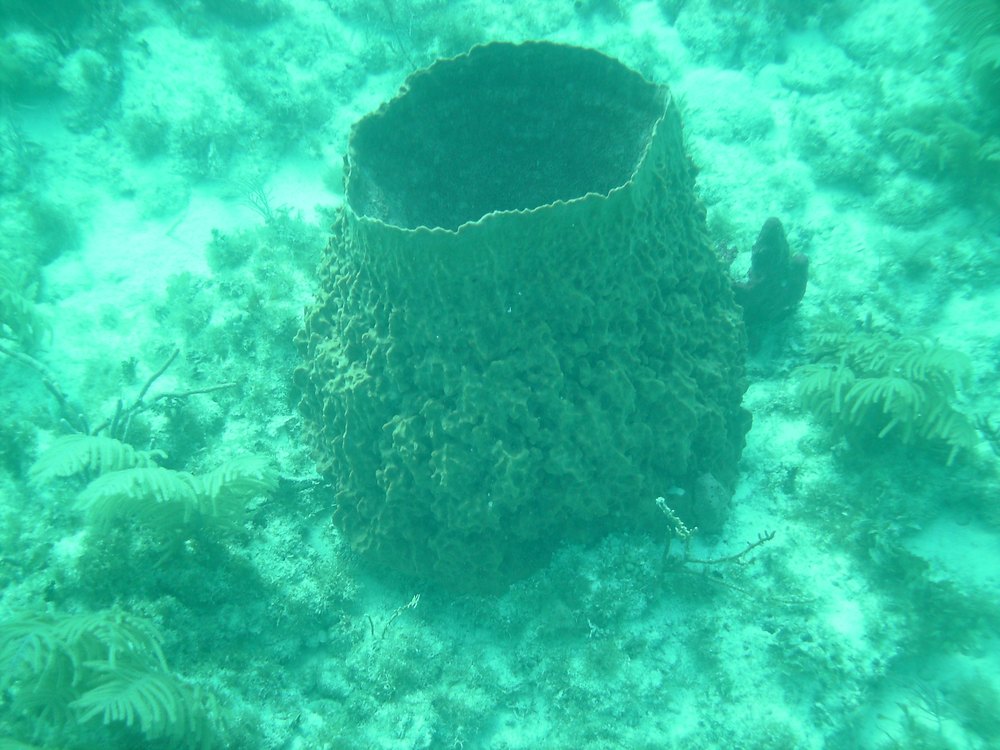
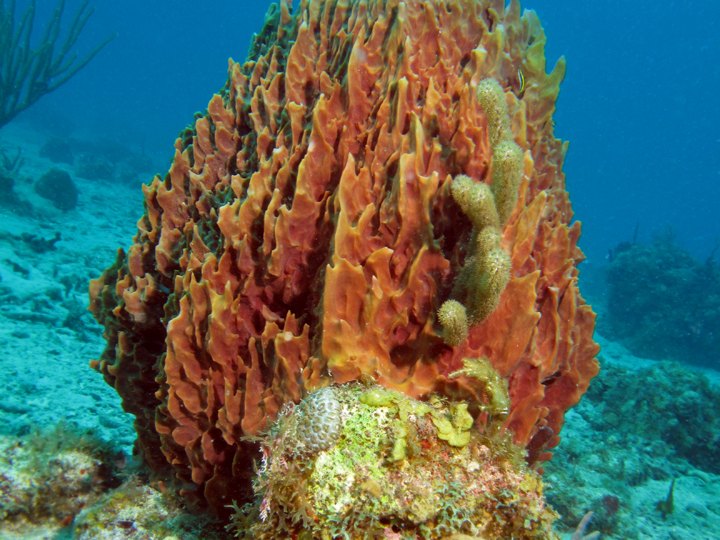
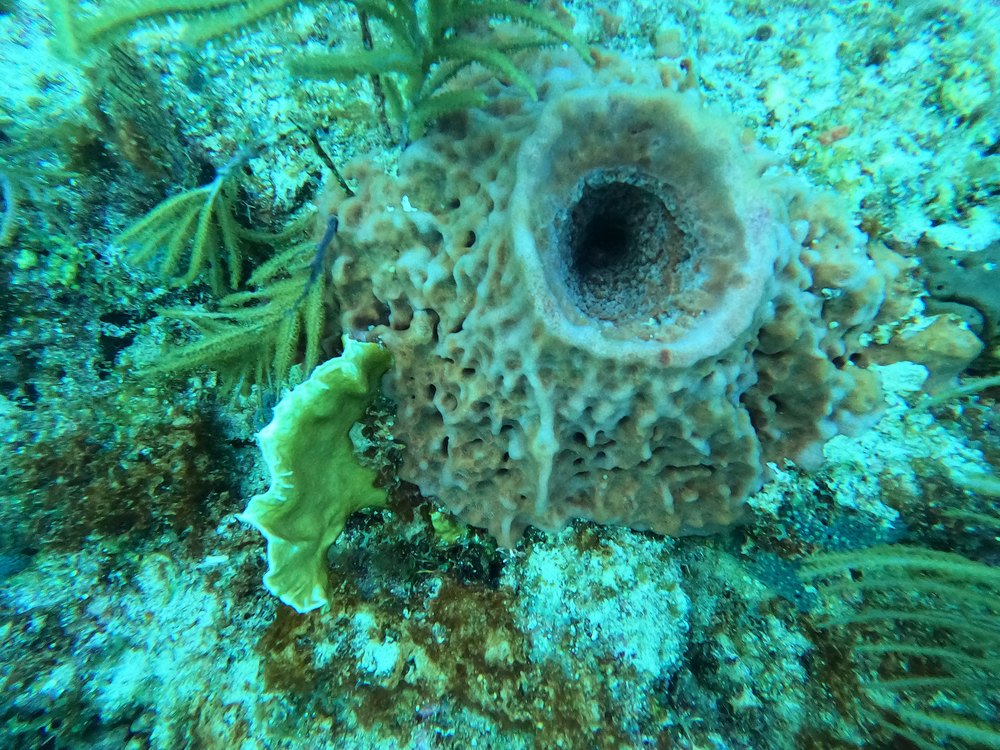
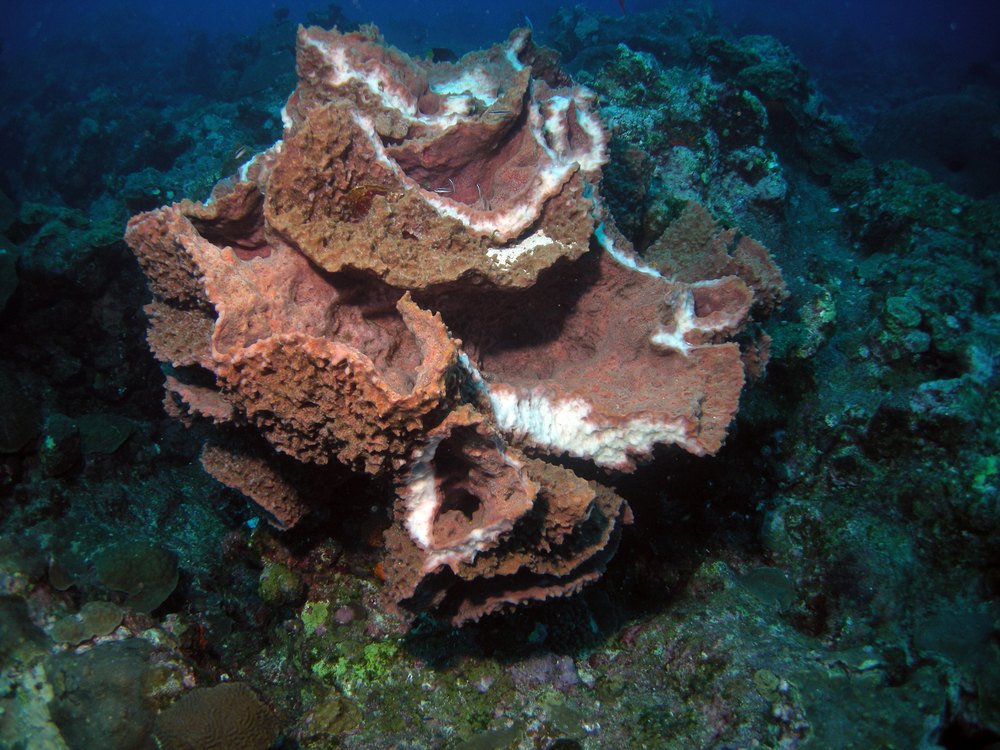
The Giant Barrel Sponge is a single large barrel or tub with a wide opening at the top, called the osculum, which is the pore that water leaves through.[1] The wall around the opening is thick and rigid, and the interior is paler tan than the outside.[1][6] Young sponges are small and conical or volcano-shaped, with the base wider than the top.[1]
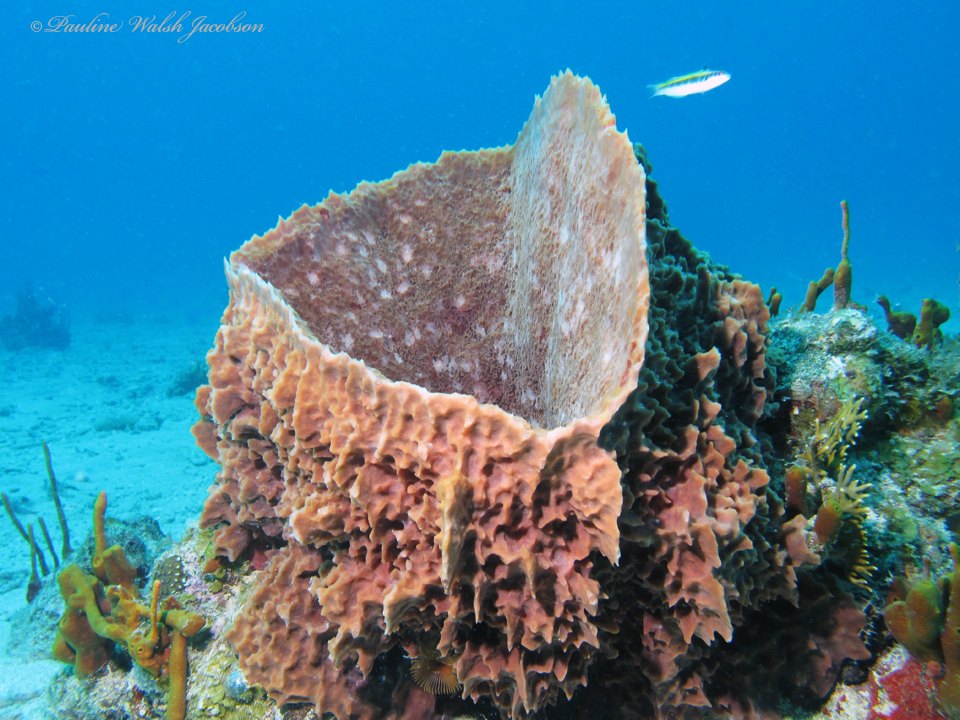
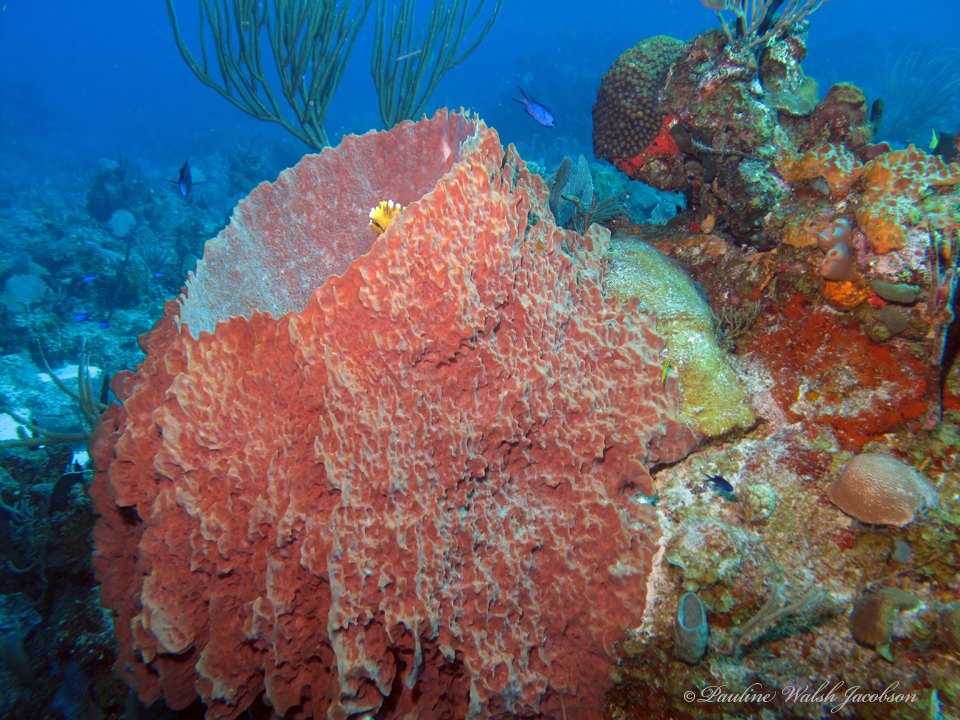
The outer surface is irregular, with jagged vertical ridges. The ridges can be shallow or deep and sometimes look like buttresses, and the spaces between them are smooth.[1][6] Some sponges also carry irregular or conical bumps.[1] The pores that let water in are too small to see with the naked eye.[6] The sponge feels brittle and crumbly, and it can be sliced easily.[1]
The colour on the side that gets light ranges from reddish-brown to purple and grey.[6]
Name
The English name “Giant Barrel Sponge” refers to the barrel or tub shape of a large adult.[1] The World Register of Marine Species also lists the names gigantic barrel sponge and Caribbean barrel sponge.[2]
The Indo-Pacific barrel sponge, Xestospongia testudinaria, is a different species that lives in the Indian and Pacific oceans; it is not the same animal as the sponge on this page.[2] See Taxonomy for the scientific name and its history.
In other languages
| Language | Name | Meaning |
|---|---|---|
| German | Karibischer Vasenschwamm | “Caribbean vase sponge” |
| German | Gigantischer Tonnenschwamm | “gigantic barrel sponge” |
German names come from the World Porifera Database record for the species.[2]
Body
Size
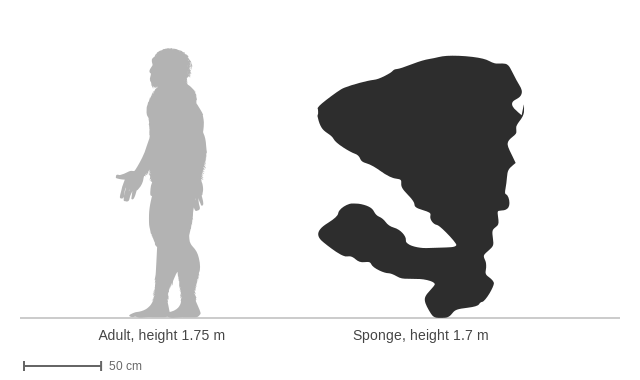
The Giant Barrel Sponge often grows more than 1 m tall and wide.[3] Its single barrel or tub can reach at least about 1.5 m in deeper water, with walls 2 to 15 cm thick.[1] The largest sponge inside the Conch Reef study plots in the Florida Keys, tagged and measured, was 1.23 m high and 0.98 m across.[3]
Two giants measured at 30 m off Plana Cay in the Bahamas in June 2007 were larger. One was 170 cm tall with a base circumference of 305 cm and an osculum 81.5 cm wide on average. The other was 140 cm tall with a circumference of 300 cm and an osculum 96.5 cm wide. Their volumes, corrected for the central cavity, were about 0.66 and 0.63 m³.[3]
On Conch Reef in the Florida Keys there were 0.134 to 0.277 sponges per m² in 2006.[7]
| Height (often over) | over 100 cm |
| Height (largest measured) | 170 cm |
Age
Ages are model estimates, because no one has watched a large sponge grow for centuries. Sponges on two reefs off Key Largo were tagged and photographed from 1997, their volumes were measured on the images, and growth curves fitted to the data were used to turn size into age.[5][3] The curve that gives the ages has no maximum size, which is needed because the largest sponges are bigger than the other curves allow.[3]
By this method the largest tagged Florida sponge was estimated at 127 years, and the two Bahamas giants at 242 and 258 years.[3] The authors add that estimates for very large sponges carry more error, and that the largest sponges on Caribbean reefs might exceed 2,300 years.[5] That figure comes from a photograph of one larger sponge off Curaçao, not from a tagged sponge, and it is an extrapolation well beyond the sizes measured.[3] No sponge of that age has been dated directly.
The largest tagged sponge died within six weeks in July 2005 of sponge orange band, a disease (see Ecology). The Curaçao sponge is thought to have died of the same syndrome.[3]
Structure
The skeleton is rigid and includes spicules, small needle-like pieces that stiffen the body.[6] The central cavity grows faster than the body, so a small sponge shaped like a cone becomes nearly cylindrical as it grows.[3]
A sponge that loses most of its wall can survive as a low ring of remains with several small openings, and later grow a new cylinder.[3] The red-brown colour comes from symbiotic cyanobacteria.[1]
Microbes
The Giant Barrel Sponge is a high-microbial-abundance sponge: its tissue holds dense, varied communities of bacteria and archaea that differ from those in the surrounding sea water.[6][8] These include cyanobacteria, in the outer tissue, and archaea related to Nitrosopumilus, a group that oxidises ammonia.[6]
At the Florida Keys, Lee Stocking Island in the Bahamas and Little Cayman, the sponge was sometimes a source and sometimes a sink of dissolved inorganic nitrogen (nitrogen in forms such as ammonium and nitrate), depending on place. Its symbionts take up ammonium and nitrate, and nitrogen moves from them to the host. Both nitrification (turning ammonia into nitrate, using oxygen) and processes without oxygen seem to occur, so the sponge may affect the nitrogen cycle of Caribbean reefs.[8]
Behavior
Pumping
The Giant Barrel Sponge stays fixed in one place and moves water through its body instead. Water is drawn in through tiny pores in the wall and leaves through the osculum.[9] In 274 sponges measured in the Bahamas and the Florida Keys, the pumping rate averaged 0.06 ± 0.04 litres a second for every litre of sponge tissue, but it was lower in extremely large sponges.[9]
A single sponge pumps steadily over short times. Over longer times its pumping varies, with periods when it stops, and these changes were not synchronised between sponges and did not follow changes in the environment.[9]
Spawning
The sexes are separate.[3] The eggs and sperm are released into the water, where they are swept away from the sponge.[3]
In 32 spawning records over 17 years at three Caribbean sites (Florida, Belize and Haiti), spawning was concentrated from mid-April to late May. All of it took place in the morning, and most of it near the first quarter moon, with a smaller group just before the third quarter moon.[10]
Diet
The Giant Barrel Sponge is a suspension feeder, which means it takes food out of the water that it pumps through its body (see Behavior). Cells lining the canals inside the wall catch particles as small as bacteria.[11]
At Conch Reef, Florida, the sponges preferred cyanobacteria to other very small plankton, and preferred those to detritus and dissolved organic carbon. Even so, their diet was mostly dissolved organic carbon, about 70 percent, and detritus, about 20 percent.[12] Foods that the sponges liked less were taken up more when they were more common in the water.[12]
In a separate test on two undisturbed sponges, dissolved organic carbon made up 96 percent of the carbon removed from the water, enough to cover most of the sponge’s need for energy.[13]
Life cycle
| Stage | Size / time | Notes |
|---|---|---|
| Larva | Released after spawning in April to May | Free-swimming; no size is known[3][10] |
| Young sponge | Smallest tagged about 24 cm³ | Likely larger than the sponge at settlement[3] |
| Growing sponge | About 143 to 17,400 cm³ | The second to fourth size classes[3] |
| Large sponge | Largest tagged 1.23 by 0.98 m, about 127 years | Age is a model estimate[3][5] |
Larvae and young sponges
The larvae are likely to feed on their own yolk and are chemically defended against fish.[3] How long they drift is not known, but gene studies across the Caribbean suggest they can travel far.[3] The time from settlement to a sponge large enough to see is not known.[3]
New sponges arrive in pulses. At Conch Reef, 191 recruits (newly seen young sponges) were counted from the fall of 2000 to the fall of 2006, and at Pickles Reef 70, and these pulses drove the rise in the population.[7] The smallest tagged sponges were about 24 cm³.[3]
Growth
In 104 tagged sponges followed for 4.5 years at Conch Reef and Pickles Reef (Florida Keys), height increased by 1.85 cm a year on average. The specific growth rate (growth as a share of the sponge’s own size) averaged 0.52 a year, but sponges grew from 2 to 404 percent a year.[3] Growth was faster in summer, and small sponges grew faster for their size than large ones. Some sponges shrank over short periods. Growth did not differ significantly between 15, 20 and 30 m.[3]
The Florida Keys growth study grouped sponges into five size classes by volume. The smallest class goes up to 143 cm³, the second to about 1,077 cm³, the third to about 5,666 cm³, the fourth to about 17,400 cm³, and the fifth is larger still.[3] No reproduction by fragments has been seen, and sponges knocked loose do not reattach.[3]
Ecology
Predators
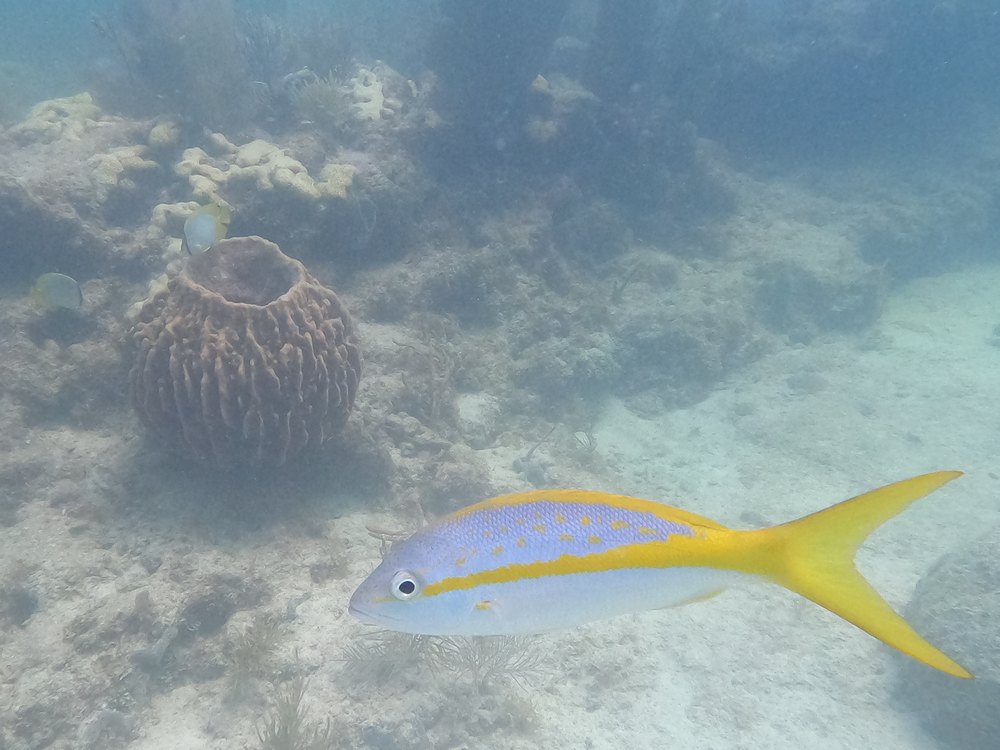
The sponge is classed as “variably defended”: its tissues carry chemical defences that deter fish in some individuals but not in others.[14] In a survey of 109 sponge species at 69 Caribbean sites it was the most common variably defended sponge and one of the ten most abundant sponges overall.[14] The same paper notes that parrotfish graze some individuals in a population more than others.[14] A Porifera Tree of Life guide lists wrasses, the yellowtail snapper (Ocyurus chrysurus), parrotfish and sergeant majors (Abudefduf) among the fish that graze on it, and says fish eat bleached tissue.[1]
Disease
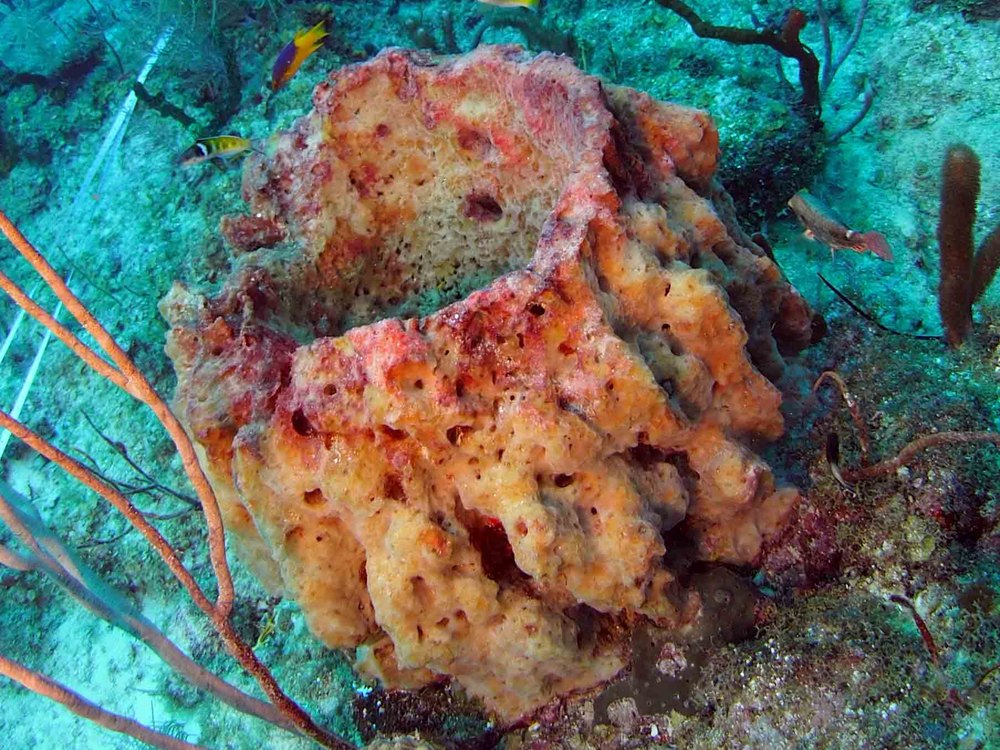
Sponge orange band is a fatal condition in which a distinct orange band separates healthy tissue from pale, dying tissue; the sponge then loses its pigment and a large part of its tissue.[1] It is not the same as cyclic bleaching, which affects the symbiotic cyanobacteria in the sponge and which sponges survive; in the Florida Keys it typically occurs in the autumn, with recovery by spring.[15][1] The largest sponge tagged in the Florida Keys died of sponge orange band (see Body).
In the La Parguera Natural Reserve in Puerto Rico, 764 sponges were inspected: 590 showed cyclic spotted bleaching, 25 a tissue-wasting disease, 7 sponge orange band, and 142 looked healthy.[16] At the Mona Island Marine Reserve, a video survey of 514 colonies found bleaching or tissue wasting in 40 (7.78 percent) and a tissue-hardening condition, newly reported in that study, in 14 (2.72 percent).[16] On the Saba Bank in the Dutch Caribbean, surveys in October 2013 at 11 sites, 15 to 30 m deep, found spotty bleaching in about 75 percent of the sponges in the transect photographs, and sponge orange band on three sponges, all at one site, two of them dead.[17]
Role on the reef
At Conch Reef in the Florida Keys, a model based on demographic data for 2000 to 2012 and measurements of carbon filtration gave an average carbon flux of 1,575 mg of carbon per day per m² of reef, which the authors say exceeds the rate of any other single species; the largest sponges contribute most, and the flux was projected to keep rising.[18]
The sponge loop is an idea that sponges turn dissolved carbon into particles that other reef animals eat. A study on the fore reef at Carrie Bow Cay, Belize, used a method that traces where carbon comes from and found that sponges, including this species, contributed little to reef detritus; the authors say the loop may not be essential on healthy Caribbean reefs.[19]
Habitat and range
Where it lives
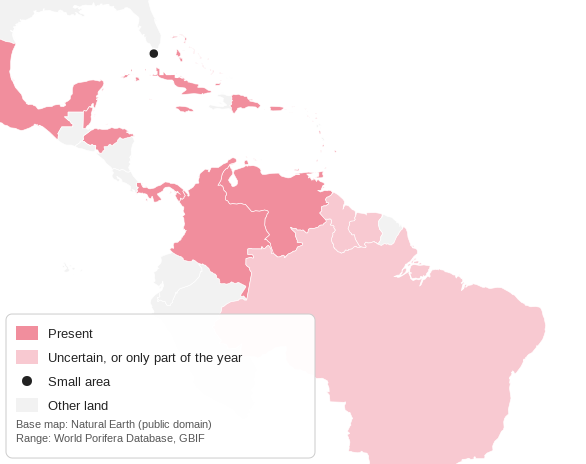
The Giant Barrel Sponge lives in the tropical western Atlantic. The World Porifera Database lists the Floridian, Bahamian, Greater Antilles and Caribbean areas, the southern Gulf of Mexico and the Mexican Caribbean coast, and areas further south: the Guianas, Suriname, Guyana, the Amazon region and Brazil as far as Fernando de Noronha and eastern Brazil.[2] Whether the Brazilian and Guianan records are this species is not settled, so they are shown as uncertain.[2][20]
GBIF holds 6,991 records. Most come from the United States (3,149) and Puerto Rico (1,059), followed by Guadeloupe (473), Martinique (315), the Bahamas (203), Colombia (197), Mexico (197), the Cayman Islands (167), Cuba (155) and Honduras (138).[20] A few single records from the Indo-Pacific probably belong to the Indo-Pacific barrel sponge.[20]
Habitat
The sponge is a reef animal. A Porifera Tree of Life guide gives its depth as 4 m to at least 100 m.[1] The deeper records, below about 30 m, put it in the mesophotic zone, the dim reef zone below the bright shallows.[1] The guide calls it common on reefs.[1]
Density depends on place. On the Saba Bank, surveys at 15 to 30 m counted 0.09 sponges per m² (95 percent confidence interval 0.02 to 0.32).[17] For Conch Reef, see Body.


Evolution
Demosponges, the group that holds the Giant Barrel Sponge, have an old origin. A 2018 dating study supports an origin in the Neoproterozoic, the era that ended about 539 million years ago.[21] For the branch that includes the order Haplosclerida (Heteroscleromorpha), that study estimates the split at 594 to 875 million years ago, depending on the calibration used (95 percent intervals of 515 to 730 and 606 to 1,200 million years).[21] Earlier estimates of the age of the whole demosponge group ranged from 657 to 872 million years ago.[21]
Forms and variants
No subspecies of the Giant Barrel Sponge are recognised in WoRMS, GBIF or the Catalogue of Life.[2][20][22] The variation found by researchers is in genes, not in looks,. None of the lineages has a name.
A 2013 study of barrel sponges in the Indo-Pacific found reproductively isolated lineages that look alike, and found that the Caribbean Xestospongia muta and the Indo-Pacific Xestospongia testudinaria have almost identical CO1 sequences (99 to 100 percent), a standard mitochondrial gene marker.[23] A 2017 study of 17 coral reef systems found that nuclear and mitochondrial DNA agree on several reproductively isolated lineages, with several in each ocean basin, and that Atlantic and Indo-Pacific barrel sponges do not form two separate natural groups.[24]
A 2025 preprint, a paper not yet peer reviewed, reports two highly divergent lineages in Florida that hybridise, and concludes that they are probably not separate species.[25]
A 2025 genome paper, whose specimen came from Boynton Beach, Florida, states that the Atlantic barrel sponges are called X. muta but that their monophyly (descent from one common ancestor, with no other group inside) has not been shown.[6] The sponge sequenced belongs to a mitochondrial haplogroup (a branch of the mitochondrial DNA family tree) known only from the tropical Atlantic.[6] The name X. muta is still used for all Atlantic barrel sponges.[2][20][22] See Taxonomy for how the databases treat the name.
Conservation
Status
The IUCN Red List has not evaluated the Giant Barrel Sponge; SeaLifeBase and GBIF both show “Not evaluated”.[4][20] SeaLifeBase also gives the CITES field as not evaluated.[4]
Counts of sponges on Conch Reef and Pickles Reef at Key Largo, in the Florida Keys, went up between 2000 and 2006.[7]
Threats
Disease[16][7]Disease. Disease is the main threat reported: sponge orange band and tissue-wasting conditions, and a disease that kills large sponges could slow the recovery seen in Florida (see Ecology for the surveys).[16][7]

History and culture
First description
Oscar Schmidt described the species in 1870, in his book on the sponge fauna of the Atlantic region (see Taxonomy for the names).[2]
Research
The Pawlik laboratory at the University of North Carolina Wilmington has monitored the sponge in the Florida Keys since 1997. Its record holds more than 5,000 digital images of over 600 sponges in 12 permanent circular plots, 16 m across, on Conch Reef and Pickles Reef off Key Largo.[11]
The laboratory’s 2008 paper in Marine Biology used growth measurements of tagged sponges and a growth model to turn size into age; the results are given under Body.[5][3]
Chemists have also studied the sponge. Seven new compounds containing bromine, the mutafurans A to G, were isolated from a Bahamian sponge and their structures worked out in 2007.[26]
Taxonomy
| Rank | Name |
|---|---|
| Kingdom | Animalia |
| Phylum | Porifera (sponges)[2] |
| Class | Demospongiae |
| Order | Haplosclerida |
| Suborder | Petrosina[30] |
| Family | Petrosiidae[2][22] |
| Genus | Xestospongia[2][22] |
| Species | Xestospongia muta (Schmidt, 1870)[2][20][22] |
Synonyms (4)
| Name |
|---|
| Petrosia muta (Schmidt, 1870) |
| Schmidtia muta (Schmidt, 1870) |
| Prianos grayi (Hechtel, 1983) |
| Xestospongia grayi (Hechtel, 1983) |
From the GBIF backbone.[29]
Higher classification
The Giant Barrel Sponge is in the family Petrosiidae, in the order Haplosclerida of the class Demospongiae. The World Porifera Database lists 35 accepted species in Xestospongia.[2] The best-known relative is the Indo-Pacific barrel sponge, Xestospongia testudinaria (Lamarck, 1815), which is a separate accepted species in the database.[2]
One species or a species complex
No database splits X. muta. The genetic evidence that it may hide more than one species is told under Forms and variants.
Sources
- Porifera Tree of Life, Sponge Guide to Florida, Xestospongia muta (species page)
- World Porifera Database / WoRMS, Xestospongia muta (Schmidt, 1870) (AphiaID 166894)
- McMurray, S. E. 2009. Demography, growth and age of the giant barrel sponge Xestospongia muta on Florida reefs (doctoral thesis, University of North Carolina Wilmington; the growth and age chapter is the basis of McMurray et al. 2008)
- SeaLifeBase, Xestospongia muta
- McMurray, S. E., Blum, J. E. and Pawlik, J. R. 2008. Redwood of the reef: growth and age of the giant barrel sponge Xestospongia muta in the Florida Keys. Marine Biology 155: 159–171
- Lopez, J. V. et al. 2025. The chromosomal genome sequence of the giant barrel sponge, Xestospongia muta Schmidt 1870, and its associated microbial metagenome sequences. Wellcome Open Research 10: 336
- McMurray, S. E., Henkel, T. P. and Pawlik, J. R. 2010. Demographics of increasing populations of the giant barrel sponge Xestospongia muta in the Florida Keys. Ecology 91: 560–570
- Fiore, C. L., Baker, D. M. and Lesser, M. P. 2013. Nitrogen biogeochemistry in the Caribbean sponge, Xestospongia muta: a source or sink of dissolved inorganic nitrogen? PLoS ONE 8: e72961
- McMurray, S. E., Pawlik, J. R. and Finelli, C. M. 2014. Trait-mediated ecosystem impacts: how morphology and size affect pumping rates of the Caribbean giant barrel sponge. Aquatic Biology 23: 1–13
- Neely, K. L. and Butler, M. J. 2020. Seasonal, lunar, and diel patterns in spawning by the giant barrel sponge, Xestospongia muta. Coral Reefs 39: 1511–1515
- Pawlik Laboratory, University of North Carolina Wilmington, Xestospongia muta (research page)
- McMurray, S. E., Johnson, Z. I., Hunt, D. E., Pawlik, J. R. and Finelli, C. M. 2016. Selective feeding by the giant barrel sponge enhances foraging efficiency. Limnology and Oceanography 61: 1271–1286
- Hoer, D. R. et al. 2018. Consumption of dissolved organic carbon by Caribbean reef sponges. Limnology and Oceanography 63: 337–351
- Loh, T.-L. and Pawlik, J. R. 2014. Chemical defenses and resource trade-offs structure sponge communities on Caribbean coral reefs. Proceedings of the National Academy of Sciences 111: 4151–4156
- McMurray, S. E., Blum, J. E., Leichter, J. J. and Pawlik, J. R. 2011. Bleaching of the giant barrel sponge Xestospongia muta in the Florida Keys. Limnology and Oceanography 56: 2243–2250
- García-Hernández, J. E. et al. 2021. Detrimental conditions affecting Xestospongia muta across shallow and mesophotic coral reefs off the southwest coast of Puerto Rico. Diseases of Aquatic Organisms 147: 47–61
- de Bakker, D. M. et al. 2016. Population genetic structure, abundance, and health status of two dominant benthic species in the Saba Bank National Park, Caribbean Netherlands: Montastraea cavernosa and Xestospongia muta. PLOS ONE 11: e0155969
- McMurray, S. E., Pawlik, J. R. and Finelli, C. M. 2017. Demography alters carbon flux for a dominant benthic suspension feeder, the giant barrel sponge, on Conch Reef, Florida Keys. Functional Ecology 31: 2188–2198
- Olinger, L. K. et al. 2024. Looking for the sponge loop: analyses of detritus on a Caribbean forereef using stable isotope and eDNA metabarcoding techniques. PeerJ 12: e16970
- GBIF Secretariat, Xestospongia muta (Schmidt, 1870), GBIF Backbone Taxonomy (species 2246280) and occurrence records (queried 14 November 2026)
- Schuster, A. et al. 2018. Divergence times in demosponges (Porifera): first insights from new mitogenomes and the inclusion of fossils in a birth-death clock model. BMC Evolutionary Biology 18: 114
- Catalogue of Life, Xestospongia muta (Schmidt, 1870) (accepted name; ChecklistBank, dataset 3LR)
- Swierts, T. et al. 2013. Lock, stock and two different barrels: comparing the genetic composition of morphotypes of the Indo-Pacific sponge Xestospongia testudinaria. PLoS ONE 8: e74396
- Swierts, T. et al. 2017. Globally intertwined evolutionary history of giant barrel sponges. Coral Reefs 36: 933–945
- Eckert, R. J., Sturm, A., Carreiro, A. and Voss, J. D. 2025. Population genetics of the giant barrel sponge, Xestospongia muta, reveal distinct, hybridizing lineages across the Florida Reef Tract (preprint, Research Square; not peer reviewed)
- Morinaka, B. I., Skepper, C. K. and Molinski, T. F. 2007. Ene-yne tetrahydrofurans from the sponge Xestospongia muta. Exploiting a weak CD effect for assignment of configuration. Organic Letters 9: 1975–1978
- Redmond, N. E. et al. 2011. Phylogenetic relationships of the marine Haplosclerida (Phylum Porifera) employing ribosomal (28S rRNA) and mitochondrial (cox1, nad1) gene sequence data. PLoS ONE 6: e24344
- van der Windt, N. et al. 2025. Host evolutionary history drives prokaryotic diversity in the globally distributed sponge family Petrosiidae. Molecular Ecology 34: e70186
- GBIF backbone, Xestospongia muta, synonyms
- ITIS, Xestospongia muta, classification