The axolotl (Ambystoma mexicanum) is a salamander that keeps its larval body, with feathery external gills, and lives its whole life in water.[1][2] It is native to Mexico, and the last place where it is confirmed in the wild is the canals of Lake Xochimilco in Mexico City. It is critically endangered.[3][4] It is bred in laboratories and kept as a pet around the world, and it can regrow limbs, parts of its heart and its spinal cord.[5][6][7][8]
Quick facts
Description
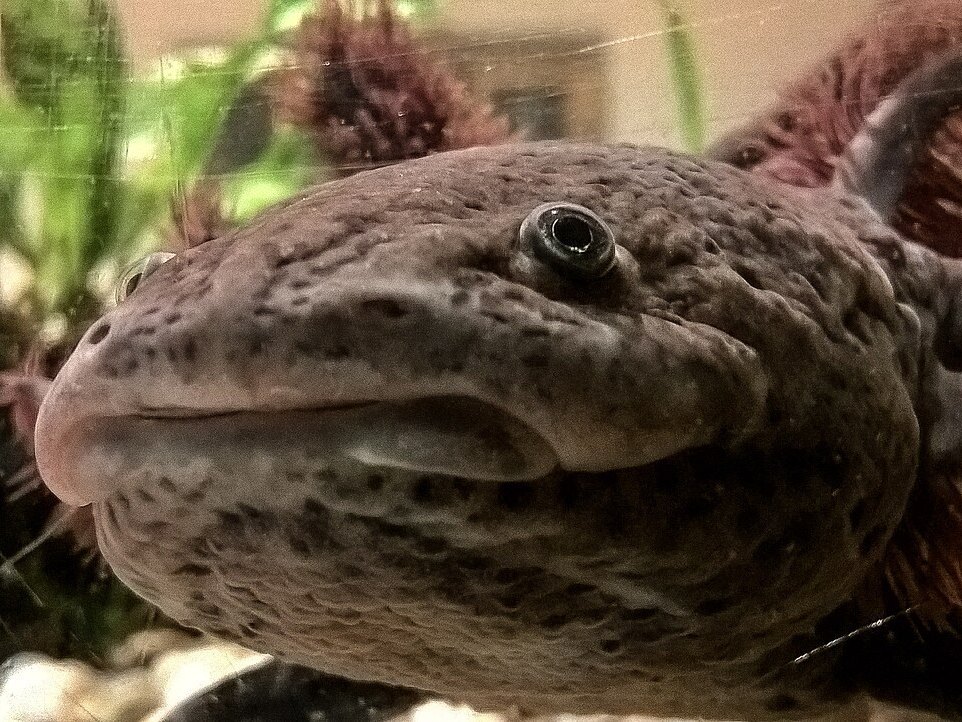
The axolotl is a large aquatic salamander. It has feathery external gills on each side of its wide head and a finned tail for swimming.[2] It keeps this larval body for life.[1] The wild colour is olive-green, from a mix of black, yellow and shiny pigment cells.[10] Many colour morphs exist in captivity, such as white and albino animals.[11]
The teeth are replaced all the time. Some are fixed to the jaw bones, and others are loose and easily lost.[12] Adult males can be told from females by their straighter bodies and the large glands around the vent, while mature females are round and plump with eggs. Axolotls cannot be sexed until they are mature, at about one year.[13]
Name
“Axolotl” is a Nahuatl word, built from atl, “water”, and xōlōtl.[14][15] What the whole word meant is not settled, because dictionaries give different translations.[14][16] The Spanish form is ajolote.[17]
The scientific name is Ambystoma mexicanum (Shaw & Nodder, 1798). It was first called Gyrinus mexicanus, and its type locality is restricted to Xochimilco.[18][19][20] Older generic names such as Siredon and Axolotl are invalid synonyms.[18] Early writers called the animal a lake fish, pez, but it is an amphibian.[21][18]
In other languages
| Language | Name | Notes |
|---|---|---|
| Nahuatl | āxōlōtl | The source of the word |
| Spanish | ajolote | From the same Nahuatl word |
| French | axolotl | The same word |
| German | Axolotl | The same word |
| Italian | axolotl | The same word |
| Portuguese | axolote | The same word |
Names are from the dictionaries listed in the sources.[14][17][22][23][16] Names in other languages are not listed because no reliable dictionary source was found.
Body
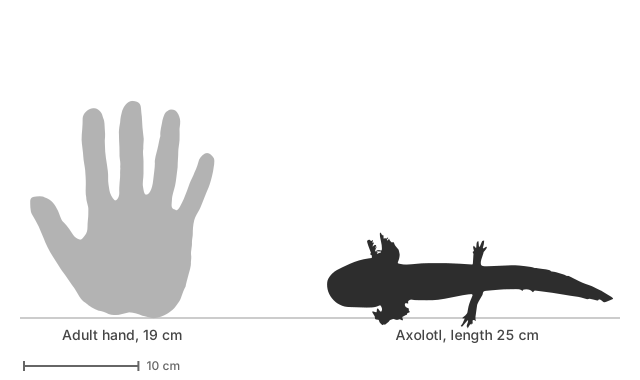
All the size figures here are from captive animals. A captive axolotl is typically 20–30 cm long and weighs about 60–110 g, and a few grow longer than 30 cm.[2]
Breathing
An axolotl breathes through its gills, and it flicks them now and then to move water over them. It also has lungs, and it sometimes swims to the surface to gulp air.[13]
Senses
The axolotl has a lateral line, a row of sense organs that feel movement in the water, and its head also carries organs that detect weak electric fields.[24][25] It also finds prey by sight and by chemical cues.[2]
Genome
The axolotl genome is 32 billion base pairs long, packed into 14 pairs of chromosomes.[9][26] It was published in 2018. The genome of an average laboratory axolotl is not purely axolotl: about 5.8% of it comes from the tiger salamander.[11]
Regrowing body parts
An axolotl can regrow a lost limb. After the limb is cut off, a mass of cells called a blastema forms and rebuilds it. The blastema is a mix of cells that each remember what tissue they came from, not a heap of cells that can become anything.[6] Adult connective-tissue cells go back to a state like that of an embryonic limb bud.[27]
The tail and spinal cord regrow too, and cells from the spinal cord can turn into muscle and cartilage.[8][28] The heart can repair itself after part of the ventricle is removed: muscle cells next to the wound divide.[7] After a brain injury, some kinds of neurons come back, though the new cells do not rebuild the long nerve tracts.[29] Lost teeth are replaced.[12] Young larvae often bite each other’s toes, and the toes regrow.[13]
Limits of regrowth
Regrowing is not unlimited. The lens of the eye regrows only for about two weeks after hatching.[30] The brain does not recover its long-distance connections.[29] Metamorphosis reduces the power to regrow limbs.[31] Nearly all of this work was done on laboratory animals, not wild ones.
Behavior
Daily life
Axolotls live alone and may be active at any time of day.[2] Captive-bred axolotls that were released into a canal in Xochimilco were most active in the evening, peaking at around 9 pm. The researchers think they hide in water plants by day. The home range was about 382 m² in the canal and 2,747 m² in a larger pond.[32] Wild-born animals have not been tracked.
Fighting and cannibalism
In captivity, larvae are aggressive and cannibalistic towards each other. Bigger ones try to eat smaller ones, and young larvae snap at anything that moves, so they often lose toes. Adults eat hatchlings, though they usually leave eggs alone while they are still in their jelly.[13] No one has recorded cannibalism in the wild.
Diet
The axolotl is a carnivore. In its native habitat it ate snails, worms, crustaceans, small invertebrates such as water fleas, and small fish and amphibians.[13] It will eat nearly anything it can catch, including others of its own kind.[2] Larvae depend on tiny animals called zooplankton in their first weeks, and they eat more of them as they grow.[33]
It catches prey by suction: it opens its mouth wide and draws the prey in with the rush of water.[34][35] Comb-like gill rakers keep the water from escaping through the gill slits, so the water flows one way, in at the mouth.[34]
Life cycle
For most axolotls the chain stops at the adult. Becoming a land-living form is possible, but it is rare.
| Stage | Time | Notes |
|---|---|---|
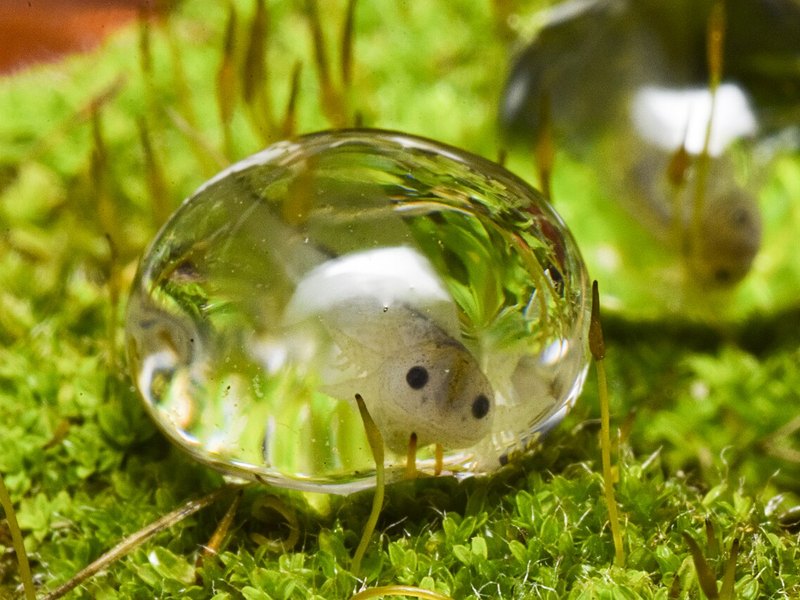
| Egg | About 2–3 weeks | About 350 hours (14.6 days) at 16 °C. Faster when warm and slower when cool. The embryo is about 2 mm across, inside three layers of jelly[36][13] |
| Larva and juvenile | Hatching to maturity | Gills and tail fin are kept. About 2.5 cm long at 1.5–2 months, in captivity[13] |
| Adult | Mature at about 1 year | Captive animals mature at 9–18 months. The adult still has its gills and fins[13][37][38] |
Neoteny
Most salamanders start life as water-breathing larvae and then change into land-living adults. The axolotl does not. It is an obligate neotene: it becomes sexually mature and completes its whole life cycle while keeping its larval form.[1] The change to a land form is called metamorphosis, and in the axolotl it can be triggered by thyroid hormone.[1]
Why it keeps its larval form
The axolotl’s thyroid is not active enough. An early burst of the hormone thyroxine happens in the larva but does not lead to a change, and later the thyroid axis is quiet.[1][39] If the pituitary hormone TSH is injected, the animal does change, which shows that the thyroid and the tissues below the pituitary still work. What is impaired is the release of TSH.[39] In laboratory crosses with tiger salamanders, one gene region has a major effect on timing. But in axolotls caught directly from Xochimilco, that gene was not linked to staying larval, so more than one mutation may be involved.[40]
Forced metamorphosis
In captivity, metamorphosis can be forced with thyroid hormone. In one study, treated animals lost weight, their fins faded and their gills shrank within 2–3 weeks, and after about two months all of them had metamorphosed.[31] In a second study that used hormone in the water, the first signs came about 26 days after the treatment began, and the researchers saw a 30% increase in deaths once the animals reached that state.[41] Metamorphosed animals also regrow limbs less well.[31] Axolotls rarely, if ever, metamorphose in the wild.[2] In the 1860s, when axolotls were first bred in Paris, a few of the offspring changed into land-living salamanders by themselves.[42]
Courtship and eggs
The male nudges the female with his snout and begins a short dance. He leaves packets of sperm, called spermatophores, on the bottom, and the female picks them up with her vent and stores the sperm inside her.[13] She begins laying 12 to 20 hours after mating and sheds her eggs over one to two days, one at a time, never in a single clump.[13] A spawning in captivity often has hundreds of eggs: the median in one colony was 350 eggs for young females and 239 for old ones.[38] Sources disagree on when wild axolotls breed, giving February or March to June.[13][2]
Egg numbers, egg quality and mating success peak after maturity and slowly decline up to the age of 4 years, but axolotls near 7 years old still bred.[38] Metamorphosis is not part of the normal life cycle; see Neoteny.
Lifespan
Captive axolotls live over 20 years, and the oldest on record in captivity lived about 21 years. The wild lifespan has not been measured.[43]
Ecology
Prey of larvae and adults
In laboratory tests with Xochimilco water, larvae ate four kinds of water flea (cladocerans) and an ostracod, a tiny crustacean in a two-part shell, and their intake rose by 57% between the first and the eighth week.[33] These were feeding experiments, not a study of what wild larvae eat. Adults are thought to eat crayfish, and the native crayfish Cambarellus montezumae lives at Xochimilco.[44][32]
Competitors and predators
A study of carbon and nitrogen in body tissue found that the axolotl, the introduced common carp and the Nile tilapia use much the same food. The axolotl had a more varied diet and fed higher in the food web than the two fish.[45] The population model counted predation by carp and tilapia as a threat to eggs and larvae.[46] Birds also take adults: great egrets were seen attacking released axolotls twice.[32]
Other animals of the lake
A search for fish and amphibian DNA found about 60% of the species recorded in the past. The fish community is mostly introduced species. In the refuges, native fish such as the Chapultepec splitfin (Girardinichthys viviparus) and a silverside have returned.[47][48]
Habitat and range
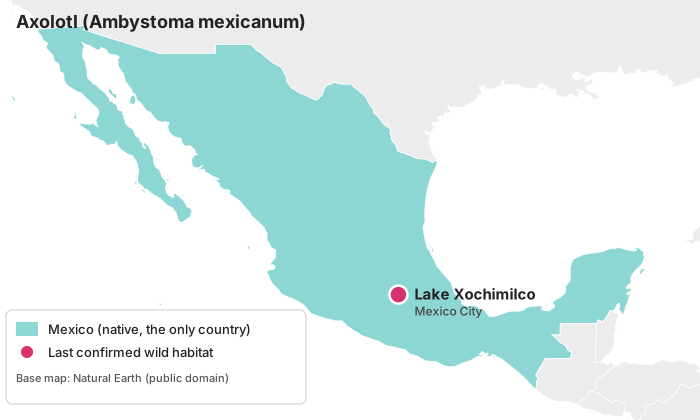
The axolotl lives only in Mexico, and the last place where it is confirmed in the wild is Lake Xochimilco, in the south of Mexico City.[49][3] The lake is now a network of canals and lagoons, at about 2,240 m above sea level. The canals are about 60 cm deep, and some lagoons are 3–6 m deep.[44] The water is fresh: in a 2022 sampling its salinity was about 0.5 practical salinity units.[50] The water is cool: loggers in a restored canal recorded a mean of 16.5 °C, from 12 to 37.7 °C over the year.[32] Laboratories keep axolotls at 15–18 °C and say they should never be kept above about 22 °C.[13]
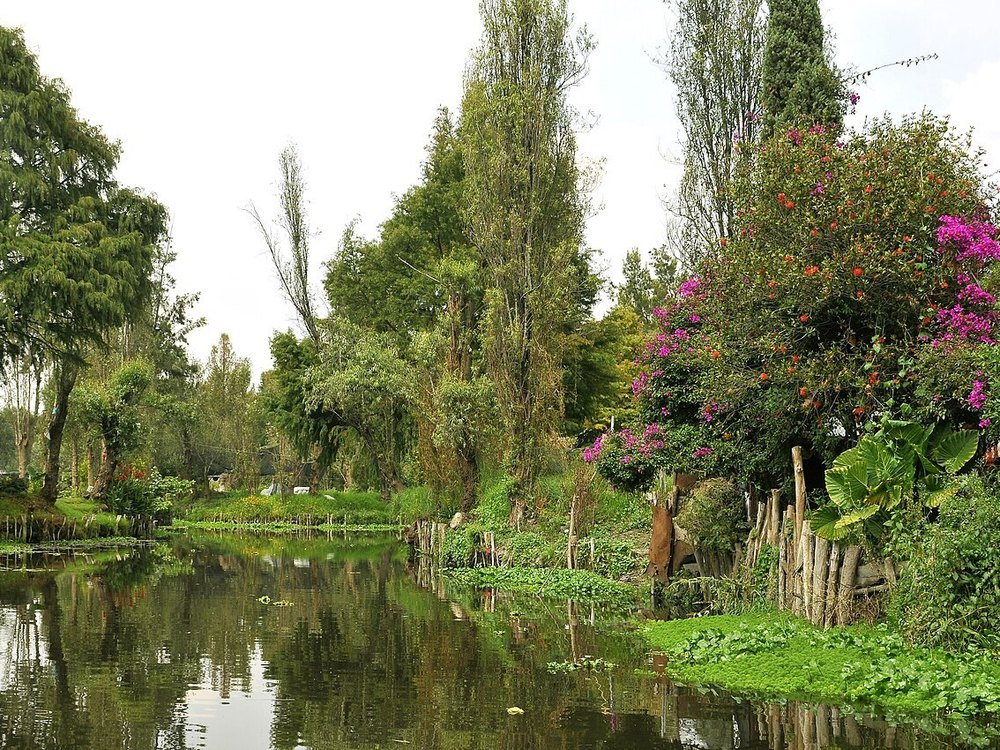
Where it used to live
Axolotls also lived in Lake Chalco, and probably in lakes Texcoco and Zumpango, which were joined to Xochimilco in the Valley of Mexico.[18] The old lakes have mostly gone. What remains is 2.83% of the former lake area, and the lakes are fed mainly by treated waste water.[50] Xochimilco’s water level is also held up with partly treated waste water.[51] No introduced axolotl population outside Mexico is documented.[49]
The water and the city
The whole habitat lies inside Mexico City. In 2004, Xochimilco was listed as a wetland of international importance under the Ramsar Convention, covering 2,657 ha. The canals and lagoons were reported to have poor water quality, with heavy metals, pesticides and waste water from the city.[44] Xochimilco’s lake water was found to be heavily polluted and rich in nutrients.[51]
Evolution
The axolotl is a mole salamander, in the genus Ambystoma, which has 26 species.[18] Its closest relatives are other Mexican species of the tiger salamander group, but which one is its sister is not settled. Different studies and trees pair it with A. andersoni and A. ordinarium, or with A. velasci and A. taylori.[52][53] The eastern tiger salamander is a more distant relative, and estimates of when it split from the axolotl range from 1.0 to 16.5 million years ago, with a median of 8.2.[54] The most recent Mexican species are young: one analysis puts their splits within the last million years.[53]
Keeping the larval form into adulthood (neoteny) has evolved more than once in this group. In the tiger salamander complex, groups often contain both neotenic and metamorphosing species, and geography seems to have mattered more than neoteny in splitting lineages.[55] In one study, the northwestern salamander and the mole salamander are the first branch of the genus.[56]
The oldest Ambystoma fossils are about 37–34 million years old.[57] In 2026, a fossil axolotl species, Ambystoma quetzalcoatli, was described from the Pliocene of Hidalgo, Mexico, about 4.2–4.6 million years old.[53] Salamanders as a group are older. Estimates for the age of living salamanders run from about 148 to 183 million years, in the Jurassic.[58][59]
Forms and variants
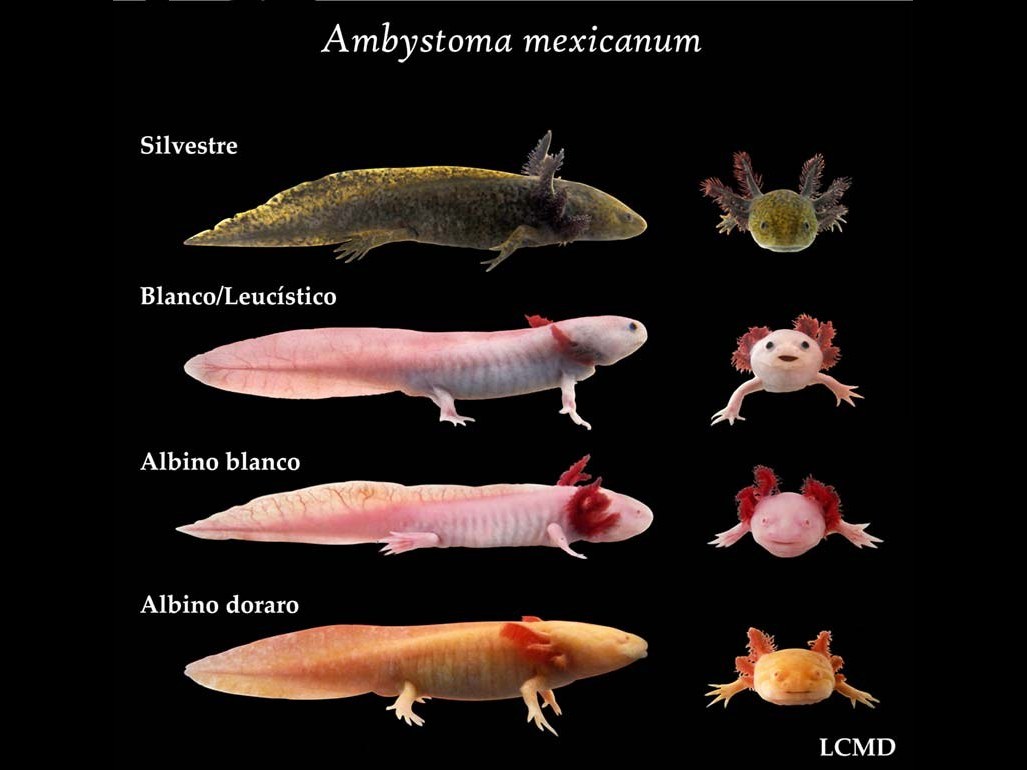
The axolotl has no subspecies.[18][19][20] It does come in many colours in captivity, which breeders call morphs. Only a few of them are single-gene mutations that scientists have traced. There may be more than this list shows.
Colour morphs
| Morph | Look | Gene | Notes |
|---|---|---|---|
| Wild type | Olive-green with black mottling | – | The natural colour[10] |
| Leucistic | White or pale, with dark eyes | edn3 | Recessive. A white animal was among the founders collected in 1863[11][10] |
| Albino | Pale pink-white, with red gills | tyr | Recessive. It came into the laboratory stock from a tiger salamander in 1962, not from axolotls[11] |
| Melanoid | Dark, with no shiny pigment cells | Ltk | Recessive. The evidence points strongly to this gene[10] |
| Copper | Copper-coloured | Tyrp1 | Recessive. Known only from the pet trade[60] |
| Axanthic | Grey to blackish, with no yellow pigment | Not identified | Recessive, from a laboratory strain. In one old study the axanthic animals all had a virus infection and the adults survived poorly[60][61] |
| GFP | Glows green under blue light | A transgene | Not a mutation: a gene for a green fluorescent protein was added in the laboratory[62] |
Breeders also sell many named colours, such as golden albino, piebald and mosaic. No scientific paper ties these to a single gene of their own, and many are combinations of the genes above. Only the wild colour is certain to occur in the wild. Whether the white and melanoid forms still occur in Xochimilco is not known.[10]
Not purely wild
Every animal in the main laboratory stock descends from a 1962 cross with an albino tiger salamander, and the average animal carries about 5.8% tiger salamander DNA. The authors of that study call the laboratory axolotl a distinct hybrid strain, different from the wild axolotl of Xochimilco.[11] Most laboratory and pet axolotls come from this stock.[11]
Conservation
The axolotl is Critically Endangered on the IUCN Red List. The assessment is dated October 2019 and was published in the 2020 Red List.[4] It is listed in Appendix II of CITES, which controls trade, and has been since 1 July 1975.[49] In Mexico it is in the highest risk category of NOM-059-SEMARNAT-2010, “en peligro de extinción”.[63]
How many are left
| Year | Density in Xochimilco |
|---|---|
| 1998 | About 6,000 per km²[64] |
| 2008 | About 100 per km²[64] |
| 2013–14 | About 36 per km² (a census by UNAM)[65][64] |
| 2024–25 | No density estimate. Nets caught none, and axolotl DNA was found in the water at all 10 refuge sites tested and at 1 of 43 other sites[65][48] |
These counts are by different teams, with different methods, so they are not a precise trend. No reliable figure for the total number of wild axolotls exists. A study that searched for DNA across the lake found no trace of axolotls at wild sites and detected them at only one refuge.[47]
Threats
The main threats are the growth of Mexico City, polluted water, and introduced fish. Between 2002 and 2021, urban areas in the axolotl habitat grew by 87 ha and greenhouses by 76 ha, and only 114 of 228 km of canals are suitable for restoration.[66] The carp and tilapia that were brought in decades ago now dominate the lake in numbers and weight, while the axolotl has dropped a great deal.[45][47] A model of the population found that eggs and larvae are the most sensitive, and that a small drop in their survival could push the chance of extinction to 100% within 20 years.[46] In lake water from Xochimilco, larvae ate fewer zooplankton than in clean water.[33] Illegal collecting is also a threat.[3] Great egrets have been seen killing adult axolotls.[32]
Refuges and other action
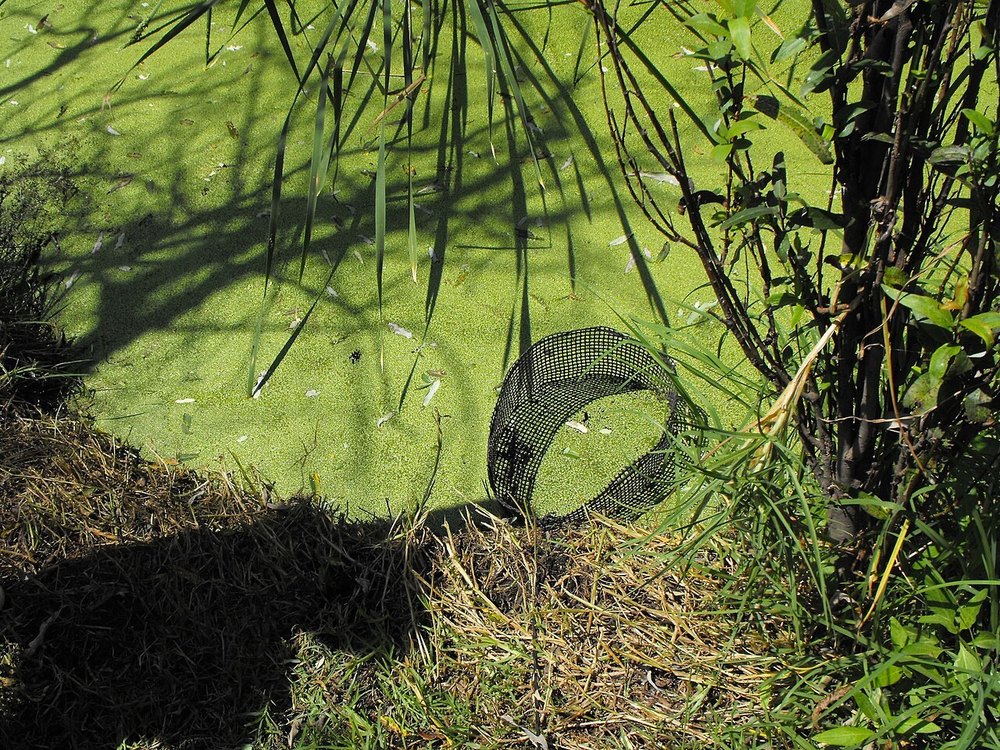
Refuges are isolated canals with filters of stones, gravel and plants that keep out introduced fish and clean the water. The project started in 2004, and there were 21 refuges by 2025.[32][48][67] In trials, 18 captive-bred axolotls released in a restored canal and a pond all survived and fed during the tracking, though two were later killed by egrets.[32] The same model concluded that restoring habitat, removing introduced fish and cleaning the water would help more than releasing animals.[46] Xochimilco is also a protected area, a Ramsar site and a UNESCO World Heritage Site.[44]
Common in captivity, rare in the wild
The axolotl is bred in laboratories and kept as a pet around the world, yet it is almost gone from the wild. The Ambystoma Genetic Stock Center at the University of Kentucky keeps a self-sustaining colony and supplies animals to laboratories and classrooms.[5] Scientists argue that the laboratory stock and Xochimilco depend on each other: if axolotls go extinct, efforts to protect the Xochimilco ecosystem will be weakened, and so will efforts to manage the laboratory populations.[64]
History and culture
The Mexica and the god Xolotl
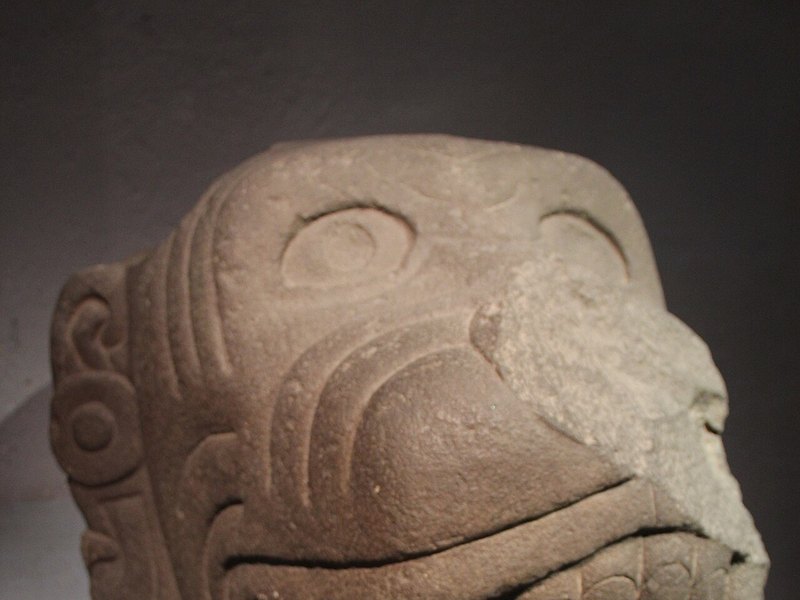
In a Mexica story recorded by the friar Bernardino de Sahagún, the gods died to set the sun moving. One of them, Xolotl, refused to die. He fled and hid as a double maize plant, then as a double maguey, and finally in the water as an axolotl, where he was found and killed.[21] The name of the animal contains his name, but the link is a guess: one scholar suggests the animal was called “the xolotl of the water”, and says himself that no text proves it.[21]
.jpg)


.jpg)
Food
The Nahua text of the Florentine Codex describes the axolotl as “good, fine, edible, savory”.[68] In Tlaxcala in 1545 a large one was worth four cacao beans.[14] Francisco Hernández, who studied Mexico’s natural history, said it tasted like eel.[21]
To Paris and the laboratory
Alexander von Humboldt sent preserved specimens to Europe at the start of the 19th century.[42] In 1863 a French military expedition collected 33 wild-coloured axolotls and one white one at Xochimilco.[11] Thirty-four living animals reached Paris by 1864, and the zoologist Auguste Duméril bred them. In 1865 Duméril reported that they had bred, which showed that axolotls were not just larvae, and several of their offspring later changed into land-living salamanders.[42] Until 1914, every axolotl in Europe came from these Paris animals.[42] In the 1870s Marie von Chauvin, working with the zoologist August Weismann, got five larvae to transform by keeping them in shallow water.[69]
Axolotls are used to study regeneration, and their genome was published in 2018.[9] The laboratory stock, including its tiger salamander ancestry from 1962, is described under Forms and variants.[11]
Pets and the law
Axolotls are popular pets, but the rules differ by place. Maine allows only captive-bred axolotls and requires a permit.[70] Hawaii lists the axolotl as conditionally approved, so an import permit is required.[71] Check local law before keeping one.
In Mexico today
Mexico’s 50-peso banknote, issued on 28 October 2021, shows an axolotl on the back, above the canals of Xochimilco.[72]
Taxonomy
| Rank | Name |
|---|---|
| Kingdom | Animalia |
| Phylum | Chordata |
| Class | Amphibia |
| Order | Caudata (salamanders)[18] |
| Family | Ambystomatidae (mole salamanders)[18] |
| Genus | Ambystoma Tschudi, 1838[18] |
| Species | Ambystoma mexicanum (Shaw & Nodder, 1798)[18][19][20] |
The Amphibian Species of the World counts 26 species in Ambystoma and puts the giant salamanders Dicamptodon in the same family, while GBIF lists 33 species in the genus and some authors keep Dicamptodon in its own family.[18][19] The holotype is lost.[18] The relationships inside the tiger salamander group are not settled, because the species split quickly and some of them interbreed.[73][55]
Sources
- Rosenkilde & Ussing 1996, International Journal of Developmental Biology 40: 665–673 (neoteny)
- Animal Diversity Web, Ambystoma mexicanum
- Amphibians and reptiles of Mexico City, ZooKeys 951 (2020)
- IUCN Red List record for Ambystoma mexicanum (Crossref entry)
- Ambystoma Genetic Stock Center, history
- Kragl et al. 2009, Nature 460: 60–65 (limb regeneration)
- Flink 2002, Anatomy and Embryology 205: 235–244 (the heart)
- Echeverri & Tanaka 2002, Science 298: 1993–1996 (spinal cord and tail)
- Nowoshilow et al. 2018, Nature 554: 50–55 (the axolotl genome)
- Kabangu et al. 2023, Genes 14: 904 (the melanoid gene)
- Woodcock et al. 2017, Scientific Reports 7: 6 (mutant genes and tiger salamander DNA in laboratory axolotls)
- Makanae et al. 2020, Scientific Reports 10: 9558 (teeth and jaw)
- Ambystoma Genetic Stock Center, University of Kentucky, guide to axolotl husbandry
- Online Nahuatl Dictionary, axolotl (after Karttunen 1992)
- Online Nahuatl Dictionary, atl
- Treccani, axolotl (in Italian)
- Real Academia Española, ajolote
- Amphibian Species of the World, Ambystoma mexicanum
- GBIF backbone, Ambystoma mexicanum
- ITIS, Ambystoma mexicanum
- Moreno 1969, “El axolotl”, Estudios de Cultura Náhuatl 8: 157–173 (in Spanish)
- DWDS, Axolotl (in German)
- Priberam dictionary, axolote (in Portuguese)
- Northcutt & Bleckmann 1993, Journal of Comparative Physiology A 172: 439–446 (the lateral line)
- Wang et al. 2026, Comparative Biochemistry and Physiology A 319: 112051 (electroreception)
- Schloissnig et al. 2021, PNAS 118: e2017176118 (chromosome-scale genome)
- Gerber et al. 2018, Science 362: eaaq0681 (limb regeneration, single cells)
- McHedlishvili et al. 2012, PNAS 109: E2258–E2266 (spinal cord regeneration)
- Amamoto et al. 2016, eLife 5: e13998 (the brain)
- Suetsugu-Maki et al. 2012, BMC Biology 10: 103 (the lens)
- Demircan et al. 2018, Scientific Reports 8: 10974 (induced metamorphosis)
- Ramos et al. 2025, PLOS ONE 20: e0314257 (released axolotls tracked in Xochimilco)
- Prey eaten by axolotl larvae in Xochimilco water, Journal of Limnology 2013
- Lauder & Shaffer 1985, Journal of Morphology 185: 297–326 (suction feeding)
- Toussaint-Lardé et al. 2025, Biology Open 14: bio061860 (axolotl feeding strikes)
- García-González et al. 2025, Frontiers in Amphibian and Reptile Science 3: 1535817 (embryo development)
- Sánchez-Ortiz et al. 2026, Journal of Morphology 287: e70118 (sexual maturity)
- Haluza et al. 2026, BMC Biology (fertility through life)
- De Groef et al. 2018, General and Comparative Endocrinology 266: 194–201 (why axolotls stay young)
- Voss & Shaffer 2000, Molecular Ecology 9: 1401–1407 (wild-caught axolotls and metamorphosis)
- Lazcano et al. 2023, Frontiers in Endocrinology 14: 1208182 (hormones and metamorphosis)
- Reiss 2022, “Cut and paste: the Mexican axolotl 1864–present”, Frontiers in Cell and Developmental Biology 10: 786533
- AnAge, Ambystoma mexicanum
- Ramsar Information Sheet 1363, Xochimilco (2004)
- Zambrano et al. 2010, Biological Invasions 12: 3061–3069 (axolotl, carp and tilapia)
- Zambrano et al. 2007, Animal Conservation 10: 297–303 (population viability)
- Maeda-Obregón et al. 2025, Environmental DNA 7 (fish and amphibian eDNA)
- Conservation International, “Axolotls are on the brink” (2025)
- UNEP-WCMC Species+, Ambystoma mexicanum (CITES listing and distribution)
- Lakes of the Basin of Mexico, Frontiers in Environmental Science 2023
- Xochimilco lake water quality, Journal of Limnology 2015
- Open Tree of Life, Ambystoma mexicanum (synthetic tree, release 16.1)
- Herrera-Flores & Velasco-de León 2026, Palaeontologia Electronica 29: a19 (a fossil axolotl from Hidalgo)
- TimeTree, axolotl and tiger salamander (summary of seven studies)
- Everson et al. 2021, PNAS 118: e2014719118 (the tiger salamander complex)
- Williams et al. 2013, Molecular Phylogenetics and Evolution 68: 671–682 (Ambystomatidae)
- Paleobiology Database, Ambystoma
- Hime et al. 2021, Systematic Biology 70: 49–66 (amphibian family tree)
- Zhang & Wake 2009, Molecular Phylogenetics and Evolution 53: 492–508 (salamander family tree)
- Tyrp1 and the axolotl copper mutant, Scientific Reports 2024
- Frost et al. 1986, Journal of Embryology and Experimental Morphology (the axanthic phenotype)
- Sobkow et al. 2006, Developmental Biology (a germline GFP axolotl)
- NOM-059-SEMARNAT-2010, Diario Oficial de la Federación, 30 December 2010
- Voss, Woodcock & Zambrano 2015, BioScience 65: 1134–1140 (“A tale of two axolotls”)
- Gaceta UNAM, 18 November 2024, new axolotl census in Xochimilco
- Urban Ecosystems 2025, canals suitable for axolotl restoration
- Valiente et al. 2010, “Creating refuges for the axolotl”, Ecological Restoration 28: 257–259
- Visual Lexicon of Aztec Hieroglyphs, axolotl (Florentine Codex, Book 11)
- “Science in Germany”, Nature 14: 133 (1876)
- Maine Department of Inland Fisheries and Wildlife, rules on restricted species (Chapter 7)
- Hawaii Department of Agriculture, non-domestic animal lists
- Banco de México, 50-peso note
- Shaffer & McKnight 1996, Evolution 50: 417–433 (the tiger salamander complex)