The Giant Panda (Ailuropoda melanoleuca) is a bear that lives in the mountain bamboo forests of central China. Its black-and-white coat is among the best-known patterns in the animal world. It feeds almost only on bamboo.[1][2] The IUCN Red List moved it from Endangered to Vulnerable in 2016, after four national surveys of the wild population.[1]
Quick facts
Description
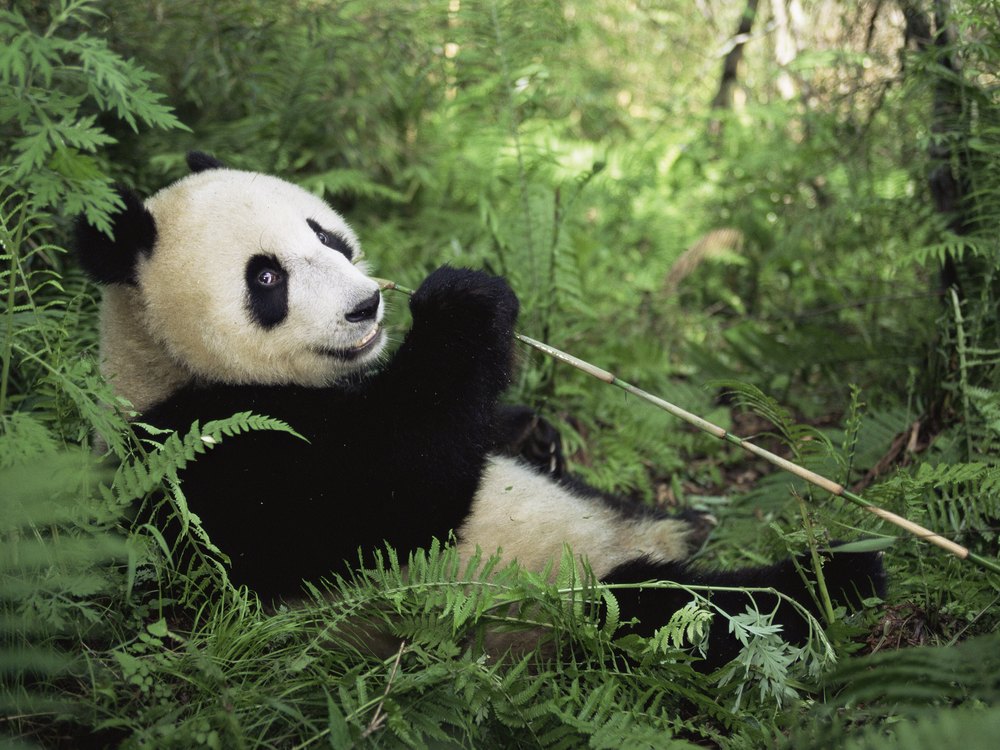
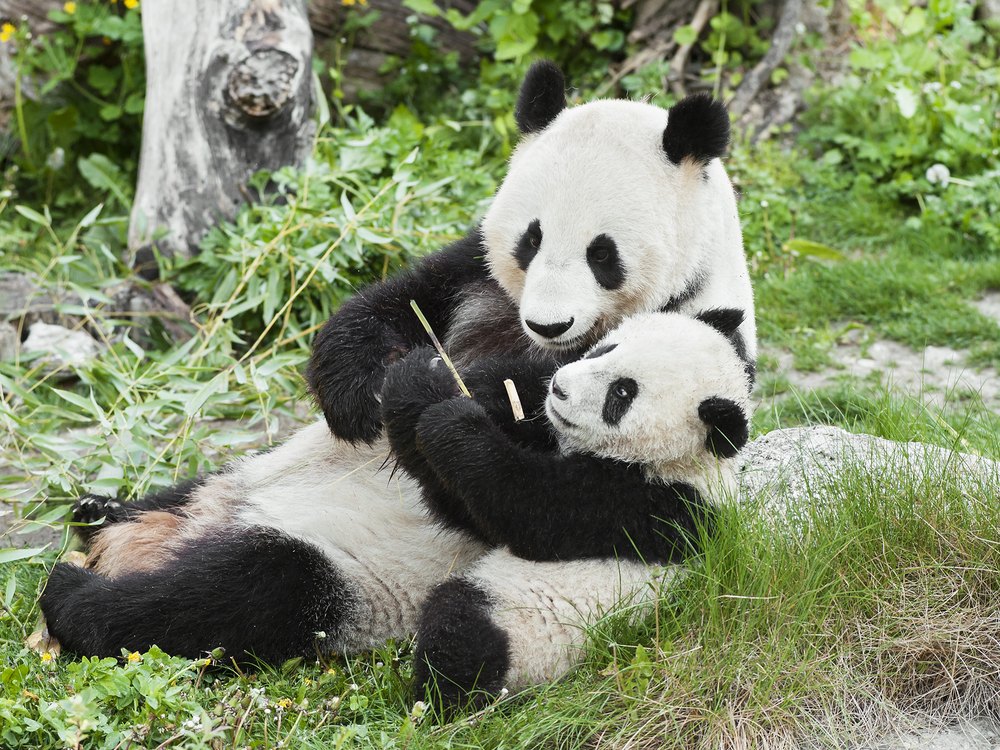
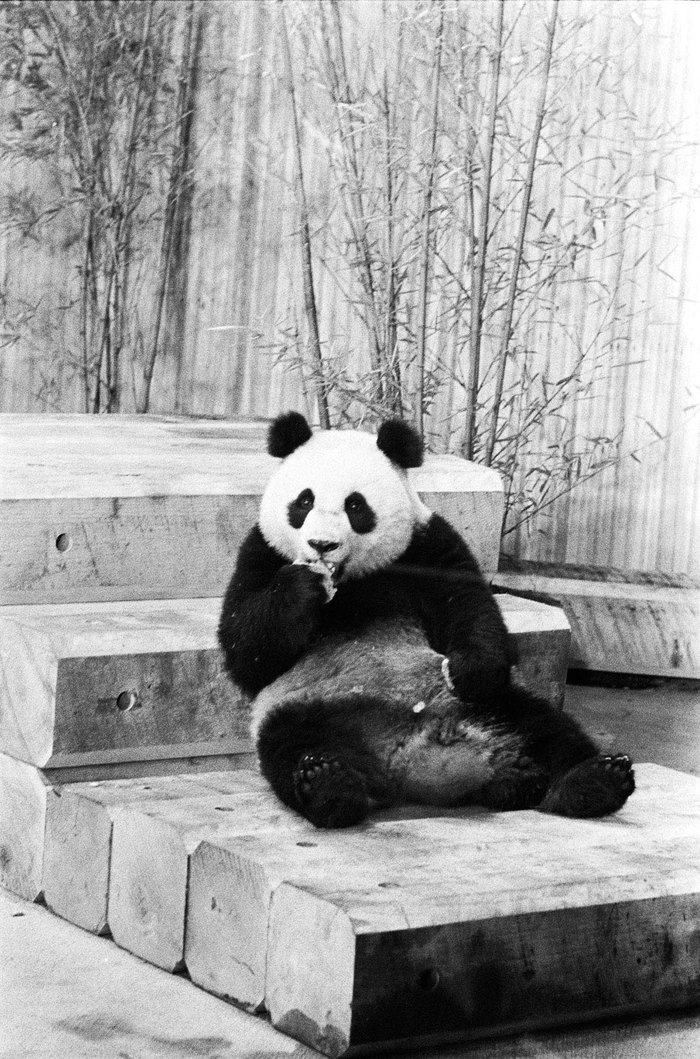
The Giant Panda is a black-and-white bear with a bear-like body, a round head and a short tail.[2][4] The fur is black on the ears, the patches around the eyes, the muzzle, the legs and the shoulders, and white on the rest of the coat.[4] Animal Diversity Web lists the limbs, eyes, ears and shoulders as black and the rest of the body as white, and adds that in some areas the black has a chestnut-red tinge.[2]
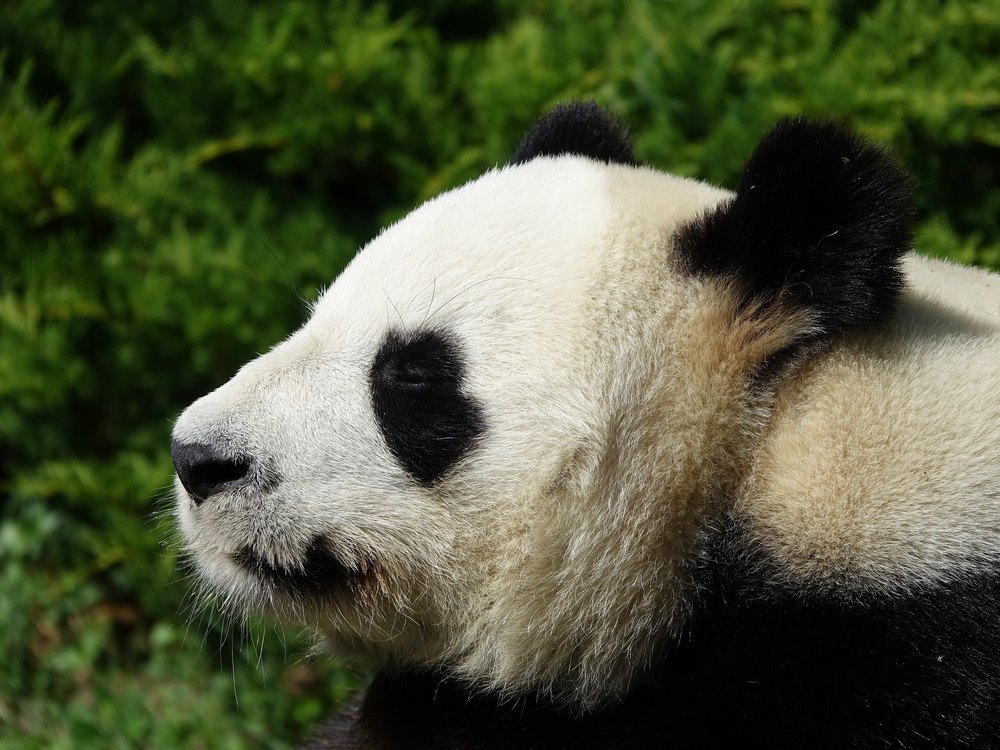
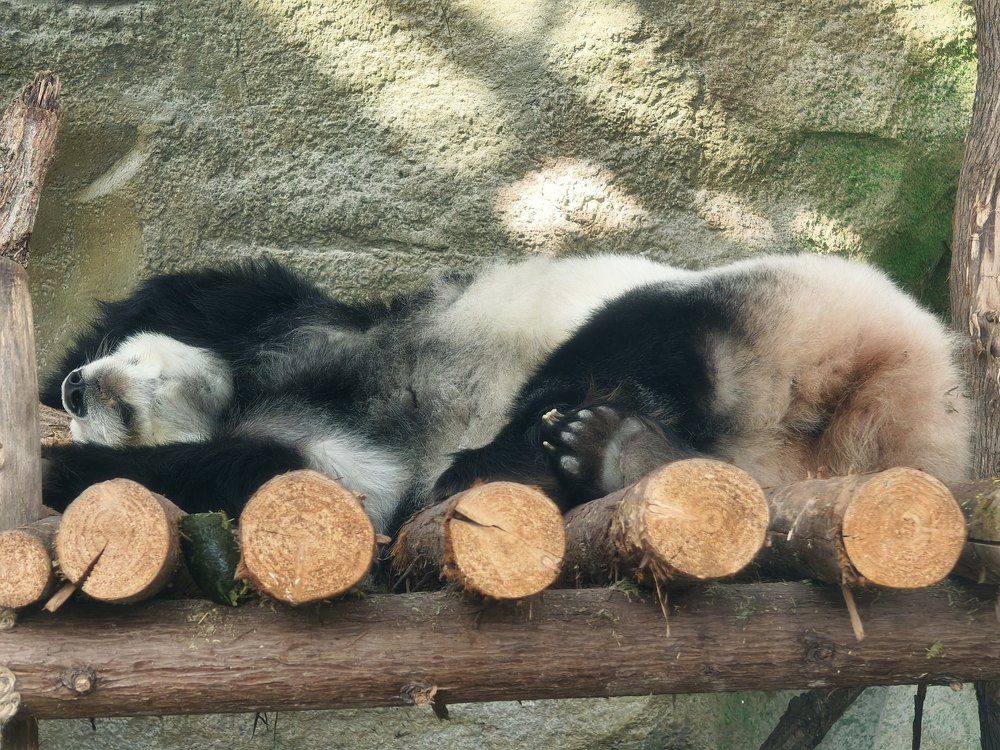
The face is round and shows little expression. The ears are not flexible enough to cock forward or flatten, and the tail is a stub that cannot be used to signal to other pandas.[4] For size and weight, see Body.
Name
“Giant” sets this animal apart from the Red Panda (Ailurus fulgens), a different animal that belongs to its own family, the Ailuridae.[5] In Chinese the animal is dà xióngmāo, written with characters that read “big bear-cat”.[6]
The species was first named Ursus melanoleucus by Armand David in 1869, which placed it in the bear genus, and it is now Ailuropoda melanoleuca (David, 1869).[7][8] For the history, see History and culture.
In other languages
| Language | Name | Meaning |
|---|---|---|
| Chinese (Sichuan) local | 白熊 (báixióng); 花熊 (huāxióng) | white bear; speckled bear |
| Qiang local | 荡 (dàng) | name of local hunters |
| Baima Tibetan local | 洞尿 (dòng gǎ) | — |
| Yi local | 峰曲 (éqū) | — |
| Chinese | 大熊貓 (Da xióngmāo) | big bear-cat |
| Spanish | Panda gigante | giant panda |
| French | Panda géant | giant panda |
| German | Großer Panda; Riesenpanda | great panda; giant panda |
| Italian | Panda maggiore | greater panda |
| Portuguese | Panda-gigante | giant panda |
| Japanese | ジャイアントパンダ | giant panda (the English name, written in Japanese script) |
| Russian | Большая панда | big panda |
Names come from the vernacular-name lists of GBIF and the Catalogue of Life; meanings are plain word-for-word glosses.[8][6] The local names are reported in Malinowski and Wu’s 2016 paper on knowledge of the giant panda in ancient China.
Body
Size
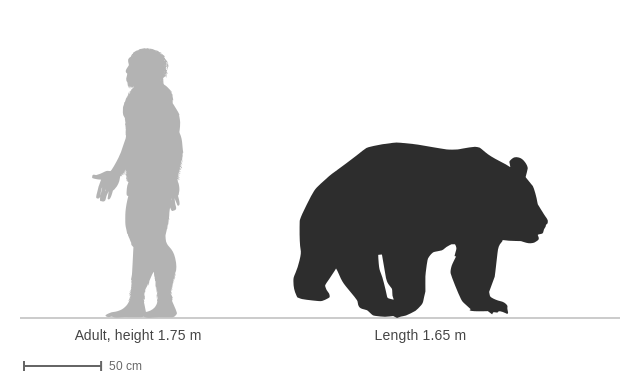
Animal Diversity Web gives a body length of 1.5 to 1.8 m and a shoulder height of 65 to 70 cm, and the Smithsonian’s National Zoo gives 1.2 to 1.8 m and 60 to 90 cm. [2][4] Males are larger than females. [2][4]
For weight, Animal Diversity Web gives 80 to 125 kg for adults, with no split by sex or by wild and captive animals. [2] The Smithsonian’s National Zoo states that wild males weigh up to 113 kg and wild females rarely more than 104 kg. [4]
| Weight (adult) | 80–125 kg |
| Length | 1.5–1.8 m |
Skull and bite
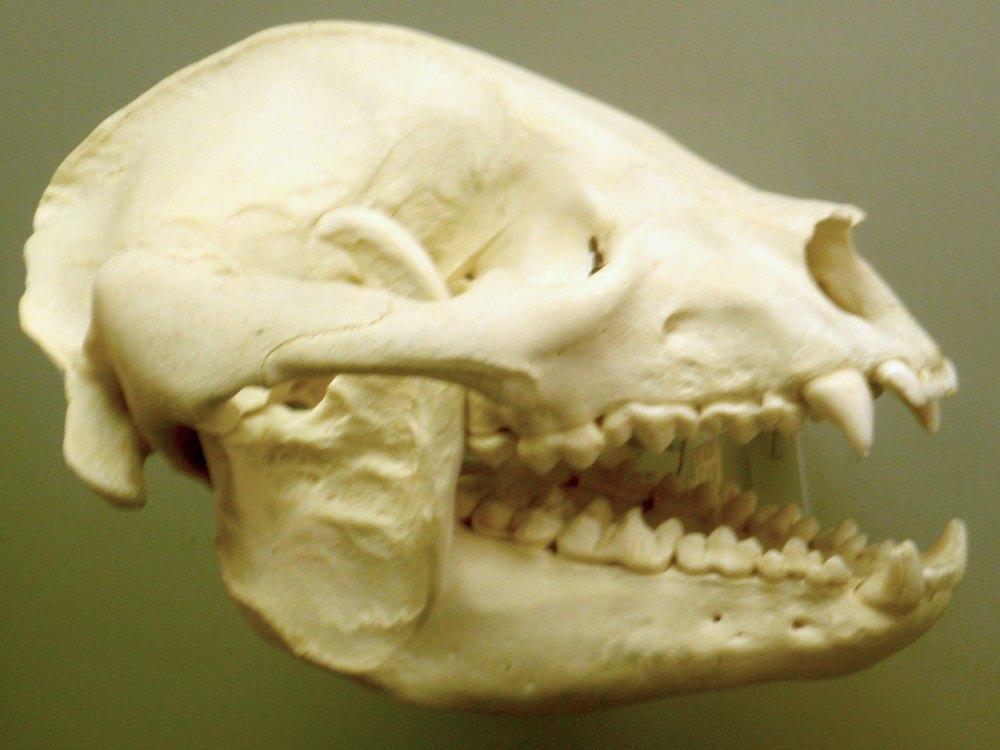
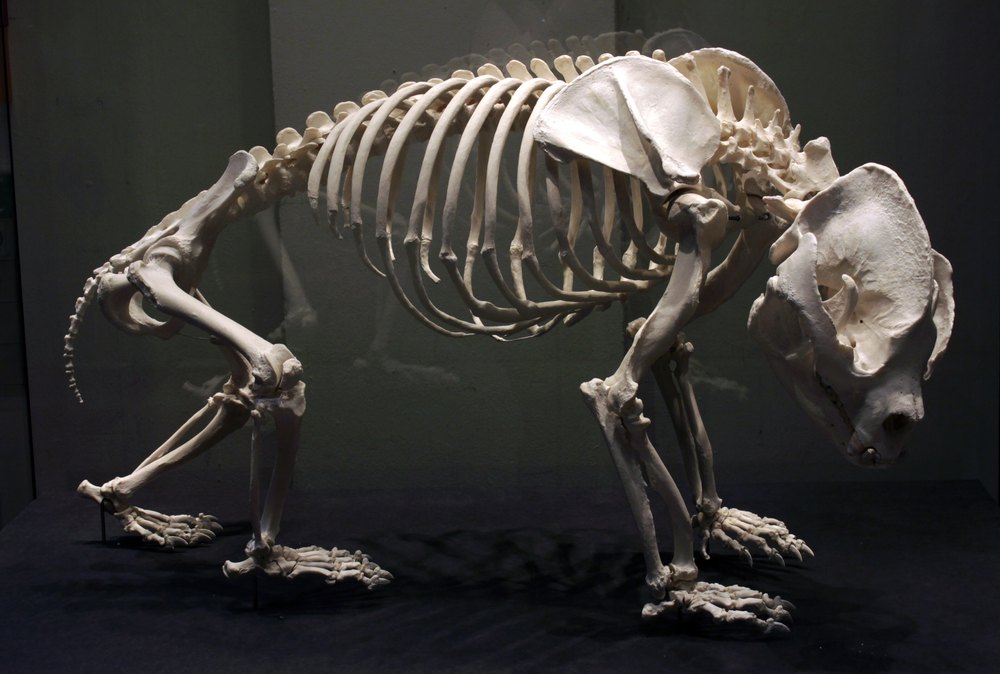
A study of the dry skulls of 122 bears of all eight living species found that the Giant Panda has a strong bite for its body size, because its skull gives the jaw muscles long leverage. It is the only bear with a skull and bite built for strength, yet it is less specialised for eating plants than other large plant eaters. [9] A 2026 tooth-wear simulation gave simulated bite forces of 1,030 N at the canine, 1,142 N at the premolar and 2,005 N at the molar (N is newtons, a unit of force). [10]


Pseudo-thumb
The pseudo-thumb is an enlarged wrist bone that works like a thumb, covered by a pad of skin, and the panda uses it to hold bamboo. It is not a true thumb: the animal still has five ordinary digits. [2] A 2022 study reports that the fossil Ailurarctos, an early relative of the panda, already had an enlarged wrist bone of this kind. [11]

Digestion and energy
Wild pandas digest on average 17% of the dry matter in bamboo and about 27% of its hemicellulose (a plant fibre). They defecate more than 100 times a day. [1] Gut microbes help to digest the fibre, and the genome has no cellulose-digesting genes of its own. [1][12] For hours spent feeding, see Diet.
In a study of five captive and three wild pandas, daily energy use averaged 5.2 MJ (megajoules, a unit of energy), and the wild animals averaged about 6.2 MJ, about 45% of the value expected for a mammal of that size. The authors link this to small organs, low activity and low levels of thyroid hormone. [3] The IUCN assessment adds that thick fur conserves heat. [1]
Behavior
Solitary life
The Giant Panda lives alone. Home ranges overlap generously, yet direct meetings between pandas are rare. [1] For the breeding season, see Life cycle.
Tracking with GPS collars has shown that home ranges are larger than older radio-tracking studies suggested, and that the core areas of neighbouring pandas overlap more than expected. [1] In Wolong Reserve, a study of five collared pandas measured the 95% range (the area where the animal spends 95% of its time) at 6 km² for the single male and 4.4 km² on average for four females. [13]

Movement
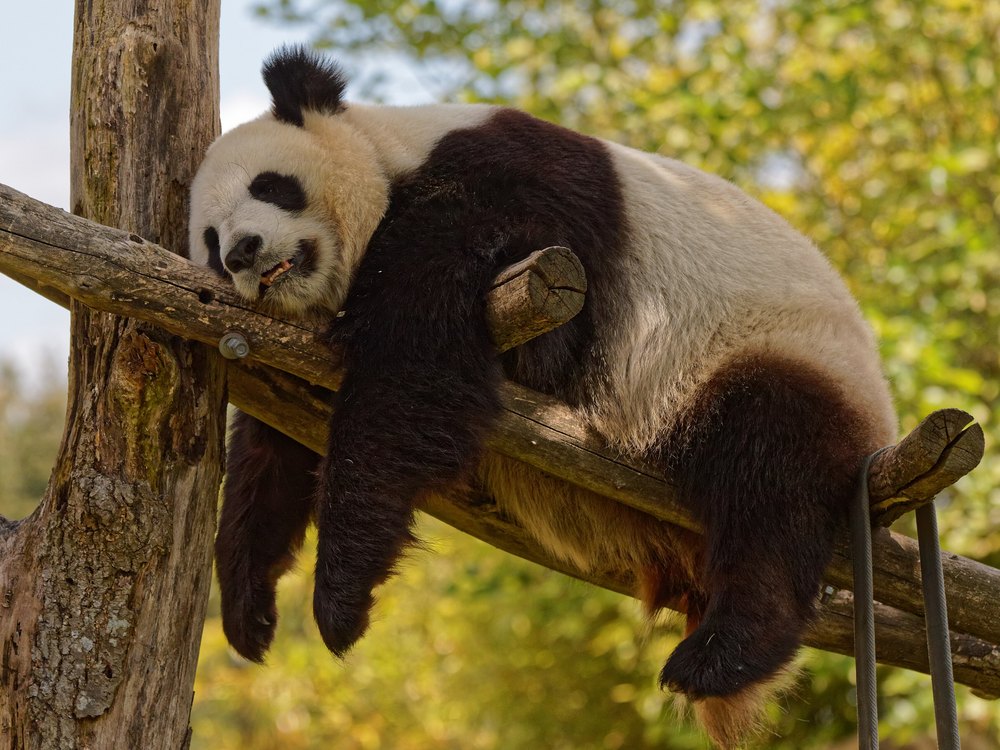
Pandas in the Qionglai and Qinling mountains move up and down the slopes with the seasons, following the bamboo that is most nutritious at the time. [1] They often return to the same feeding patches, which suggests that they remember where good bamboo grows, and they sometimes make sudden long moves. [1] They do not hibernate. [1]
Scent marking
Pandas use traditional scent-mark stations that many animals visit. [1] Pandas can tell individuals apart by the smell of a male’s anogenital gland secretion (the scent produced by glands near the tail). [14]
Sounds
Adult males use several kinds of call. A study of 17 adult males, watched for 993 sessions of 45 minutes, described their length and sound. [15]
- Bleat: a goat-like twittering call lasting 1 to 3 seconds. [15]
- Honk: a short, low, nasal call under 0.5 seconds, usually given in a series. [15]
- Bark: a fairly noisy call lasting 0.1 to 0.3 seconds, like a dog’s bark. [15]
- Chirp, moan and growl: a short high chirp, a low moan and a long, noisy growl. [15]
Males gave more bleats, chirps, honks and moans in the breeding season than outside it. [15]
Cubs have their own calls. A study of 281 cub calls sorted them into three types: a harsh squawk, a high-pitched squall and a pulsed croak. [16]
Diet
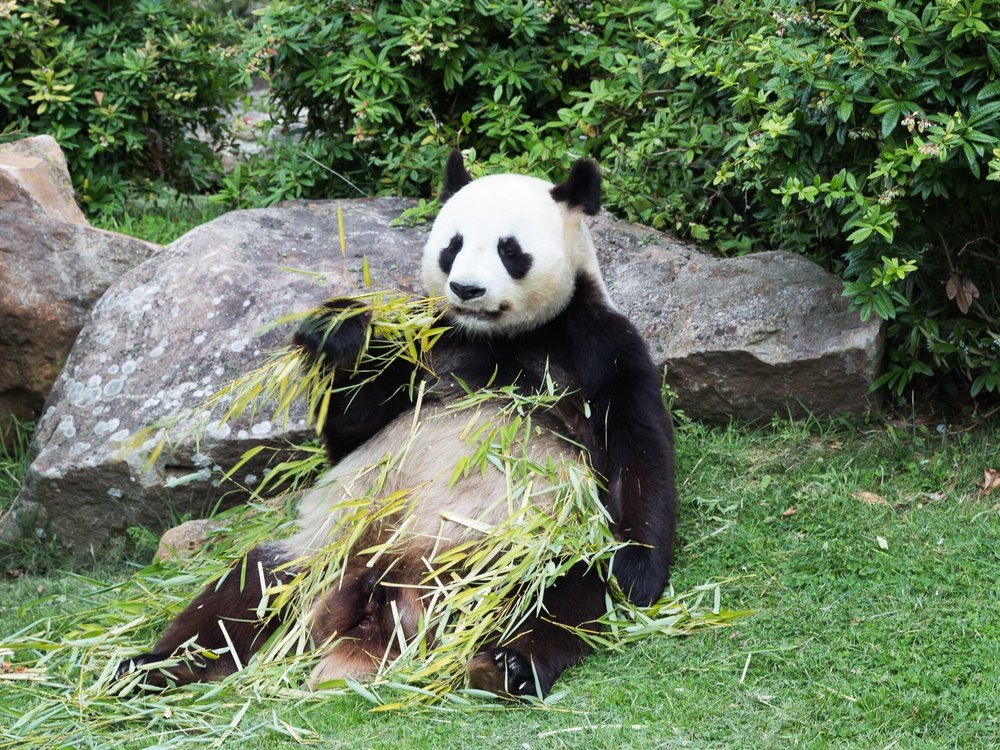
Bamboo makes up over 99% of the Giant Panda’s diet. [2][1] The panda eats the shoots, leaves and stems, and the part it chooses changes with the season: it prefers shoots in late spring, eats mainly leaves for the rest of the year, and eats more stems in winter. [1]
The panda spends about 14 hours a day searching for and eating bamboo, more than half of its time. [1] Other sources give a range of 10 to 16 hours a day. [2][4] A wild panda can eat up to 12.5 kg of bamboo in a day. [1] Bamboo is low in nutrients and the panda digests only part of it; see Body for how the gut and the low energy use cope with this. [1][3]

Life cycle
| Stage | What it looks like / size |
|---|---|
| Newborn cub | About 100 g, in a range of 85 to 140 g; the mother is nearly 1,000 times heavier.[2][4][1] |
| Cub | Mobile at about 3 months; weaned at about 1 year.[2][4] |
| Subadult | Leaves its mother at about 1.5 to 3 years.[2][4] |
| Adult | Breeds from about 4 to 7 years; about 80 to 125 kg, males larger.[2][4] |
Pregnancy lasts 112 to 163 days, and a litter has 1 to 3 cubs.[39]
Stages
A Giant Panda (Ailuropoda melanoleuca) is born tiny and helpless, stays with its mother for one and a half to three years, and starts breeding at about 4 to 7 years old.[2][4]
Breeding
Wild pandas live alone, and the sexes come together only from March to May.[1] Males range over several females and gather around the ones that are in oestrus (the days a female can mate). Rival males fight fiercely until dominance is settled, and then switch to threats without contact. The IUCN describes this as possibly scramble competition polygyny, a system in which males search for and compete around mating females.[1] The IUCN also states that wild pandas have no mating problems and breed at high rates.[1]
The pregnancy includes delayed implantation: the fertilised egg floats freely for weeks before it attaches to the womb. Because of this, the length of a pregnancy varies a great deal. Animal Diversity Web gives 112 to 163 days.[2] In a captive study of 13 pandas, ultrasound first showed the fetus only about 17 days before birth.[17]
Wild females usually have a single cub and raise a young one every 2 to 3 years.[1] In a captive study, pandas that were allowed to choose their own mate bred better than pandas that were paired by keepers.[18]
Cubs
At birth a cub’s skeleton is still immature.[19] Zoo reports say the eyes begin to open at about 6 weeks and are fully open by about 8 to 9 weeks.[4] The cub is mobile at about 3 months.[2][4]

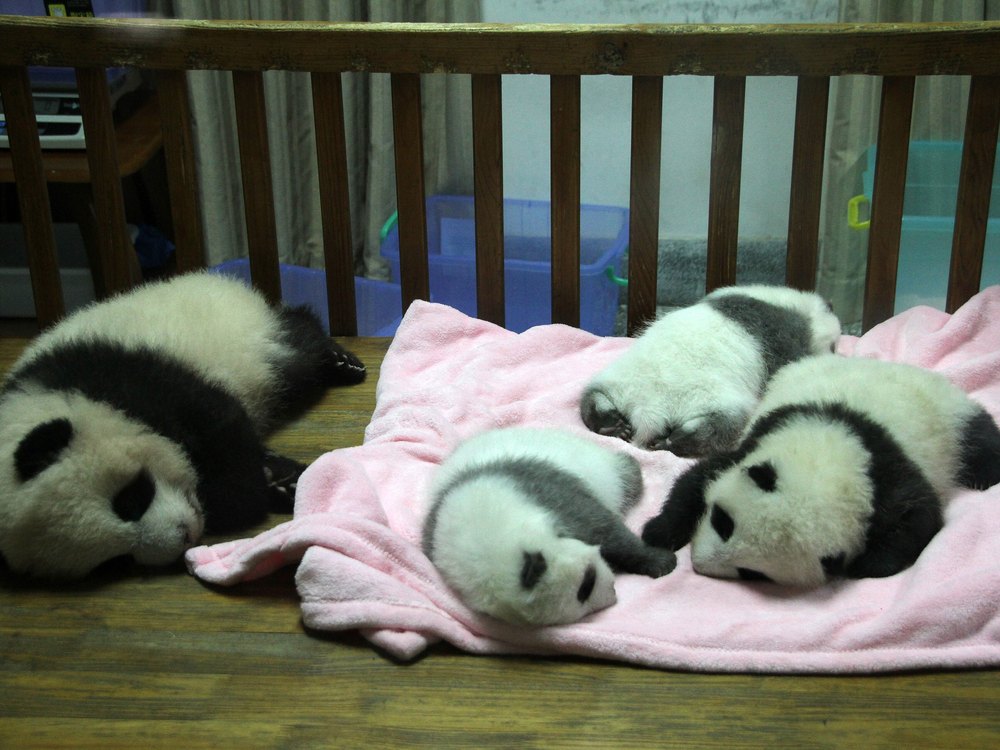

The mother nurses for 8 to 9 months and the cub is weaned at about 1 year, according to the National Zoo;[4] Animal Diversity Web gives about 46 weeks for weaning.[2] Young pandas stay with the mother for up to 18 months in Animal Diversity Web, while the National Zoo says they may remain for up to 2 years, and sometimes 3.[2][4] Mothers raise their cubs in dens in rock caves or tree cavities, near water.[1]
Animal Diversity Web puts sexual maturity at 5.5 to 6 years, and the National Zoo at 4 to 7 years.[2][4]
Lifespan
Captive pandas live to about 30 years.[2][4] The oldest captive panda on record was Jia Jia, who died at Ocean Park in Hong Kong in 2016 at 38 years old.[20]
Ecology
Research at Foping, in the Qinling Mountains, used camera traps at giant panda dens for 5.5 years. Asian black bears, yellow-throated martens, leopard cats and masked palm civets visited the dens often, and females preferred dens with more rodents and ground birds nearby. [21]
Parasites and disease
Parasites and disease-causing microbes may be an emerging problem for wild pandas, especially where dogs, livestock and other domestic animals bring in pathogens that the pandas have not met before. [1]
Bamboo and the forest
Bamboo species flower together over a whole region and then die back, at intervals of 15 to 100 years. [1] Before pandas were confined to high ground they could move to other bamboo species when this happened. Now, with fewer places to go, they can face starvation, most of all when more than one bamboo species flowers at the same time. [1] Past die-offs caused starvation and deaths, but the panda populations recovered, and when the populations fell sharply, genetic variety did not drop. [1]
The bamboo grows as the understorey of mountain forest that many other animals share, and the panda reserves hold a biodiversity that rivals tropical ecosystems. [1] The panda is given as an example of an umbrella species, an animal whose protection also protects many others living in the same places. [1]
Habitat and range
Habitat
The Giant Panda (Ailuropoda melanoleuca) lives in cool mountain forest, typically at 1,500 to 3,000 m. [1] The recorded elevation limits are 1,200 m and 4,100 m. [1] The IUCN classes its habitat as temperate forest and links it with forest that has never been cut. [1] Pandas once also used forest below 1,000 m, but now live only in the mountains. [1]
Range
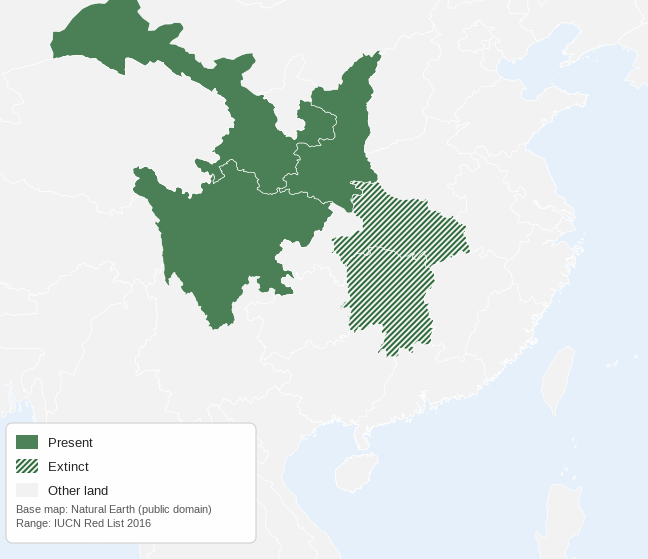
The Giant Panda was once widespread across southern China, as far north as Beijing and south into Southeast Asia. [1] The IUCN lists it as native and extant in the Chinese provinces of Gansu, Shaanxi and Sichuan, and as native but extinct in Hubei and Hunan. [1] The shrinking of the range over the past several hundred years is attributed to the conversion of bamboo forest to farmland and to the growth of the human population. [1] China lost more than 30% of its forests between 1950 and 2004, although forest cover has increased in the past two decades. [1]
The largest populations live in the Minshan, Qinling and Qionglai mountains. Smaller and more isolated ones live in the Liangshan, Daxiangling and Xiaoxiangling mountains. [1] The wild population is fragmented, meaning it is split into separate patches: there are as many as 33 separate groups, 18 of which have fewer than 10 pandas. [1] For population counts, see Conservation.
Evolution
For a long time the Giant Panda (Ailuropoda melanoleuca) was argued over as either a bear or a relative of the raccoons. Four independent molecular and genetic measures published in 1985 placed it with the bears, and the Red Panda, a different animal, sits in a separate family.[5] Studies of whole mitochondrial genomes (the small ring of DNA passed down from the mother) and of nuclear genomes agree that the Giant Panda branched off first among the living bears, with the spectacled bear next.[22][23]
Dates for these early splits vary between studies. Krause and colleagues (2008) place the main burst of bear splitting around 5 million years ago.[22] Later studies found that the bear groups split in quick succession and that genes passed between species, so different genes give different family trees.[24][25][26]
The oldest known member of the panda lineage is Kretzoiarctos beatrix, from two Spanish sites of the Middle Miocene, about 12 to 11 million years ago, according to Abella and colleagues (2012).[27] A later fossil panda, Ailurarctos, comes from the Late Miocene of Yunnan, China, roughly 8 to 6 million years ago.[28]
The 2010 genome showed that the gene for the umami taste receptor (the savoury taste of meat), T1R1, no longer works in the panda. Its loss is estimated at about 4.2 million years ago, with a range of 1.3 to 10 million years.[12]
Forms and variants
Subspecies
The Qinling panda (A. m. qinlingensis) was described by Wan and colleagues in 2005.[29] The IUCN text calls the subspecies designation controversial and not widely accepted.[1] The Mammal Diversity Database lists the name only as a synonym, and GBIF, ITIS and the Catalogue of Life list no valid subspecies.[7][8][30][6] A genome study of wild pandas found three genetic clusters, with the Qinling group splitting from the others about 0.3 million years ago.[31]
Conservation
Status
The IUCN Red List lists the Giant Panda as Vulnerable. The assessment was made on 11 April 2016 by Swaisgood, Wang and Wei. The panda was downlisted, which means moved to a lower threat category, from Endangered, a category it had held since 1990; in 1988 it was listed as Rare. The IUCN calls the change a positive sign that China's efforts work, but says the panda still depends on conservation action. [1]
The decision rests on four national surveys, which counted pandas in China by searching for signs such as droppings and bamboo bitten to a typical size. [1]
| Survey | Years | Pandas counted |
|---|---|---|
| First | 1974 to 1977 | 2,459 |
| Second | 1985 to 1988 | about 1,200 |
| Third | 2000 to 2004 | 1,596 |
| Fourth | 2011 to 2014 | 1,864 |
The fourth survey did not count dependent young under 1.5 years old. If cubs make up 9.6% of the population, the total is about 2,060. [1] The IUCN warns that the methods changed between surveys, so the figures are rough and the change from one survey to the next is uncertain. [1] The fall between the first two surveys was about 50%. [1]
The Giant Panda is listed in Appendix I of CITES, the convention that controls international trade in wild species; legal trade is limited to live animals donated by the Chinese government. [32]
Threats
Habitat loss Climate change Disease Snares
Habitat loss. The main threat is the lasting effect of earlier habitat loss and the splitting of the forest into patches, which leaves small, isolated populations. Roads, dams, mining and other building cut the forest further, and livestock grazing and tourism add pressure in some areas.[1]
Climate change. Climate change is predicted to remove more than 35% of the bamboo habitat in the next 80 years.[1] Other models give losses of 37% to 100% by the end of the century, though the IUCN notes that these may not allow for bamboo spreading into lower or southern areas.[1]
Disease. Parasites and disease may be a growing problem, especially where dogs and livestock bring new pathogens into panda forest.[1]
Snares. Hunting for pelts was a past threat, and law enforcement appears to have ended that trade; pandas can still be caught in snares set for musk deer or other animals.[1]
Protection
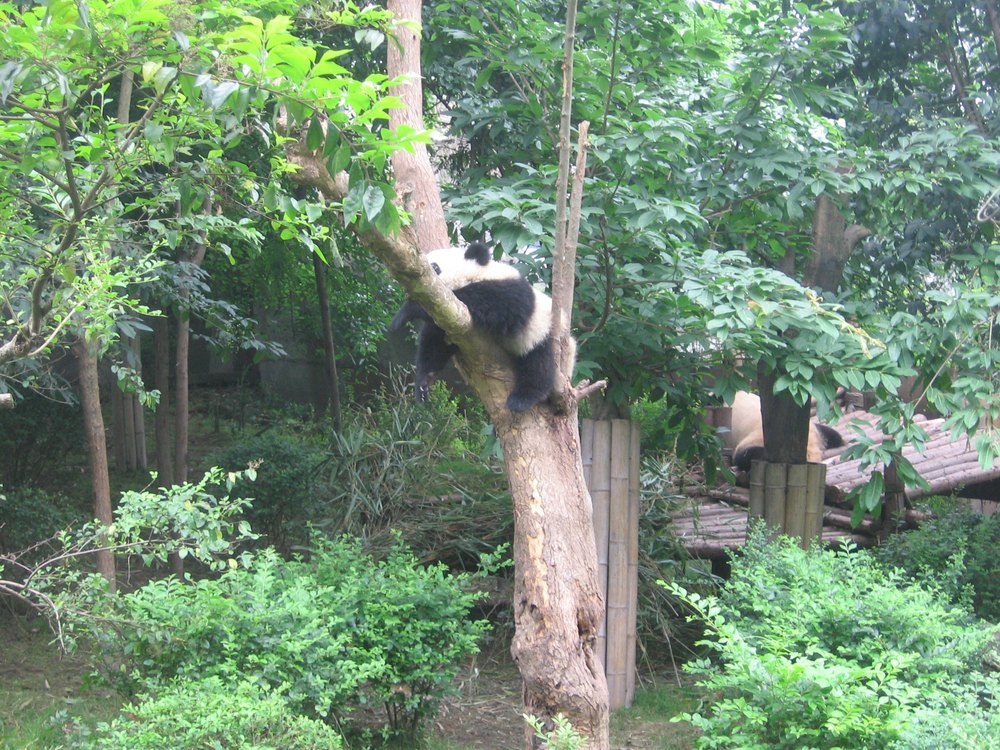
China banned poaching and gave the panda its highest category of legal protection in the 1988 Wildlife Protection Law. The fall seen in the second survey led to the 1992 National Conservation Project for the Giant Panda and its Habitat, which created a reserve system. Today it has 67 reserves, protecting 67% of the panda population and nearly 1.4 million hectares of habitat. [1] The Natural Forest Conservation Program banned logging in most panda forests from 1997, and the Grain-to-Green Program planted trees on steep slopes. [1] Other measures include anti-poaching patrols, the relocation of settlements and the restoration of habitat corridors between reserves. [1][33]
The IUCN also reports that captive-born pandas are being released into the wild to add genetic variety to small populations. [1] A further 15% of the remaining unprotected habitat lies in collectively owned forest. [1]

History and culture
The first description
The scientific name Ursus melanoleucus, “black and white bear”, was published by Armand David in 1869. Its type locality is Moupin (Baoxing) in Sichuan. [7] The genus Ailuropoda was named by Alphonse Milne-Edwards in 1870. [7]
The first complete panda specimen collected by Westerners was shot on the 1928 expedition of Theodore Roosevelt Jr. and Kermit Roosevelt. A second skin was obtained from a local hunter. Both are in the Field Museum in Chicago. [34]
The panda was known in China long before. The scholar Mark Harper concluded in 2013 that textual and archaeological evidence shows the early Chinese word mo (胡) referred to the Giant Panda. [35]
Panda diplomacy
China has used pandas as gifts and later loans to other countries. In 1972, after President Nixon's visit to China, the pair Ling-Ling and Hsing-Hsing arrived at the Smithsonian's National Zoo in Washington on 16 April as a gift to the American people. [36] Later arrangements were loans. Mei Xiang and Tian Tian came in December 2000 under a 10-year agreement, and their cub Tai Shan, born on 9 July 2005, was the first cub to survive at the zoo. [36] A new agreement signed in 2024 runs to April 2034 with an annual fee of US$1 million paid to the China Wildlife Conservation Association; the pandas Bao Li and Qing Bao arrived on 15 October 2024. [36]

The WWF logo
The panda logo of the World Wide Fund for Nature was designed by Sir Peter Scott from preliminary sketches by Gerald Watterson. The model was Chi Chi, a panda living at London Zoo. [37]
Famous pandas
Hua Mei was born on 21 August 1999 at San Diego Zoo. The zoo calls her the first cub born in the United States to survive to adulthood, and the first born outside China by artificial insemination. She returned to China in February 2004. [38]
Bao Bao, a female born at the National Zoo on 23 August 2013, moved to China on 21 February 2017. [36]
The genome
In 2010 a team of researchers published the sequence of the Giant Panda genome in the journal Nature. The assembled sequence totals about 2.25 gigabases (2.25 billion DNA letters), roughly 94% of the genome. [12]
Taxonomy
| Rank | Name |
|---|---|
| Kingdom | Animalia |
| Phylum | Chordata |
| Subphylum | Vertebrata |
| Superclass | Tetrapoda[41] |
| Class | Mammalia |
| Subclass | Theria[41] |
| Infraclass | Eutheria[41] |
| Order | Carnivora |
| Suborder | Caniformia[41] |
| Family | Ursidae |
| Genus | Ailuropoda |
| Species | Ailuropoda melanoleuca (David, 1869) |
Synonyms (3)
| Name |
|---|
| Aeluropus melanoleucus (David, 1869) |
| Ailuropus melanoleucus (David, 1869) |
| Ursus melanoleucus (David, 1869) |
From the GBIF backbone.[40]
Higher classification
The Giant Panda belongs to the bear family, Ursidae, in the order Carnivora and the suborder Caniformia, the dog-like carnivores.[30] It has a subfamily of its own, Ailuropodinae, and Ailuropoda has no other living species.[7] Its place among the bears is told under Evolution.
Extinct names inside the species
The Mammal Diversity Database counts two names based on fossils as synonyms of the living species: Aelureidopus baconi Smith Woodward, 1915, whose holotype comes from Mogok in Upper Burma, and Aeluropus fovealis Matthew and Granger, 1923, whose holotype comes from Chongqing.[7] It also lists the subspecies-style names qinlingensis (2005), baconi and melanoleuca (both Jiangzuo and colleagues, 2025) as synonyms, so it accepts no subspecies (see Forms and variants).[7]
Sources
- Swaisgood, Wang and Wei 2016, “Ailuropoda melanoleuca”, The IUCN Red List of Threatened Species 2016: e.T712A45033386 (errata version 2017)
- Animal Diversity Web, Ailuropoda melanoleuca
- Nie et al. 2015, “Exceptionally low daily energy expenditure in the bamboo-eating giant panda”, Science 349(6244): 171–174
- Smithsonian’s National Zoo and Conservation Biology Institute, giant panda page
- O’Brien, Nash, Wildt, Bush et al. 1985, “A molecular solution to the riddle of the giant panda’s phylogeny”, Nature 317(6033): 140–144
- Catalogue of Life (ChecklistBank), Ailuropoda melanoleuca (David, 1869), taxon 6673Q
- Mammal Diversity Database, Ailuropoda melanoleuca (David, 1869), taxon 1005930
- GBIF Backbone Taxonomy, Ailuropoda melanoleuca (David, 1869)
- Christiansen 2007, “Evolutionary implications of bite mechanics and feeding ecology in bears”, Journal of Zoology 272(4): 423–443
- Chen et al. 2026, “Computer simulation of tooth wear in giant pandas (Ailuropoda melanoleuca): quantitative predictions for captive health management”, Animals 16(14): 2273
- Wang, Su, Jablonski, Ji et al. 2022, “Earliest giant panda false thumb suggests conflicting demands for locomotion and feeding”, Scientific Reports 12: 10538
- Li et al. 2010, “The sequence and de novo assembly of the giant panda genome”, Nature 463(7279): 311–317
- Hull, Zhang, Zhou, Huang et al. 2015, “Space use by endangered giant pandas”, Journal of Mammalogy 96(1): 230–236
- Swaisgood, Lindburg, Zhou and Owen 2000, “The effects of sex, reproductive condition and context on discrimination of conspecific odours by giant pandas”, Animal Behaviour 60(2): 227–237
- Charlton, Owen, Zhou, Zhang and Swaisgood 2019, “Influence of season and social context on male giant panda (Ailuropoda melanoleuca) vocal behaviour”, PLOS ONE 14(11): e0225772
- Baotić, Stoeger, Li, Tang and Charlton 2014, “The vocal repertoire of infant giant pandas (Ailuropoda melanoleuca)”, Bioacoustics 23(1): 15–28
- Zhang, Li, Wang and Hull 2009, “Delayed implantation in giant pandas: the first comprehensive empirical evidence”, Reproduction 138(6): 979–986
- Martin-Wintle, Shepherdson, Zhang, Zhang et al. 2015, “Free mate choice enhances conservation breeding in the endangered giant panda”, Nature Communications 6: 10125
- Li and Smith 2019, “Comparative skeletal anatomy of neonatal ursids and the extreme altriciality of the giant panda”, Journal of Anatomy 236(4): 724–736
- Guinness World Records, “Farewell Jia Jia, the oldest panda ever in captivity”, 2016
- Lai et al. 2020, “Impact of sympatric carnivores on den selection of wild giant pandas”, Zoological Research 41(3): 273–280
- Krause et al. 2008, “Mitochondrial genomes reveal an explosive radiation of extinct and extant bears near the Miocene-Pliocene boundary”, BMC Evolutionary Biology 8: 220
- Yu, Li, Ryder and Zhang 2007, “Analysis of complete mitochondrial genome sequences increases phylogenetic resolution of bears (Ursidae), a mammalian family that experienced rapid speciation”, BMC Evolutionary Biology 7: 198
- Kutschera, Bidon, Hailer, Rodi et al. 2014, “Bears in a forest of gene trees: phylogenetic inference is complicated by incomplete lineage sorting and gene flow”, Molecular Biology and Evolution 31(8): 2004–2017
- Kumar, Lammers, Bidon, Pfenninger et al. 2017, “The evolutionary history of bears is characterized by gene flow across species”, Scientific Reports 7: 46487
- Lammers, Gallus, Janke and Nilsson 2017, “Phylogenetic conflict in bears identified by automated discovery of transposable element insertions in low-coverage genomes”, Genome Biology and Evolution 9(10): 2862–2878
- Abella, Alba, Robles, Valenciano et al. 2012, “Kretzoiarctos gen. nov., the oldest member of the giant panda clade”, PLoS ONE 7(11): e48985
- Jin, Ciochon, Dong, Hunt et al. 2007, “The first skull of the earliest giant panda”, Proceedings of the National Academy of Sciences 104(26): 10932–10937
- Wan, Wu and Fang 2005, “A new subspecies of giant panda (Ailuropoda melanoleuca) from Shaanxi, China”, Journal of Mammalogy 86(2): 397–402
- ITIS, Ailuropoda melanoleuca (David, 1869), TSN 621845
- Zhao et al. 2013, “Whole-genome sequencing of giant pandas provides insights into demographic history and local adaptation”, Nature Genetics 45(1): 67–71
- CITES Species+, Ailuropoda melanoleuca listing record
- Wei, Swaisgood, Hu, Nie et al. 2015, “Progress in the ecology and conservation of giant pandas”, Conservation Biology 29(6): 1497–1507
- Field Museum, Theodore and Kermit Roosevelt page (1928 giant panda expedition)
- Harper 2013, “The cultural history of the giant panda (Ailuropoda melanoleuca) in early China”, Early China 35–36: 185–224
- Smithsonian’s National Zoo and Conservation Biology Institute, “History of Giant Pandas at the Zoo”
- Victoria and Albert Museum, collection record on the WWF panda logo
- San Diego Zoo Wildlife Alliance, giant panda pages (Hua Mei timeline and “Panda Cub Number One”)
- Bies, L. 2002. Ailuropoda melanoleuca (on-line). Animal Diversity Web
- GBIF backbone, Ailuropoda melanoleuca, synonyms
- ITIS, Ailuropoda melanoleuca, classification