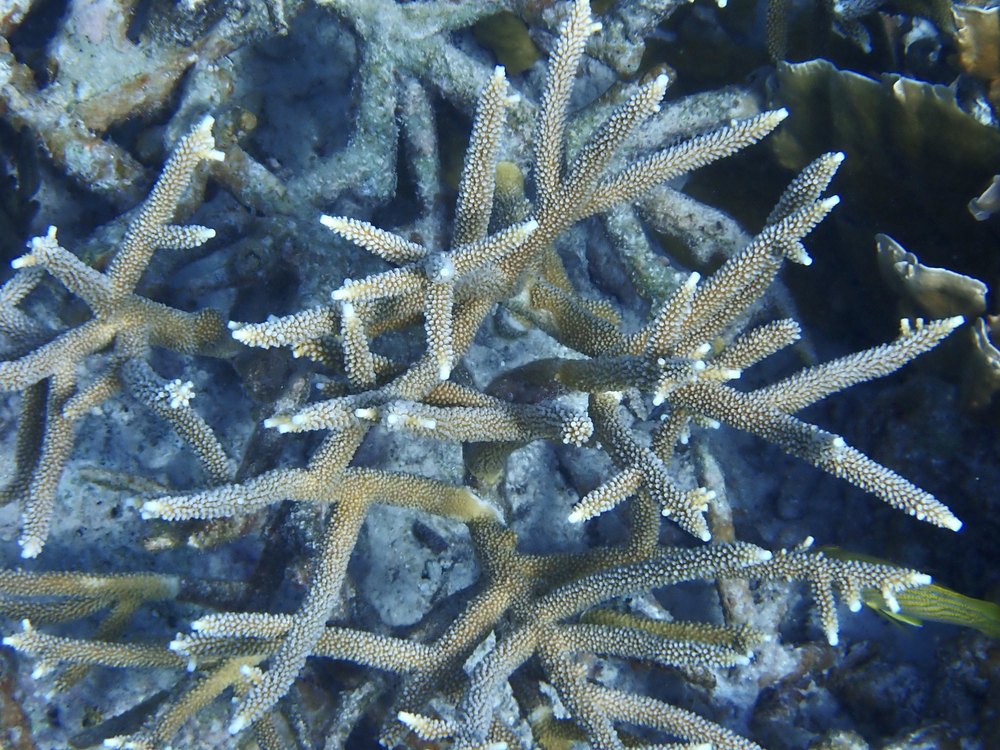
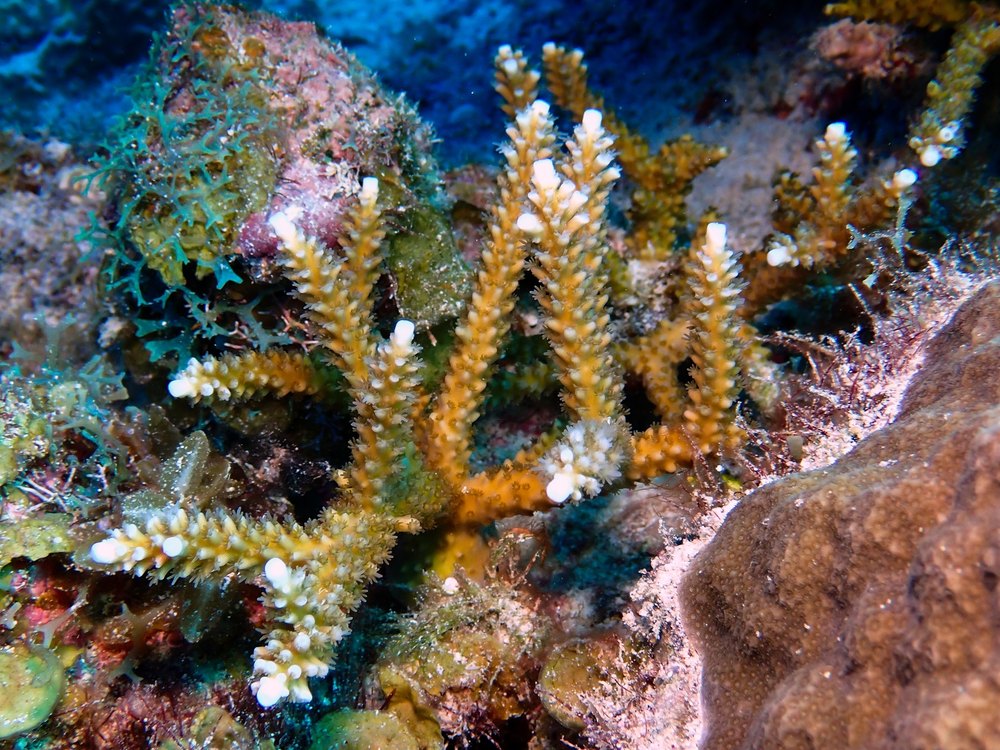
The Staghorn Coral is a colony of many tiny animals called polyps, which together build a hard skeleton of branches that look like deer antlers.[1][2] It grows on shallow reefs in the Caribbean, the Gulf of Mexico and the western Atlantic, where it was once the main reef builder in shallow water.[3][4] Its numbers have crashed. The IUCN Red List has listed it as Critically Endangered since 2008, and a new assessment in 2021 kept it there.[3]
Quick facts
Description
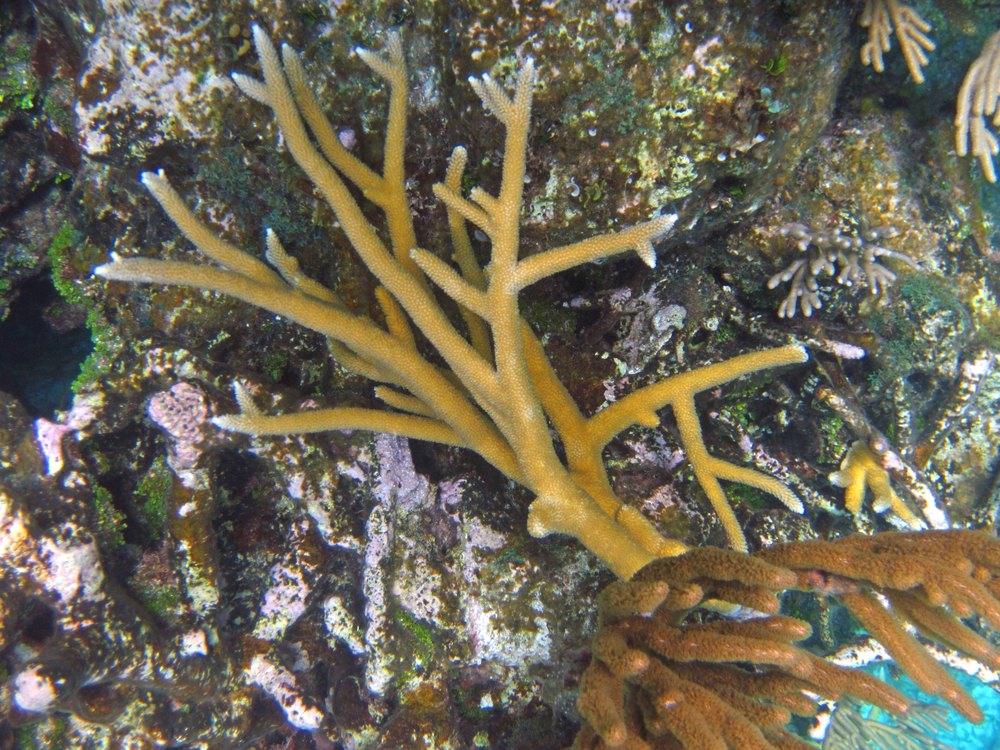
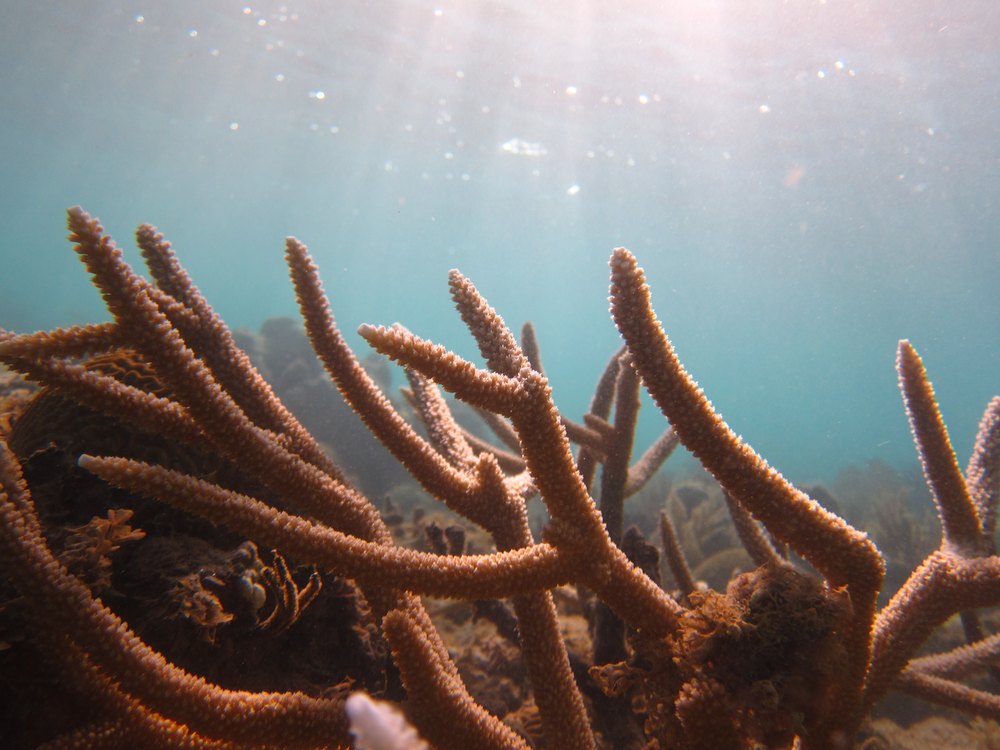
A Staghorn Coral colony has antler-like branches that usually stem out from a central trunk and angle upward.[1] Colonies are golden tan or pale brown with white tips, and they get their colour from algae that live within their tissue (see Body).[1] The polyps have tiny finger-like tentacles.[6] For sizes, see Body.


Name
The common name is Staghorn Coral. The scientific name is Acropora cervicornis. It was described by Jean-Baptiste Lamarck in 1816, who first named it Madrepora cervicornis; the species was later moved to the genus Acropora.[7][8]
The Elkhorn Coral (Acropora palmata) is a different species. The Fused Staghorn (Acropora prolifera) is a hybrid of the two (see Forms and variants).[9]
In other languages
| Language | Name | Meaning |
|---|---|---|
| Papiamento local | Koral Kachu di Biná | deer-horn coral |
| English | Staghorn Coral | stag’s horn coral |
| Spanish | Coral Cuerno de Venado | deer-horn coral |
| French | Corne de cerf | stag’s horn |
| Dutch | Hertshoornkoraal | hart’s-horn coral |
| German | Hirschgeweihkoralle | stag-antler coral |
Sources: the IUCN, GBIF and the Catalogue of Life.[3][8][10] The Papiamento name is from the Dutch Caribbean species register, as listed by GBIF.
Body
Colony size and shape
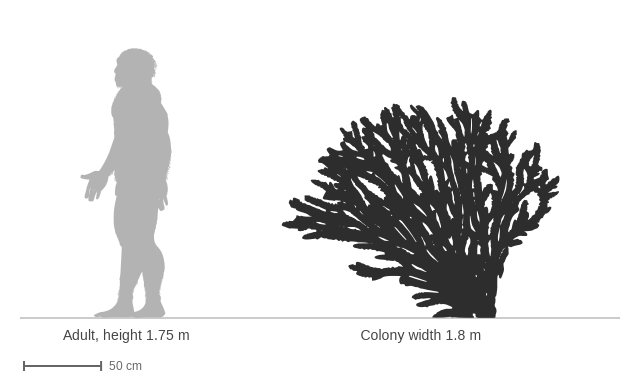
A Staghorn Coral (Acropora cervicornis) colony is branching and tree-like, with arms that resemble deer antlers. [2] NOAA gives a colony as at least 1.2 m tall and 1.8 m across, and elsewhere as up to about 2.4 m across. [1] The tagged colonies in the Puerto Rico growth study were medium-sized, about 1 to 2 m across. [11]

Branches and growth
In Wallace’s 2012 revision of the genus, branch diameter was about 1 to 2 cm. [12]
Wild branches were measured in southwest Puerto Rico, where 29 colonies with five tagged branches each grew an average of 3.1 cm a month, about 37 cm a year in this study. Growth was fastest in winter and spring (3.5 cm a month) and slowest in summer and autumn (0.53 cm a month). [11] The same paper quotes earlier wild measurements of 14 cm a year in Barbados and 12 to 26 cm a year in Jamaica. [11] NOAA says a healthy branch can lengthen by up to 8 inches (about 20 cm) a year, so rates differ a good deal between places. [1]
Nursery pieces grow differently. In a Florida and Dominican Republic nursery study of more than 1,700 fragments and colonies, the fastest colonies grew up to ten times faster than the slowest. [13] Nursery-grown and outplanted fragments have grown 25.6 to 80.6 cm a year, a rate from nurseries rather than from wild colonies. [11][14]

Polyps and skeleton
Each polyp has a ring of tentacles and lives in a tiny stony cup called a corallite. [6] The single large axial corallite at a branch tip is 2.0 to 3.5 mm across on the outside. [12] The radial corallites along the sides are tube-like and about 0.8 to 1.0 mm across. [2] All the polyps in one colony are genetically identical. [1]
Algae inside the coral
Zooxanthellae are tiny algae that live inside the coral's tissue. They pass sugar to the coral and give it its golden tan or pale brown colour. [1][6] According to Animal Diversity Web, corals as a group grow much more slowly without them. [6]
Behavior
Feeding
The polyps of the Staghorn Coral catch their food with their tentacles. The tentacles carry stinging cells called nematocysts, which the polyps use to capture small animals drifting in the water. [6] Animal Diversity Web adds that the polyps extend their tentacles at night. [6]
The tentacles come in multiples of three, usually six per polyp. [6] For the coral’s other food source, see Diet.
Diet
The Staghorn Coral gets its food in two ways: sugars from the algae in its tissue (see Body), and tiny animals caught by its polyps (see Behavior). [1][6]
Animal Diversity Web notes that the prey in corals of this kind are planktonic animals, and that captured food may also supply nitrogen and phosphorus. [6] In an eight-week laboratory experiment with warmer, more acidic water, fed colonies of the Staghorn Coral kept growing at close to normal rates while unfed colonies grew less. [15]
Life cycle
| Stage | What it looks like / size |
|---|---|
| Planula larva | In the lab, a tiny free-swimming larva can settle about 5 days after fertilisation; larvae of acroporid corals (the group that includes the Staghorn Coral) are ready 4 to 10 days after fertilisation. [16] |
| Young colony | In a nursery, about 2.5 cm across when put on a reef after about 10 weeks (a place where coral pieces are grown before being planted out). [16] |
| Adult colony | Starts to make eggs and sperm at about 25 to 30 cm across or about 18 cm tall. [16][1] |
Stages
A Staghorn Coral (Acropora cervicornis) is a colony, so its life cycle follows a colony rather than a single body. Most measurements of the early stages come from lab and nursery work, not from wild colonies. Each colony is a simultaneous hermaphrodite, which means it makes both eggs and sperm at the same time. [1] In lab tests, a colony’s own sperm and eggs rarely joined: fertilisation was below 5%. [16] Size, not age, decides when a colony starts to breed, and larger colonies produce more eggs. [16]
Spawning
Spawning means releasing eggs and sperm into the sea. A colony spawns once a year, after the full moon in late summer, usually the August full moon in Florida. [1][16] In restoration work by Mote Marine Laboratory in the Florida Keys, spawning happened on the nights after the full moon, roughly two and a half to four hours after sunset. [16]
The eggs and sperm are packed together in buoyant bundles. Before release the bundles show in the polyps’ mouths, and they then float to the surface, where they break apart after 30 to 60 minutes. [16] The eggs are pink-orange and the sperm packets cream. [16]
Larvae and settlement
Fertilisation reached about 95% in the lab when two different colonies were crossed, although some pairs were not compatible. [16] The fertilised egg grows into a planula, a larva that swims and drifts in the water. [16] When it is ready it settles on a hard surface and builds a skeleton, becoming the first polyp of a new colony. [6] Chemical cues from crusty pink algae on the reef help larvae settle. [16]
In a nursery, young colonies grown from such larvae for about 10 weeks survived at a rate of more than 96% and were then put on a reef at about 2.5 cm across. [16]
Fragmentation
Fragmentation is another way a new colony can start: a branch breaks off, reattaches to the reef and grows into a new colony. [1] In Belize, local populations are highly clonal and new colonies there come mainly from fragments. [5]
Lifespan
The length of a single colony’s life is not known. What has been measured is the age of a clone. In Belize, clones of the Staghorn Coral were at least 62 to 409 years old. [5] This is the age of a genetic line that fragments keep going, not of one piece of skeleton. [5]
Ecology
Reef builder
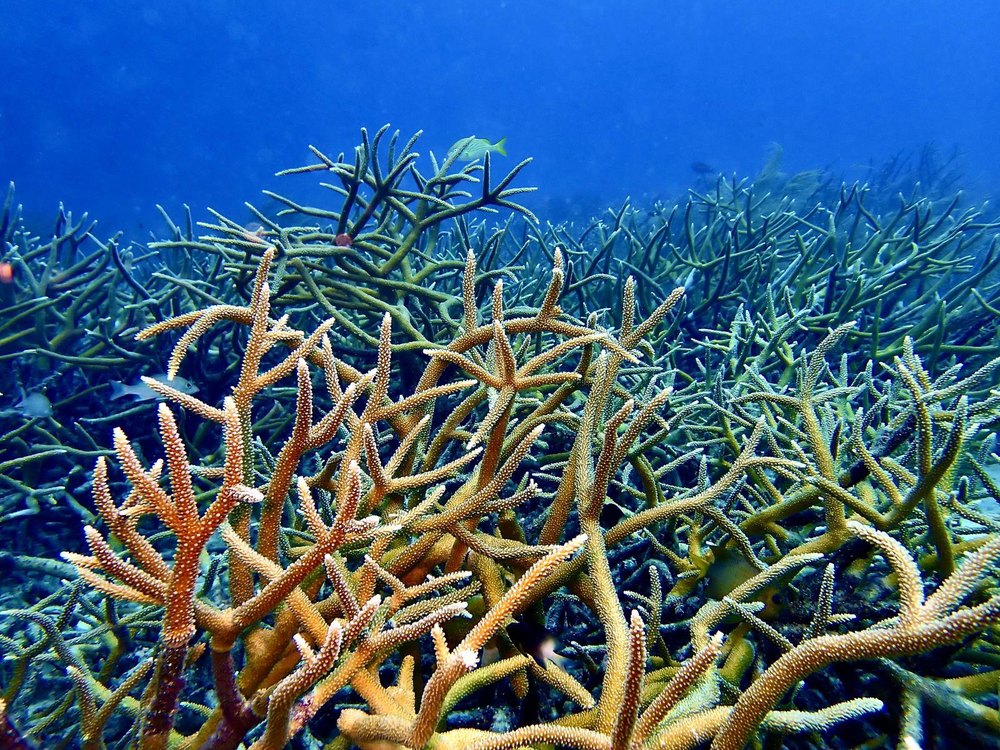
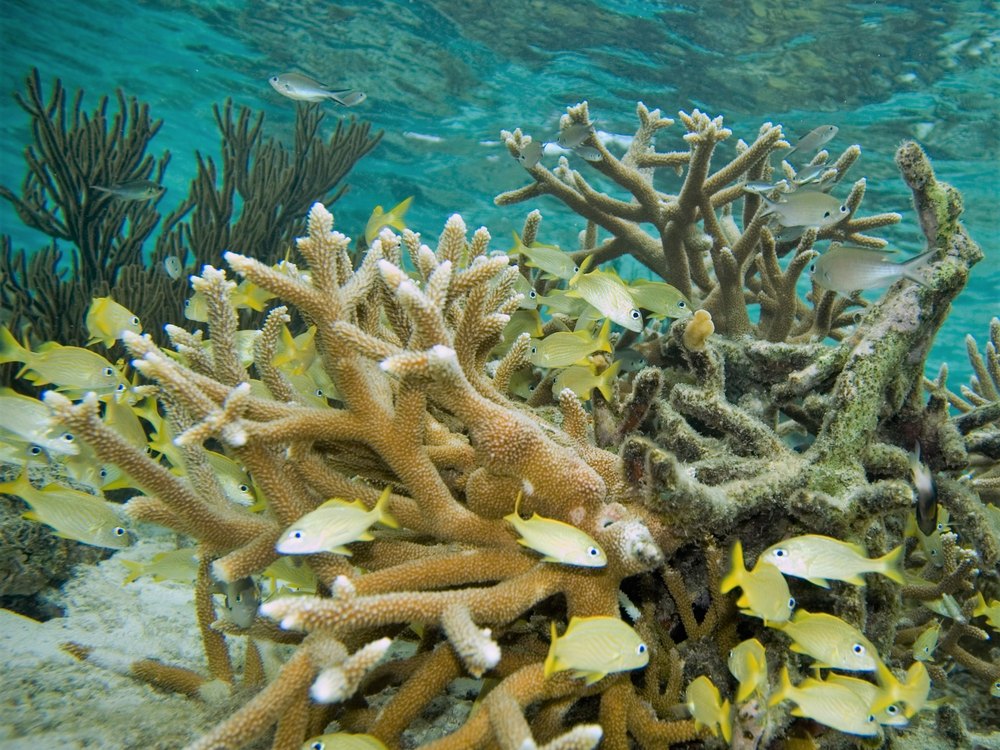
The Staghorn Coral is one of the main reef-building corals of the Caribbean, and its colonies house many other animals.[6] Its branches grow into dense patches, often called thickets, in shallow water.[1] At Dry Tortugas, dense patches of the coral had faster branch growth and more fish than sparse ones. [17] The IUCN adds that these links between coral and fish may only show up at high densities, and that experiments with very high densities reduced coral health and survival.[3]


Predators and disease
The IUCN names three animals that damage the coral: the Bearded Fireworm (Hermodice carunculata), coral-eating snails of the genus Coralliophila, and the Three-spot Damselfish (Stegastes planifrons). The damselfish does not eat whole colonies; it kills tissue inside the territory it defends, and algae then grow there.[3]
White band disease is a disease that strips the living tissue from a branch in a band. The IUCN believes it was the main cause of the unprecedented loss of the late 1970s and 1980s (see Conservation) and says it is still ongoing.[3] Only 6% of the remaining populations have been shown to resist it.[3]
Disease was not the only cause of loss. A 2020 study found that the Staghorn and Elkhorn corals began disappearing from Caribbean reefs decades before climate change had an effect,[18] and the IUCN places the first major declines in the 1960s, before the disease outbreaks.[3] See Conservation for the decline figures.

Bleaching and heat
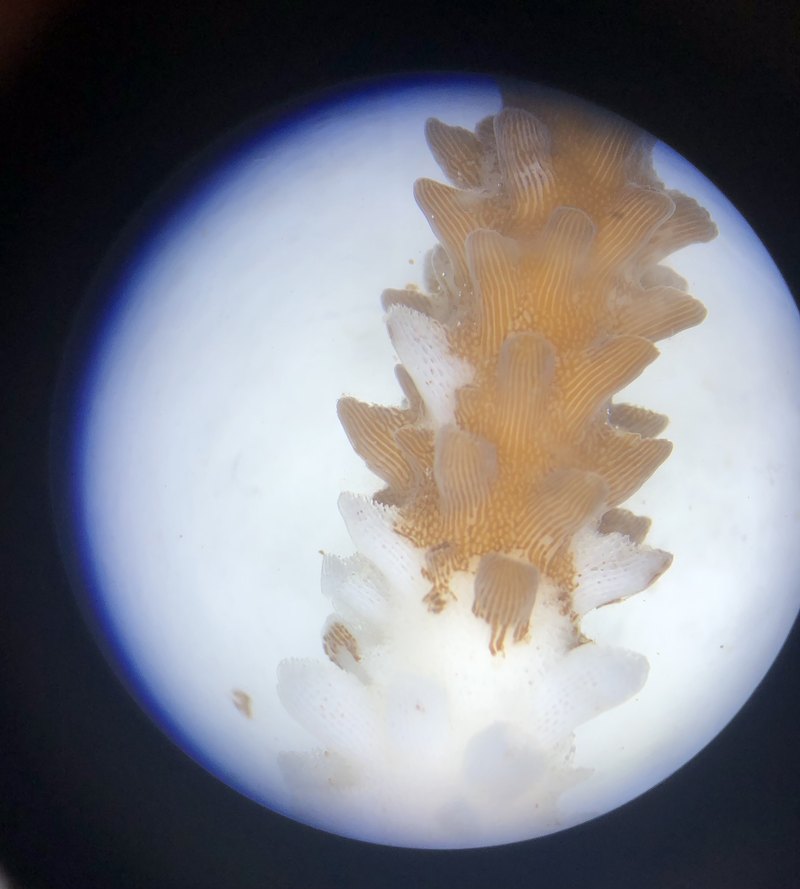
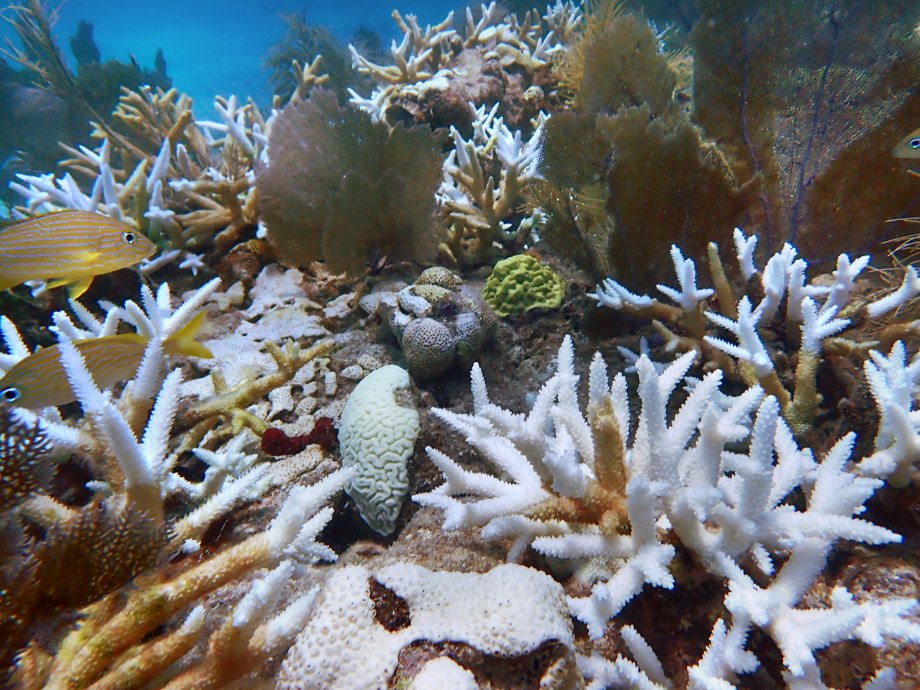
Bleaching happens when a coral loses the tiny algae that live in its tissue and turns white. Without them the coral loses much of its food and can starve or fall ill.[1][6] The Staghorn Coral is highly sensitive to heat, although the IUCN notes it can show some adaptability, and colonies differ in how much heat they tolerate.[3]
In 2005 the Caribbean had its worst bleaching on record, in a year when regional temperatures were the warmest in over 150 years. Eakin and colleagues (2010) report that at many sites over 80% of all corals bleached and over 40% died. These figures are for corals in general, not the Staghorn Coral alone.[19]
In 2023 a record marine heat wave hit Florida’s Coral Reef, with sea-surface temperatures at or above 31 °C for an average of 40.7 days. Manzello and colleagues (2025) found that 97.8 to 100% of the Staghorn and Elkhorn colonies they studied in the Florida Keys and Dry Tortugas died, and 37.9% died offshore in south-east Florida. They describe this as the functional extinction of the genus Acropora from Florida’s Coral Reef, which means the corals can no longer do their job on the reef.[20]

Habitat and range
Habitat
The Staghorn Coral lives in shallow, tropical reef habitats, favouring the upper to mid-reef slopes and lagoons where waves are moderate to weak.[3] Its depth range is 1 to 60 m, but it is most often found shallower than 25 m.[3] It needs a hard surface to settle on, clear and well-oxygenated water warmer than 20 °C, and enough light for its algae.[6] Off south-east Florida, colonies cluster along the crests of reef ridges.[3]
Range
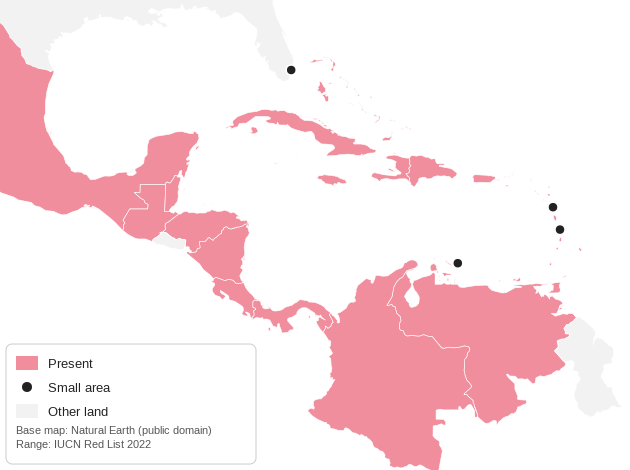
The IUCN gives the range as the western Atlantic, from Mexico (Veracruz), southern Florida (Broward County) and the northern Bahamas south to Trinidad and Tobago. It includes the island and coastal reefs of Barbados, Venezuela, Aruba, Curaçao, Bonaire and Colombia, and it is unlikely to occur further south than Trinidad and Tobago.[3] The coral is listed as native and present in 38 countries and territories. They cover the Caribbean islands and the Caribbean coasts of Central America, Colombia and Venezuela, as well as Mexico, the Bahamas, the Turks and Caicos Islands and the United States.[3]
The coral has become scarce across much of this range, and in some places, such as Morrocoy National Park in Venezuela, it is likely to be locally extinct.[3] See Conservation for the decline and the protected areas.
Evolution
The oldest fossils placed in the genus Acropora, the group that holds the Staghorn Coral, come from the Lutetian stage of the Eocene in France, dated to 49.0 to 41.3 million years ago (Wallace, 2008).[21]
A study of the Staghorn Coral genome and 15 other Acropora genomes put the split between the Caribbean lineage and the Indo-Pacific Acropora at about 41 million years ago, with a 95% range of 35 to 47 million years. The authors tie it to the closing of the western Tethys, an ancient sea that once linked the Atlantic and Indian oceans (Selwyn and Vollmer, 2023).[22] A different study of 15 species, using many nuclear genes and fossils to set the clock, places the last common ancestor of the genus at about 131 to 20 million years ago, and the spread of today's lineages at about 13 to 3 million years ago (Wu and colleagues, 2024).[23]
The same 2024 study found that ancient hybridisation, where lineages interbred and swapped genes, shaped the genus. The two Caribbean species sit near the base of the family tree in one analysis and deeper inside it in another, depending on which DNA is compared.[23]
Its genome has about 307 million DNA letters and 28,059 validated genes (Selwyn and Vollmer, 2023).[22]
Forms and variants
Hybrid
The Fused Staghorn (Acropora prolifera) is a natural hybrid of the Staghorn Coral and the Elkhorn Coral (A. palmata), a different species (Vollmer and Palumbi, 2002).[9] The United States rule that listed the Staghorn and Elkhorn corals in 2006 found that the Fused Staghorn is not a species of its own.[24]
Conservation
Status
The IUCN Red List lists the Staghorn Coral as Critically Endangered, assessed on 1 June 2021 and published in 2022; the previous assessment, in 2008, also gave Critically Endangered. [3] The listing rests on an inferred population decline of more than 80% over the past 30 years. [3] The population trend is decreasing, and the IUCN describes the decline as “punctuated”: some places keep declining while others show moderate or local recovery. [3] Earlier, from the late 1970s to the 1980s, an unprecedented disease event caused an 80 to 98% decline in the coral’s cover, abundance and occupied range. [3]
In the United States the species is listed as Threatened under the Endangered Species Act, a law that protects species at risk of extinction. The listing took effect in 2006, and a 2014 rule kept it at Threatened. [24][25][3] NOAA has designated critical habitat (areas set aside as essential to the coral’s recovery) in four areas off Florida, Puerto Rico and the U.S. Virgin Islands. [1]
Threats
Climate changeDiseasePollutionHabitat loss
Climate change and disease. The IUCN names disease and climate change as the main causes of the decline, together with other human impacts.[3] Climate change brings heat that bleaches colonies and raises their susceptibility to disease, and storms and ocean acidification are also listed (bleaching and disease are described in Ecology).[3]
Pollution and habitat loss. Among the IUCN’s other threats are coastal development, shipping, pollution and sedimentation, marine debris and the aquarium trade.[3] NOAA lists climate change, disease, land-based pollution, unsustainable fishing that removes grazing fish, and the small size of the remaining population.[1]
Protection
The species is on CITES Appendix II, which allows international trade only under controls. [3] In U.S. waters it is illegal to harvest corals for commercial purposes. [3] NOAA also applies a rule that prohibits import, export, commercial activity and take of the coral, and a Recovery Plan guides its recovery. [1] Mexico lists it as “Under Special Protection”, and Venezuela’s national Red List calls it vulnerable. [3]
The coral occurs in several protected areas: the Florida Keys National Marine Sanctuary, Biscayne National Park, Dry Tortugas National Park, Buck Island Reef National Monument, the Hol Chan Marine Reserve in Belize and Exuma Cays Land and Sea Park in the Bahamas. [3]
Restoration
Restoration is mostly done by coral gardening: pieces of the coral are grown in a coral nursery, then put back on a reef, which is called outplanting. [3] By 2012 the IUCN counted more than 60 such programmes for Caribbean Acropora corals, with work in Florida, Mexico, Puerto Rico, the Dominican Republic, Jamaica and Honduras. [3]
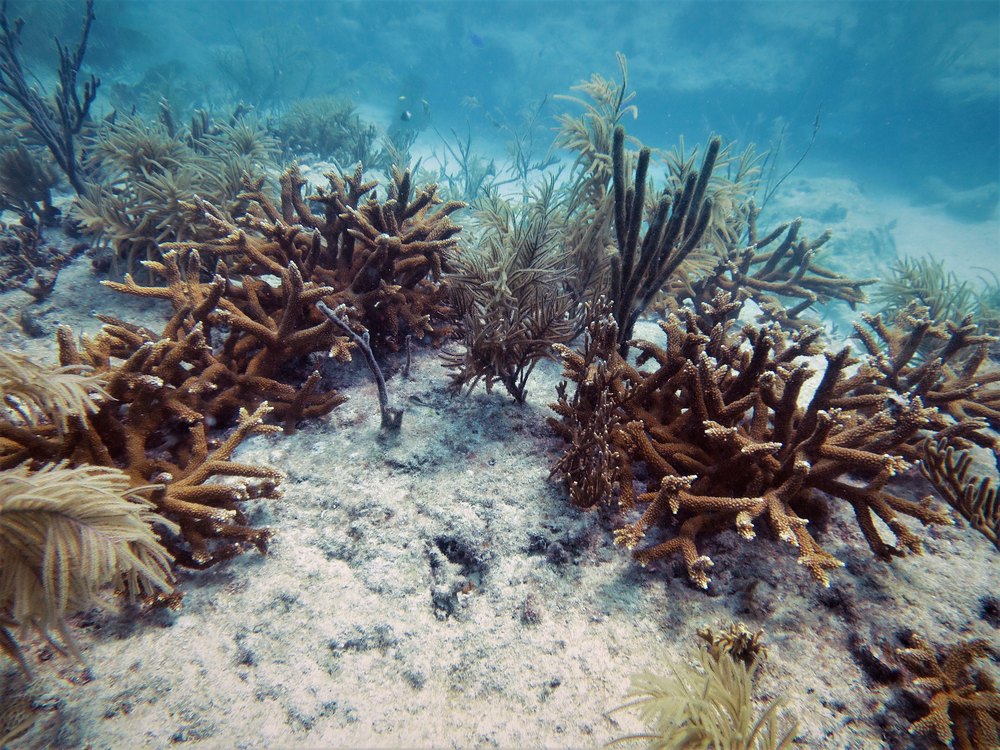

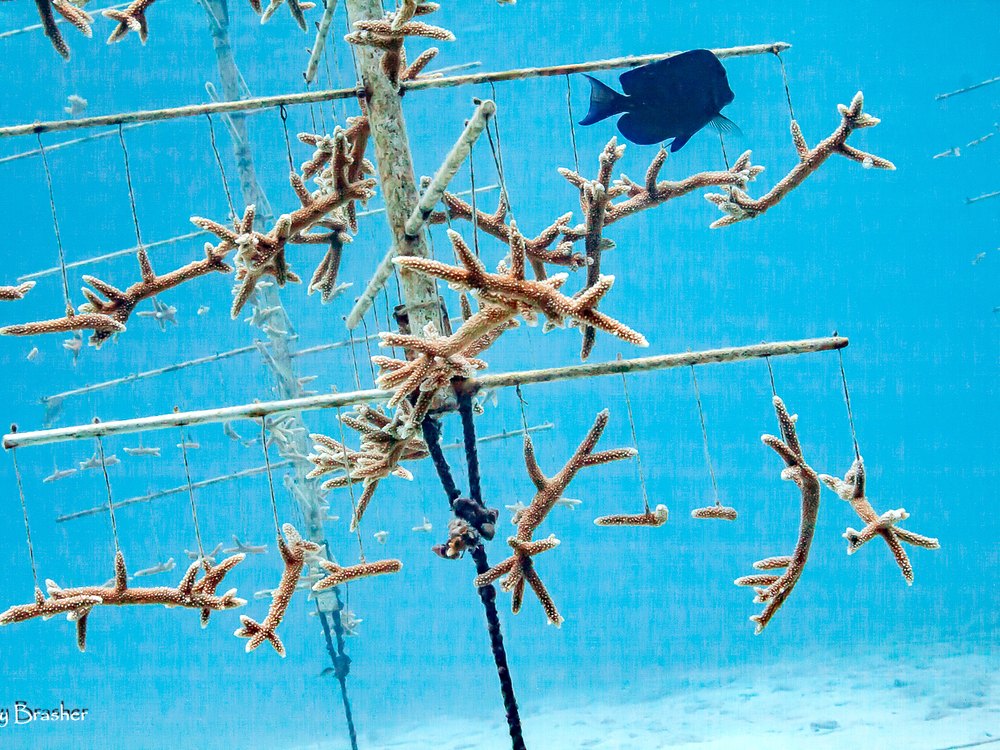

A study of 20 outplanting projects run by the Coral Restoration Foundation followed 2,419 Staghorn Coral colonies monitored from 2007 to 2015. [26] Survival was high at first and then generally fell after two years, and in the seven projects that lasted at least five years, between 4% and 89% of colonies survived. [26] In that study, outplanted colonies grew about 10 cm a year for the first two years before growth levelled off. [26] Planting is not enough alone: the authors conclude that stressors must be reduced, while outplanting guards against local extinction and keeps genetic diversity. [26]
After the 2023 heat wave, a study found that two decades of restoration, including two land-based gene banks, had prevented the regional extirpation (local disappearance) of these corals, even though outplants, nurseries and wild colonies all suffered large losses. [27] The IUCN notes that colonies differ in how much heat they tolerate. [3]
History and culture
The first description
Lamarck described the coral in 1816 as Madrepora cervicornis. [8][7][3]
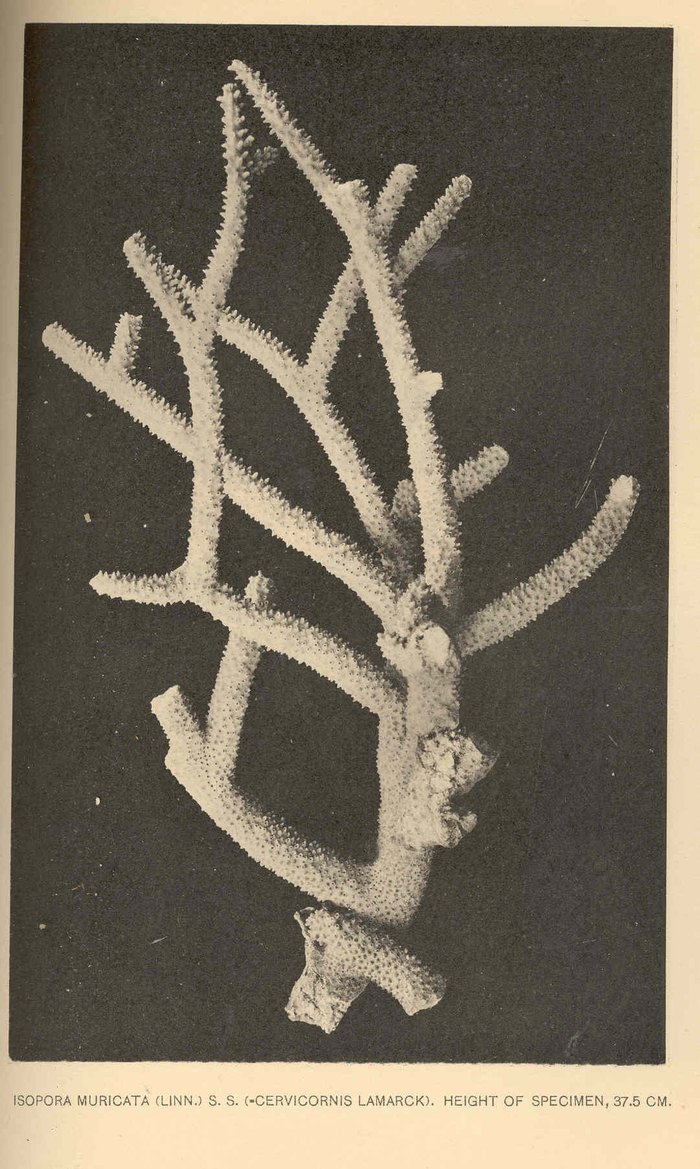

The Caribbean decline
Aronson and Precht (2001) argued that over the previous 20 to 25 years white band disease had killed more Acropora than hurricanes over large areas. They described the regional loss as without precedent in the late Holocene, and noted that fleshy algae spread as coral cover fell. [4]
For the decline figures, see Conservation.
In 2006 NOAA Fisheries listed the Staghorn Coral and the Elkhorn Coral (a different species) as Threatened, the first corals listed under the US Endangered Species Act. [25]
Coral restoration
The Coral Restoration Foundation, a non-profit organisation in Key Largo, Florida, says it was founded in 2007 to build offshore coral nurseries. [28] For the numbers and results, see Conservation.
Use by people
The IUCN lists the Staghorn Coral as one of the corals most often harvested for the aquarium trade, at least in the United States. It reports that 10 times more corals were seized in 2012 than in 2003, and that legal imports doubled from 2003 to 2009. [3] For the legal protection, see Conservation.
Taxonomy
| Rank | Name |
|---|---|
| Kingdom | Animalia |
| Phylum | Cnidaria |
| Class | Anthozoa |
| Subclass | Hexacorallia[31] |
| Order | Scleractinia |
| Suborder | Astrocoeniina[31] |
| Family | Acroporidae |
| Genus | Acropora |
| Species | Acropora cervicornis (Lamarck, 1816)[7][8][10] |
Synonyms (4)
| Name |
|---|
| Heteropora cervicornis (Lamarck, 1816) |
| Madrepora cervicornis (Lamarck, 1816) |
| Acropora attenuata (Brook, 1893) |
| Madrepora attenuata (Brook, 1893) |
From the GBIF backbone.[30]
Higher classification
The Staghorn Coral is a stony coral, in the order Scleractinia and the family Acroporidae.[7][8] Stony corals build the hard skeletons that make up reefs. Lists differ on the class. WoRMS uses Hexacorallia, the corals and anemones with six-fold symmetry, while GBIF and the IUCN use Anthozoa, a wider class that holds them.[3][7][8] The Catalogue of Life shows both.[10] The only other Acropora species in the Caribbean is the Elkhorn Coral, A. palmata.[9]
The Fused Staghorn
Vollmer and Palumbi (2002) found that the Fused Staghorn is a first-generation hybrid, and that its shape depends on which species supplied the egg (see Forms and variants).[9]
Sources
- NOAA Fisheries, Staghorn Coral species page
- NMITA (University of Miami) Coral Database, Acropora cervicornis systematics page
- Crabbe, Rodriguez-Martinez, Villamizar, Goergen, Croquer and Banaszak 2022, “Acropora cervicornis”, The IUCN Red List of Threatened Species 2022: e.T133381A165860142 (assessed 1 June 2021)
- Aronson and Precht 2001, “White-band disease and the changing face of Caribbean coral reefs”, Hydrobiologia 460(1–3): 25–38
- Irwin, Greer, Humston, Devlin-Durante et al. 2017, “Age and intraspecific diversity of resilient Acropora communities in Belize”, Coral Reefs 36(4): 1111–1120
- Animal Diversity Web, Acropora cervicornis
- WoRMS (World Register of Marine Species, World List of Scleractinia), Acropora cervicornis (Lamarck, 1816), AphiaID 206989
- GBIF Backbone Taxonomy, Acropora cervicornis (Lamarck, 1816), key 5184681
- Vollmer and Palumbi 2002, “Hybridization and the evolution of reef coral diversity”, Science 296(5575): 2023–2025
- Catalogue of Life (ChecklistBank), Acropora cervicornis (Lamarck, 1816), usage 9NXX
- Weil, Hammerman, Becicka, Cruz-Motta et al. 2020, “Growth dynamics in Acropora cervicornis and A. prolifera in southwest Puerto Rico”, PeerJ 8: e8435
- Wallace, Done and Muir 2012, “Revision and catalogue of worldwide staghorn corals Acropora and Isopora (Scleractinia: Acroporidae) in the Museum of Tropical Queensland”, Memoirs of the Queensland Museum – Nature 57: 1–255
- Lirman, Schopmeyer, Galvan, Drury et al. 2014, “Growth dynamics of the threatened Caribbean staghorn coral Acropora cervicornis: influence of host genotype, symbiont identity, colony size, and environmental setting”, PLoS ONE 9(9): e107253
- Schopmeyer, Lirman, Bartels, Gilliam et al. 2017, “Regional restoration benchmarks for Acropora cervicornis”, Coral Reefs 36(4): 1047–1057
- Towle, Enochs and Langdon 2015, “Threatened Caribbean coral is able to mitigate the adverse effects of ocean acidification on calcification by increasing feeding rate”, PLoS ONE 10(4): e0123394
- Koch et al. 2022, “Assisted sexual reproduction of Acropora cervicornis for active restoration on Florida’s Coral Reef”, Frontiers in Marine Science 9: 959520
- Huntington, Miller, Pausch and Richter 2017, “Facilitation in Caribbean coral reefs: high densities of staghorn coral foster greater coral condition and reef fish composition”, Oecologia 184(1): 247–257
- Cramer, Jackson, Donovan, Greenstein et al. 2020, “Widespread loss of Caribbean acroporid corals was underway before coral bleaching and disease outbreaks”, Science Advances 6(17): eaax9395
- Eakin et al. 2010, “Caribbean corals in crisis: record thermal stress, bleaching, and mortality in 2005”, PLoS ONE 5(11): e13969
- Manzello, Cunning, Karp, Baker et al. 2025, “Heat-driven functional extinction of Caribbean Acropora corals from Florida’s Coral Reef”, Science 390(6771): 361–366
- Wallace 2008, “New species and records from the Eocene of England and France support early diversification of the coral genus Acropora”, Journal of Paleontology 82(2): 313–328
- Selwyn and Vollmer 2023, “Whole genome assembly and annotation of the endangered Caribbean coral Acropora cervicornis”, G3: Genes, Genomes, Genetics 13(12): jkad232
- Wu, Xu, Lei, Song et al. 2024, “Ancient hybridisation fuelled diversification in Acropora corals”, Molecular Ecology 34(22): e17615
- National Marine Fisheries Service 2006, “Endangered and Threatened Species: Final Listing Determinations for Elkhorn Coral and Staghorn Coral”, Federal Register 71(89): 26852–26872, 9 May 2006
- NOAA Fisheries, “Listing Elkhorn and Staghorn Corals under the ESA” (timeline page)
- Ware, Garfield, Nedimyer, Levy et al. 2020, “Survivorship and growth in staghorn coral (Acropora cervicornis) outplanting projects in the Florida Keys National Marine Sanctuary”, PLOS ONE 15(5): e0231817
- Muller, Ladd, Karp et al. 2025, “Success of restoration strategies in preventing extirpation of 2 critically endangered coral species”, Conservation Biology 40(2): e70168
- Coral Restoration Foundation, home page and 2025 spawning page
- Richards, Miller and Wallace 2013, “Molecular phylogenetics of geographically restricted Acropora species: implications for threatened species conservation”, Molecular Phylogenetics and Evolution 69(3): 837–851
- GBIF backbone, Acropora cervicornis, synonyms
- ITIS, Acropora cervicornis, classification