The lion (Panthera leo) is a large, tawny cat of Africa and one small area of India. It is the most social of the cats: females live in family groups called prides, and adult males grow a mane.[1][2] Lions live mostly in savanna and grassland and hunt large hoofed animals.[3][4] They have vanished from most of their old range. The IUCN rates the species Vulnerable, with about 22,000–25,000 adults and subadults left in Africa.[3]
Quick facts
Description
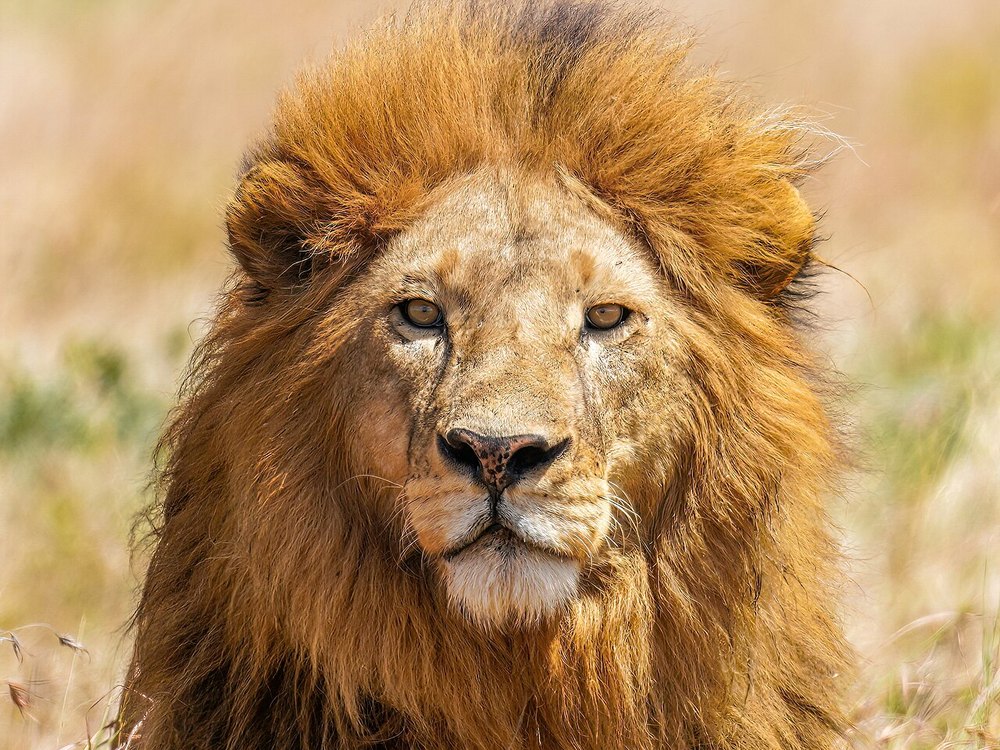
The lion has a short, tawny coat, white underparts and a long tail that ends in a dark tuft. The sexes look different: adult males have a mane, and adult lions have 30 teeth.[2] The mane grows from about age three and ranges in colour from blond to black.[2] Cubs are born with brown spots on a greyish coat, which fade by about three months, though spots may stay on the belly.[2]
Mane colour and length are not fixed. In a Serengeti study, darker manes signalled nutrition and testosterone and influenced both female choice and fights between males, while longer manes signalled fighting success. Males had lighter or shorter manes in hotter seasons, years and habitats.[5] In a small group of captive lions in Addis Ababa, variants in the MITF and TYR genes were linked to mane colour, but that is a candidate-gene result in 15 animals and not proof of cause.[6]
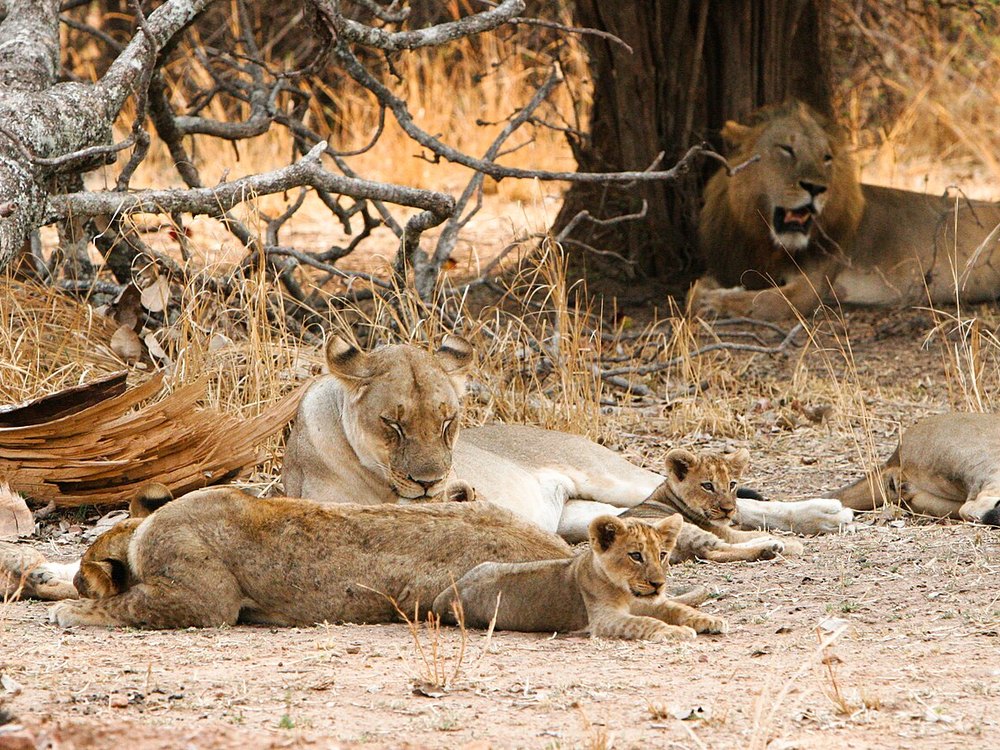
Lions rest for most of the day. Their activity comes in short bursts of hunting, travelling and fighting, followed by long rests that add up to as much as 21 hours in 24.[7] They are the most social of the cats, living in prides of related females, while most other cats live alone.[1][8]

Name
The English word “lion” came through Old French from Latin leō, which came from Greek léōn. Scholars call the Greek word a loanword of unknown origin.[9][10] The scientific name Panthera leo goes back to Linnaeus, who described the lion in 1758 as Felis leo; the genus Panthera was named by Lorenz Oken in 1816.[11][12]
In other languages
| Language | Name | Notes |
|---|---|---|
| German | Löwe | from Old High German lēo, from Latin leō |
| Italian | leone | from Latin leō, an old loan from Greek |
| Portuguese | leão | — |
| Afrikaans | leeu | from Dutch leeuw |
| Zulu | ibubesi; imbube | — |
| Tswana | tau | — |
| Shona | shumba | — |
| Japanese | ライオン (raion) | from English lion; also 獼子 (shishi), “king of beasts” in dictionary wording |
| Chinese | 狮 (shī) | bound form meaning “lion” |
| Sanskrit | सिंह (siṃha) | “the powerful one” |
German, Italian, Portuguese, Japanese, Chinese, Zulu and Sanskrit entries come from dictionaries; Afrikaans, Tswana and Shona come from a database of southern African animal names that cites printed dictionaries.[13][10][14][15][16][17][18][19] Names in other languages, such as Swahili, French and Spanish, are not listed because no reliable dictionary source was found.
Body
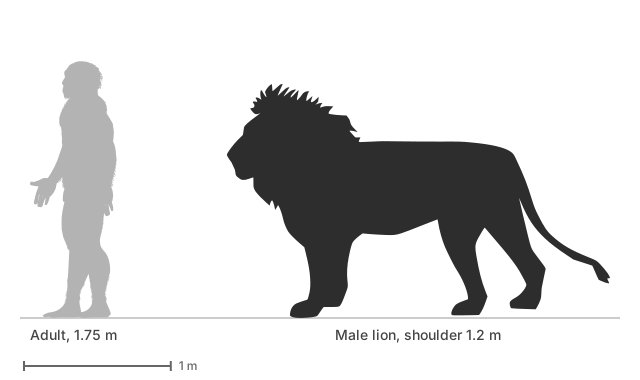
In Kruger National Park, South Africa, adult males averaged 187.5 kg (158 males measured) and adult females 124.2 kg (186 females). Growth is steady to about 36 months. Males keep growing until about 7 years and females until 9–10 years.[20] Lions in East Africa are smaller than those from Zimbabwe, the Kalahari and Kruger.[20] Across the species, one zoo source gives 150–260 kg for males and 122–180 kg for females.[7] Males measure 1.7–2.5 m from head to body end and females 1.4–1.7 m, and the tail adds about 0.6–1.0 m.[7][2] The shoulder is about 1.2 m high in males and 1.1 m in females.[2] A newborn cub weighs about 1–2 kg.[7][2]
Size ranges
The Kruger figures come from animals in one park. Speed, jump height and roar loudness are not listed because no study measuring them was found.
Behavior
Prides
Female lions live in fission-fusion groups called prides and forage only with members of their own pride. Mothers keep their cubs together in a crèche, and large prides often have four or five mothers raising young together, which protects the cubs from males that kill them.[8] Most females stay in the pride they were born in. About a third leave before age four, mostly when a new group of males arrives or when adult females give birth. All males leave.[21] A pride typically has 4–6 adults, and in rich ecosystems it can reach about 30 animals. Pride size follows how much food there is in the lean season.[3][22] Pride ranges are large: a mean of 600 km² in Etosha, 266–4,532 km² in the Kgalagadi and a mean of 4,344 km² in Namibia’s Kunene region.[3]
Males and takeovers
Males join in coalitions, and larger coalitions are more likely to win a pride and to hold it for more than two years. When a new coalition takes over, many cubs die, and females stay less fertile for the first months.[23] Males seldom stay long: successful takeover males have about two years before a stronger coalition replaces them.[2]
Roaring and rest
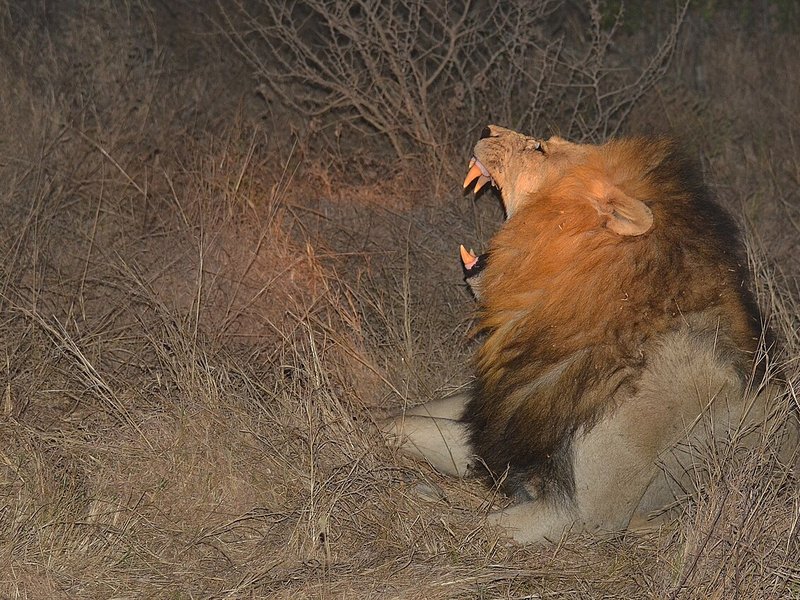
Males can roar from about one year old, and females a few months later. The roar identifies the animal and advertises the pride’s territory.[7] In a Serengeti recording study, differences between male and female roars were explained entirely by body size, and the roars did not reveal a male’s condition. The authors concluded that roars were probably shaped mainly to advertise territory.[24] Activity is mostly at night and around dawn and dusk: a study of large predators across Africa found that all showed some crepuscular behaviour, and in the Okavango lions and spotted hyenas were the night-active predators, with no change across the moon cycle.[25][26]
.jpg)
.jpg)
Diet
Lions are carnivores that take mainly medium to large hoofed animals, from mice up to young elephants.[27] A review of 32 studies from 48 places found that lions prefer prey of 190–550 kg, with 350 kg the most preferred. Gemsbok, buffalo, wildebeest, giraffe and zebra are preferred, and warthogs, which are lighter, are taken in line with how common they are.[4] Prey differs by place. In Hwange National Park in Zimbabwe, buffalo made up 56% of male kills and 33% of female kills, and most kills lay within 2 km of waterholes.[27] In the Gir Forest the commonest wild prey is the chital deer and livestock have long been a big part of the diet.[3] Skeleton Coast lions take Cape Fur Seals.[3]
| Food | Where | Notes |
|---|---|---|
| Buffalo, wildebeest, zebra, giraffe, gemsbok | Savanna, across Africa | The preferred prey across studies[4] |
| Young elephants | Chobe, Botswana; Hwange, Zimbabwe | Lions at Savuti switch to elephants in the late dry season, and most elephants killed were 4–11 years old[28][27] |
| Chital deer and livestock | Gir, India | [3] |
| Cape Fur Seals | Skeleton Coast, Namibia | [3] |
Hunting
In the Serengeti, lions do not seem to cooperate much when hunting, except when they hunt buffalo. Single lionesses succeed in about 15% of hunts and a pair in about 25%, and groups of three to six do little better.[29] Groups of fewer than five seldom attack buffalo.[29] In Kruger, the most important factor in hunting success was the kind of prey, and females favoured zebra and wildebeest while males mainly took buffalo.[30]
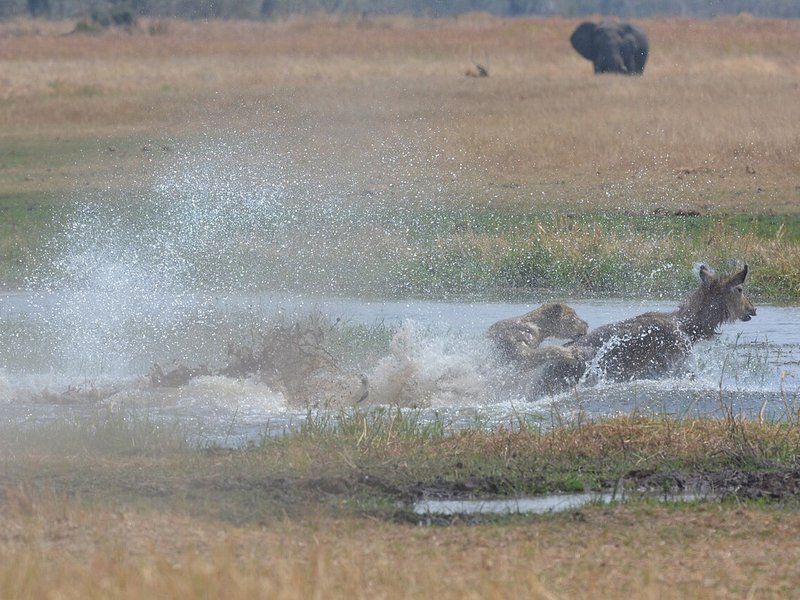

Eating
A lone lioness in the Serengeti took in about 10 kg of meat a day, while in the dry season larger groups got under 2 kg each unless they caught buffalo.[29] A male can eat about a quarter of his weight, up to 63 kg, in one meal.[7] Lions also scavenge, and they take kills from hyenas and cheetahs.[2][3]
Life cycle
| Stage | Age / time | Notes |
|---|---|---|
| Pregnancy | About 110 days | Zoo and reference sources agree on about 3.5 months[7][2] |
| Litter | 1–6 cubs, about 3 on average | A newborn weighs about 1–2 kg and is spotted[2][7] |
| Early growth | Eyes open at about 11 days, walking at about 15 days | From one secondary source; the mother hides the cubs for about 8 weeks[2] |
| Weaning | 7–10 months | Cubs depend on the pride for at least 16 months[2] |
| Maturity | 3–5 years | Females about 4 and males about 5 in one source; about 3–4 in another[2][7] |
Lions breed all year, with a peak in the rainy season.[2] New male coalitions kill many cubs after a takeover, and mothers try to defend them.[23][2]
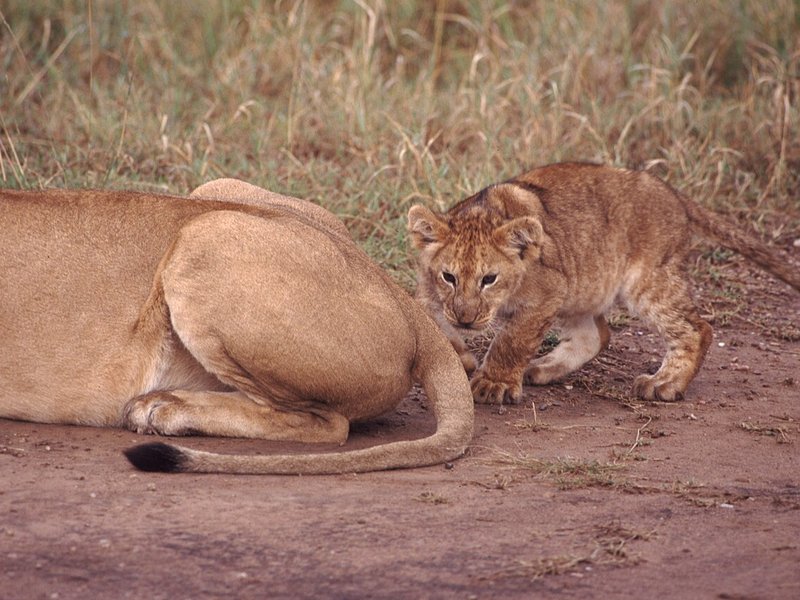

Between litters
Lionesses usually give birth again after 20–30 months. A mother whose cubs die can come into heat again within 2–3 weeks.[2]
Lifespan
In the Serengeti, life expectancy from the age of 3 months is 4.7 years for females and about 2.4–2.7 years for males.[31] In zoos the average lifespan is about 13–17 years; two sources disagree, and no record age was verified.[7][2]
The Serengeti figures are mean life expectancy for animals that survive the first three months, and include males that leave and die. They are not maximum lifespans.[31]
Ecology
Competitors
The lion is the top predator of the savanna. It takes kills from spotted hyenas and cheetahs.[3] A review of 148 studies found that lions and hyenas compete strongly, over food and space and through killing each other and stealing kills, but also help each other, because their prey choices differ and scavenging gives each chances.[32] Across six ecosystems, African Wild Dog numbers fell where lion numbers were high.[33] Cheetahs avoid lions in space and time and use places with fewer prey where lions are rare.[34] In Gir, lions and leopards are active at the same hours but use different habitats: leopards prefer dense cover, while lions use both dense and open ground.[35]
Disease
Canine distemper has hit lions hard. An outbreak in 1993–94 coincided with the death of about a third of the Serengeti lions, and the virus caused another epidemic in Ngorongoro Crater in 2001.[36] In September 2018 the same disease reached the Asiatic lions of Gir, and the virus was found in 68 lions and 6 leopards.[37] In Hluhluwe-iMfolozi Park, South Africa, bovine tuberculosis killed more than 30% of the native lions.[38]
Lions and people
Lions have killed people in many places. In Tanzania they killed more than 563 people and injured at least 308 from 1990 to the early 2000s, and attacks were most frequent where prey other than bush pigs was scarce.[39] The Tsavo man-eaters are the best known case. Two lions stopped work on a railway in Kenya in 1898, and estimates of how many people they killed range from 28 to 135.[40][41] Studies of their teeth found injuries, and suggest man-eating was an alternative to hunting hoofed prey when the lions had dental disease or prey was scarce.[42]
Habitat and range
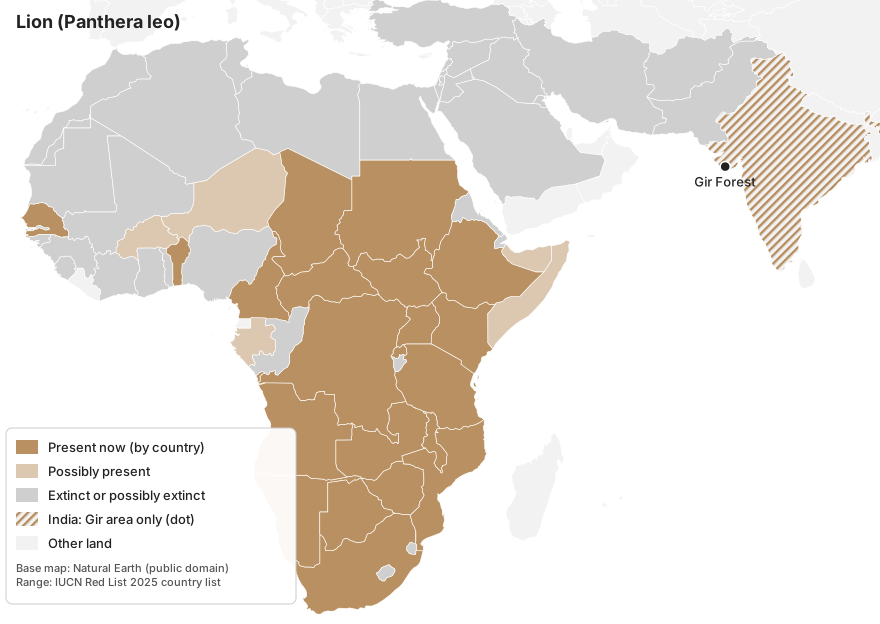
Lions can live in almost any habitat except tropical rainforest and the heart of the Sahara. They have been recorded above 4,000 m in the Bale Mountains in Ethiopia and on Mount Kilimanjaro.[3] The core habitat is savanna, which here means land with 300–1,500 mm of rain a year. It covers about 13.5 million km² of Africa and holds most of the lion’s present range.[43] Lion numbers are highest on rich grass plains, up to 55 adults per 100 km² in parts of the Serengeti, and lowest in the semi-deserts of southern Africa, about 1.5 per 100 km².[3] Kalahari lions get moisture from prey and from plants such as the tsama melon. The Asiatic lions of Gir live in dry deciduous forest.[3]
Lions once lived across Africa, southern Europe, the Middle East and as far east as India. They are gone from North Africa, the Middle East and Europe.[3] The IUCN gives two figures for how much range has been lost: the current range of about 1.57 million km² is 6% of the historical range, and elsewhere the same text says about 85% was lost since 1500. The two use different baselines, so the range lost is roughly 85–94% depending on the baseline.[3] The range shrank by 34% over the 21 years to 2025.[3]
Africa has an estimated 22,000–25,000 adult and subadult lions. The African estimate fell by 25% between 2006 and 2018, from 33,292 to 25,105.[3] Lions are declining almost everywhere in Africa except in Botswana, Namibia, South Africa and Zimbabwe, where numbers are stable or growing, partly in small fenced reserves.[44] In West Africa an estimated 406 lions (273–605) survive in four of 21 protected areas surveyed.[45] In India, the Gir lions numbered about 670 in 2020, though the IUCN text also gives 537 for the same survey.[3] Lions have been reintroduced in Malawi and Rwanda, and some were also released in Mozambique.[3]
Evolution
The living lion came from Africa, and its lineages split into a northern and a southern group. The two groups diverged about 70,000 years ago in one study of whole genomes,[46] while another study of mitochondrial DNA puts the divergence at about 151,000 years ago.[47] Lions reached Asia in the last tens of thousands of years: an analysis of the northern group dates the first move from North Africa into India to about 21,000 years ago, with a later move into the Middle East.[48]
The cave lion (Panthera spelaea) was a separate lineage that lived across Europe and northern Asia as far as Beringia, and its last fossil is about 14,200 years old.[49] Its split from modern lions is dated to about 1.85 million years ago from mitochondrial DNA, but only to about 500,000 years ago from nuclear genomes.[49][46] A 2026 study of 12 cave lion genomes found limited ancient gene flow between the two lineages: 3.2–4.4% modern lion ancestry in one 20,000-year-old Asian cave lion.[50] The American lion (Panthera atrox) became genetically isolated from the cave lion about 340,000 years ago.[51]
Among the big cats, the lion and leopard are sister lineages, and the jaguar is the next closest. This is the most common branching pattern in the genomes, though only about 64% of genome windows support it.[52] The genus Panthera is dated to about 10.7 million years ago,[53] but the order of the tiger and snow leopard on the tree is disputed. Ancient gene flow between lineages is documented, and the lion lineage shows the most signs of it.[52][54][55]
Forms and variants
Subspecies
Lion subspecies are not settled. Older checklists listed up to 11 subspecies, including the Barbary, Asiatic, Masai, Transvaal and Cape lions.[56] The IUCN Cat Specialist Group recognised just two in 2017, Panthera leo leo (West and Central Africa and India) and Panthera leo melanochaita (southern and eastern Africa), and did not recognise the other names.[56] DNA studies describe four to six regional groups: a northern lineage and a southern lineage, with East and Southern Africa, West and Central Africa, and India as separate clusters.[57][58][48] Some databases follow the 2017 two-subspecies list, while GBIF lists eight.[11][12] Whether any of these groups deserve formal names is still debated. The contact zone of the two main groups is somewhere in Ethiopia.[56]
See all named subspeciesThe cards show the two names recognised in 2017. The full list also has the older names and the extinct Barbary and Cape lions. It follows the 2005 and 2017 checklists, and other names may have been published, so there may be more.
The Barbary lion survived in North Africa later than long thought. The last confirmed lion in Morocco’s High Atlas was shot in 1942, and a statistical estimate puts the last wild lions in Algeria at about 1958, with an upper bound of 1962.[59] Captive lions kept in Morocco as “royal lions” may descend from Barbary lions, but how pure they are is debated.[60] The Cape lion was driven out of the Cape region of South Africa in the mid-19th century. A 2024 study of 22 skulls found it did not stand apart from other southern lions.[61]
White lions
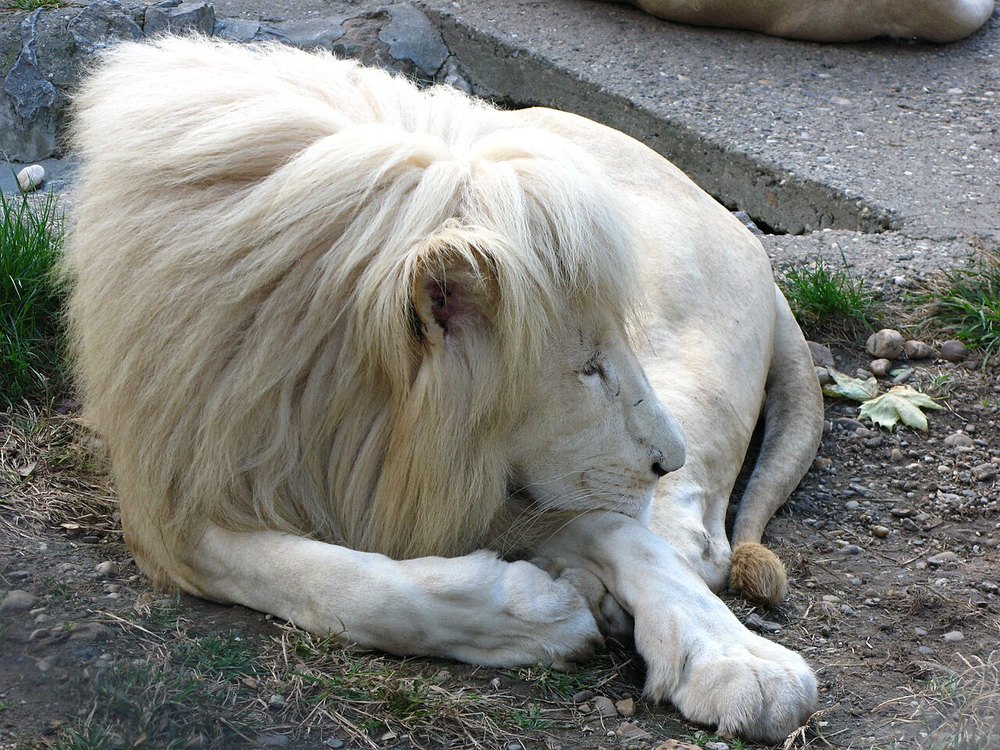
White lions are a rare colour form. A change in the TYR gene (260G>A, which swaps one amino acid in tyrosinase) is likely to cause the white coat. It matched the coat colour in all 47 lions tested, 17 white and 30 normal.[62] Every photograph of a white lion that could be reused was of a captive animal, so none is shown here. No published record of a black (melanistic) lion was found.[62][2]

Hybrids
Lions have been crossed with other big cats in captivity. These hybrids are not a species, and no wild hybrid has ever been confirmed. Lions and tigers did live in the same parts of Asia in the past, but the study of that overlap says nothing about hybrids.[63][64] The best-documented crosses are below, and the parent listed first is the father. The liger has been bred in captivity since the 1820s.[65]
See all lion hybridsOnly hybrids with a freely licensed photo are shown here. The full list also has the litigon, liliger and jaglion. It covers the crosses with a documented case, and there may be more.
Size. The largest liger on record is Hercules, which Guinness World Records listed in 2013 as the largest living cat, at 418.2 kg.[66] One proposed reason for such size is genomic imprinting, in which paternal genes push growth and maternal genes hold it back, and in a liger the lion father’s growth genes meet no matching restraint from a tigress. This is a hypothesis taken from studies of mice: no study has measured imprinting in a liger or tigon, and the tigon is usually smaller.[67][68][65]
Fertility. Female hybrids are fertile, and male hybrids have been reported to be sterile, as expected under Haldane’s rule, which says the sex with two different sex chromosomes is the one affected.[54][69] Female tigons at Alipore Zoo in Kolkata bred with lions and produced litigons. A liger at Novosibirsk Zoo in Russia bred with a lion to produce a liliger.[70][71] No fertile male hybrid has been documented, but that does not prove none exists. The records of Alipore differ on dates and cub counts, so they are not given here.[70]
The leopon and others. The earliest well-described leopon was bred at Kolhapur, India, in 1910 and described by R. I. Pocock in 1912. A pair of leopons was also bred in Japan at Koshien Hanshin Park from 1959.[72] One jaglion pair was born in Ontario in 2006; the sanctuary says the birth was a surprise.[73] No sourced case of a lion crossed with a puma was found.
Law and ethics. In the United States, the Big Cat Public Safety Act of 2022 makes it unlawful to breed or possess any lion, tiger, leopard, cheetah, jaguar or cougar “or any hybrid of such species”, with exemptions for licensed exhibitors, universities, qualifying sanctuaries and animals owned before the law.[74] The Association of Zoos and Aquariums has said that hybrids have no conservation value and give a confused educational message.[64] The ancient gene flow found in cat genomes was between the ancestors of the snow leopard and the lion, long before captive breeding.[54][52]
Conservation
The lion is listed as Vulnerable on the IUCN Red List (criterion A2c, assessed in May 2025). The listing rests on an estimated 34% decline in range over three generations (21 years), and the trend is decreasing. The 2023 assessment was also Vulnerable, with a 36% range decline.[3][75] Subpopulations differ: lions in West Africa are Critically Endangered, P. l. leo as a whole is Endangered and P. l. melanochaita is Vulnerable.[3] African lion populations are in Appendix II of CITES, which controls trade, and the Indian population is in Appendix I.[3]
Threats
Habitat lossKilling in conflict with peopleLoss of preySnaresTrade in bones and body partsDisease[3]The main threats are habitat loss, which the IUCN names as the most important driver of decline, killing in conflict with livestock owners, and loss of prey.[3] Lions are often caught in snares set for other animals: in one population, about 11.5% of adult and subadult lions and 20% of adult males had been snared at some point, and 82% of those were treated and recovered.[3] Protected areas for lions need US$1,000–2,000 per km² a year, and they receive about $200.[3]
Trophy hunting. This is debated. The IUCN says it can help in some areas but may at times contribute to local declines in countries such as Botswana, Namibia, Tanzania, Zimbabwe, Cameroon and Zambia. Sport hunting of species whose males kill cubs after takeovers risks population decline, and the African countries with the highest hunting intensity showed the steepest lion declines over 25 years.[3][76]
Bone trade. South Africa began exporting lion bones to Asia in 2008. Because the lion is the only big cat in Appendix II, commercial trade is legal, and lion bones are used as a substitute for tiger bone.[77] Whether captive breeding relieves pressure on wild lions is disputed, and a 2025 review found that the evidence does not show it does.[78]
History and culture
Lions in ancient art and myth
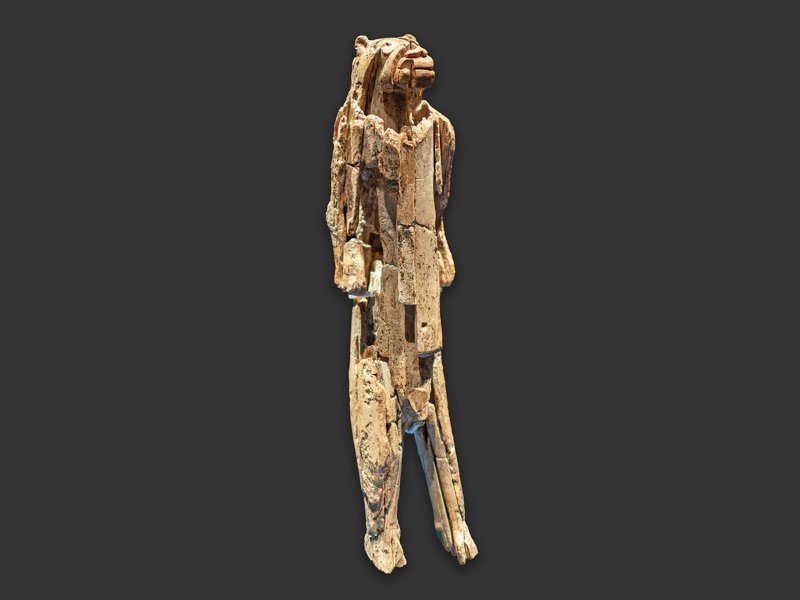
The Lion Man of Hohlenstein-Stadel is a figurine about 30 cm high, carved from mammoth tusk about 40,000 years ago. It was found at Hohlenstein-Stadel in the Swabian Jura, Germany.[79] Herodotus wrote that lions lived in Greece only between two rivers, the Nestus and the Achelous.[80] In Greek myth, Heracles was first ordered to bring the skin of the Nemean lion, “an invulnerable beast”.[81] Barbary lions were shipped from Carthage across the Roman empire for use in the arena.[82]

Near extinction in India
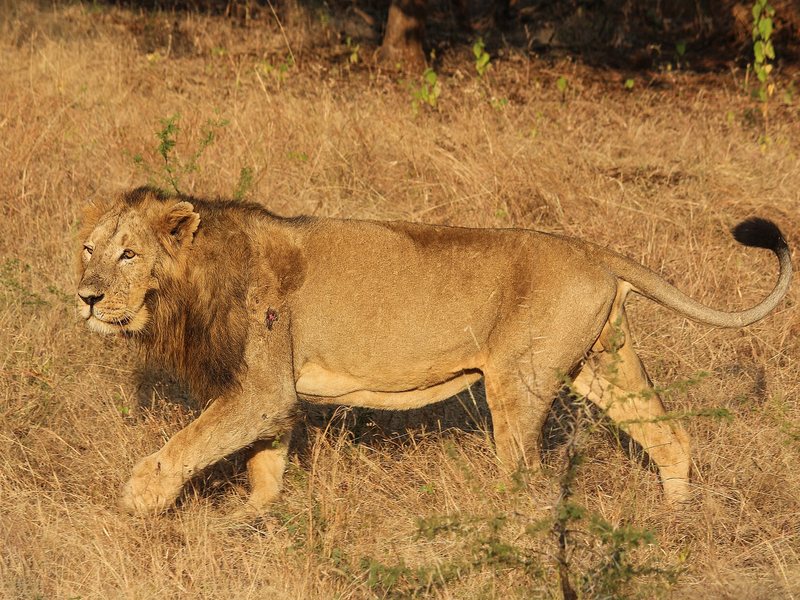
By the end of the 1800s only a small population of Asiatic lions remained in Junagadh. The Nawab of Junagadh protected the Gir area, and a 2015 census counted 523 lions, 27% more than in 2010, with up to 40% living outside the park.[83]

Symbols and stories
Jacob’s blessing calls Judah “a lion’s whelp”, and the book of Revelation names “the Lion of the tribe of Judah”.[84][85] In Aesop’s fables the lion is a common character, and the tale of the lion and the mouse starts “A lion was awakened from sleep by a mouse running over his face.”[86] A Japanese dictionary calls the lion the “king of beasts”.[15] The English phrase “king of the jungle” fits badly: lions are absent from tropical rainforest and live mostly in open country.[3]

.jpeg)
Famous lions
Cecil, a tagged male lion in a research project in Zimbabwe, was killed by a trophy hunter in July 2015. News stories rose from about 15 a day to nearly 12,000 at the peak, with 87,533 social media mentions.[87] The Tsavo man-eaters of 1898 are described in J. H. Patterson’s 1907 book, which says they killed 28 railway workers and many more African people not officially counted. His figures are disputed.[41][40]
Taxonomy
| Rank | Name |
|---|---|
| Kingdom | Animalia |
| Phylum | Chordata |
| Class | Mammalia |
| Order | Carnivora |
| Suborder | Feliformia (cat-like carnivores) |
| Family | Felidae (cats)[56] |
| Subfamily | Pantherinae (big cats)[56] |
| Genus | Panthera Oken, 1816[12] |
| Species | Panthera leo (Linnaeus, 1758)[11][12] |
The species was first described as Felis leo in the tenth edition of Systema Naturae, page 41.[11] Linnaeus gave the locality only as “Africa”, and a later author restricted it to the Barbary coast, more exactly Constantine in Algeria.[56] The Mammal Diversity Database treats the lion as a single species.[88]
Sources
- Klećkowska-Nawrot et al. 2026, BMC Veterinary Research
- Animal Diversity Web, Panthera leo (secondary)
- Nicholson et al. 2025, IUCN Red List assessment of Panthera leo
- Hayward & Kerley 2005, Journal of Zoology 267: 309–322 (prey preferences)
- West & Packer 2002, Science 297: 1339–1341 (manes)
- Addis Ababa lion genomes, Genome Biology and Evolution 2024
- San Diego Zoo Wildlife Alliance, lion fact page
- Packer, Scheel & Pusey 1990, American Naturalist 136: 1–19
- DWDS, Löwe (quoting Pfeifer, Etymologisches Wörterbuch des Deutschen)
- Treccani, leone
- GBIF backbone, Panthera leo
- ITIS, Panthera leo
- Duden, Löwe
- Priberam, leão
- Kotobank (Digital Daijisen), ライオン
- MDBG (CC-CEDICT), 狮
- Roberts, English-Zulu Dictionary
- Monier-Williams, Sanskrit-English Dictionary, siṃha
- Tsammalex, Panthera leo (names in southern African languages)
- Smuts, Robinson & Whyte 1980, Journal of Zoology 190: 365–373 (body mass, Kruger)
- Pusey & Packer 1987, Behaviour 101: 275–310 (dispersal)
- Van Orsdol, Hanby & Bygott 1985, Journal of Zoology 206: 97–112 (pride size and food)
- Packer & Pusey 1983, American Naturalist 121: 716–728 (takeovers and infanticide)
- Pfefferle et al. 2007, Journal of the Acoustical Society of America 122 (roars)
- Hayward & Slotow 2009, South African Journal of Wildlife Research 39: 109–125 (activity of large predators)
- Cozzi et al. 2012, Ecology 93: 2590–2599 (activity in the Okavango)
- Davidson et al. 2013, PLOS ONE 8: e55182 (Hwange prey)
- Power & Compion 2009, African Zoology 44 (lions that kill elephants)
- Fryxell et al. 2025, Ecology Letters (Serengeti hunting)
- Funston, Mills & Biggs 2001, Journal of Zoology 253: 419–431 (hunting in Kruger)
- Barthold et al. 2016, Ecology and Evolution 6: 4821 (Serengeti life expectancy)
- Periquet, Fritz & Revilla 2015, Biological Reviews (lions and hyaenas)
- Creel & Creel 1996, Conservation Biology (wild dogs)
- Durant 1998, Journal of Animal Ecology (cheetahs)
- Gir camera-trap study, PLOS ONE 2020 (lions and leopards in Gir)
- Munson et al. 2008, PLOS ONE 3: e2545 (canine distemper in the Serengeti)
- Emerging Infectious Diseases 2019, canine distemper in Gir lions
- Journal of Wildlife Diseases 2011, tuberculosis and FIV in Hluhluwe-iMfolozi lions
- Packer et al. 2005, Nature 436: 927 (lion attacks in Tanzania)
- Yeakel et al. 2009, PNAS 106: 19040 (the Tsavo man-eaters)
- Patterson 1907, The Man-Eaters of Tsavo
- DeSantis & Patterson 2017, Scientific Reports 7: 904 (Tsavo and Mfuwe teeth)
- Riggio et al. 2013, Biodiversity and Conservation, “The size of savannah Africa”
- Bauer et al. 2015, PNAS, “Lion populations are declining rapidly across Africa”
- Henschel et al. 2014, PLOS ONE 9: e83500 (West African lions)
- de Manuel et al. 2020, PNAS (lion and cave lion genomes)
- Broggini et al. 2024, International Journal of Molecular Sciences
- Barnett et al. 2014, BMC Evolutionary Biology 14: 70
- Stanton et al. 2020, Scientific Reports (cave lion mitogenomes)
- Cave lion genomes, Cell 2026
- Barnett et al. 2009, Molecular Ecology (American lions)
- Figueiró et al. 2017, Science Advances 3: e1700299
- Tseng et al. 2014, Proceedings of the Royal Society B 281 (Panthera ages)
- Li et al. 2016, Genome Research 26: 1–11 (ancient hybridisation in cats)
- Davis et al. 2010, Molecular Phylogenetics and Evolution
- Kitchener et al. 2017, A revised taxonomy of the Felidae, IUCN Cat Specialist Group
- Bertola et al. 2015, PLOS ONE 10: e0137975
- Bertola et al. 2016, Scientific Reports 6: 30807
- Black et al. 2013, PLOS ONE 8: e60174 (Barbary lion)
- Black 2016, International Journal of Evolutionary Biology (Barbary lion)
- Cape lion skulls, Scientific Reports 2024
- Cho et al. 2013, Nature Communications 4: 2433 (white lions)
- Schnitzler & Hermann 2019, Mammal Review 49: 340–353 (lions and tigers in Asia)
- National Geographic, 24 February 2017, on ligers and other big-cat hybrids
- Messybeast, ligers and tigons (hobbyist site with dated quotations; secondary)
- Guinness World Records, largest living cat (2013)
- Messybeast, growth dysplasia in hybrids (hobbyist account; a hypothesis only)
- Vrana et al. 2000, Nature Genetics 25: 120–124 (imprinting in hybrid deer mice)
- Haldane 1922, Journal of Genetics 12: 101–109 (hybrid sterility)
- Down To Earth, on the tigons and litigons of Alipore Zoo
- National Geographic, 21 September 2012, on the liliger
- Messybeast, leopons (hobbyist site quoting Pocock 1912; secondary)
- Bear Creek Wildlife Sanctuary, the jaglions
- Big Cat Public Safety Act, Public Law 117-243 (2022)
- IUCN Red List assessment of Panthera leo, 2023
- Packer et al. 2009, PLOS ONE 4: e5941 (sport hunting)
- Williams et al. 2017, PLOS ONE 12: e0185996 (lion bone trade)
- Systematic review of captive lion breeding, Animals 2025
- Geopark Swabian Alb, the Lion Man cave
- Herodotus, Histories 7.126 (Godley translation), Perseus
- Apollodorus, Library 2.5.1 (Frazer translation), Perseus
- University of Kent Barbary Lion project, history of lions in North Africa (secondary)
- PBS Nature, Asiatic lion fact sheet
- Genesis 49:9 (King James Version)
- Revelation 5:5 (King James Version)
- Aesop’s fables, Townsend translation, Project Gutenberg
- Macdonald et al. 2016, Animals 6: 26, “Cecil: a moment or a movement?”
- Mammal Diversity Database, Panthera leo