The Capybara (Hydrochoerus hydrochaeris) is the largest living rodent.[1][2] It lives in South America east of the Andes, close to rivers, lakes and marshes.[3] It lives in groups of related animals with one dominant breeding male.[3] The IUCN rates it Least Concern.[3]
Quick facts
Description
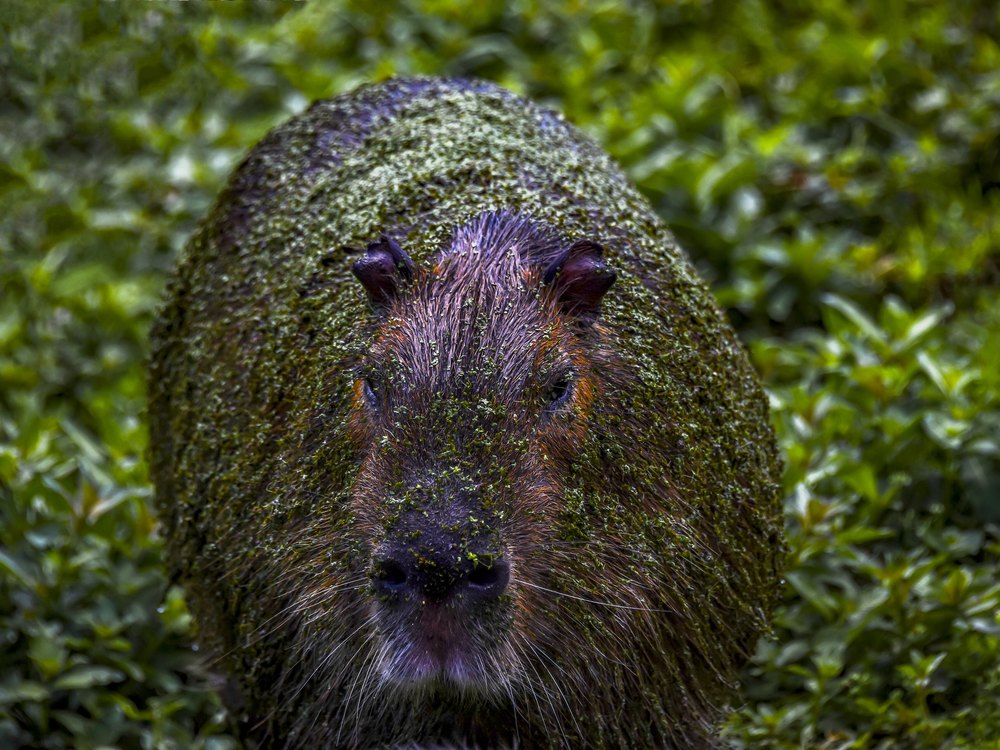
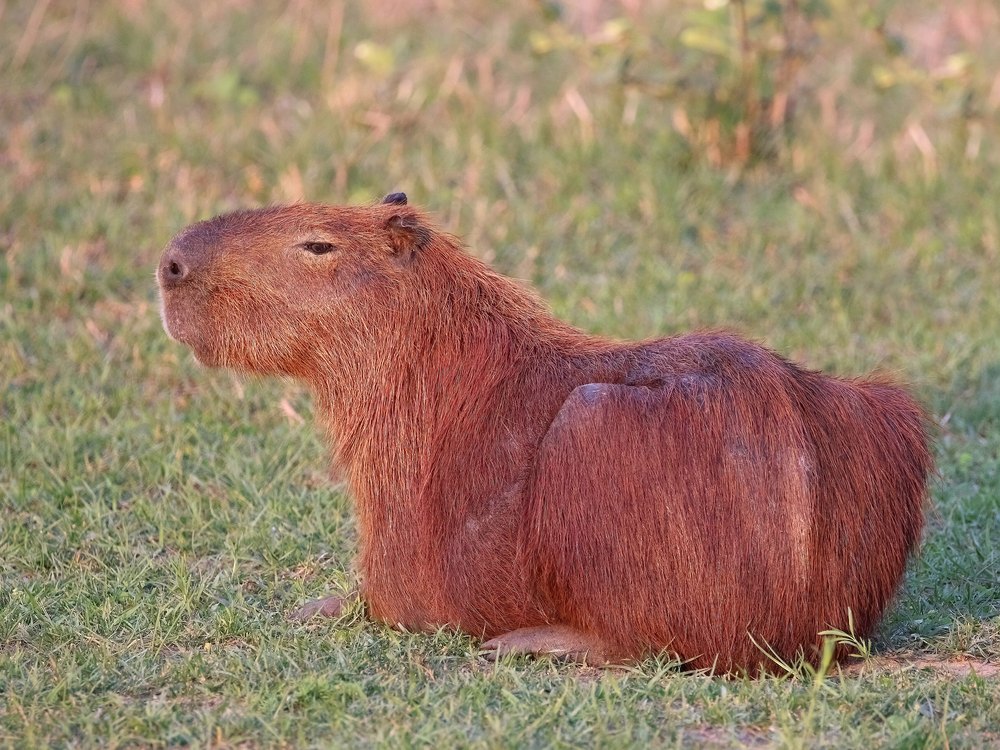
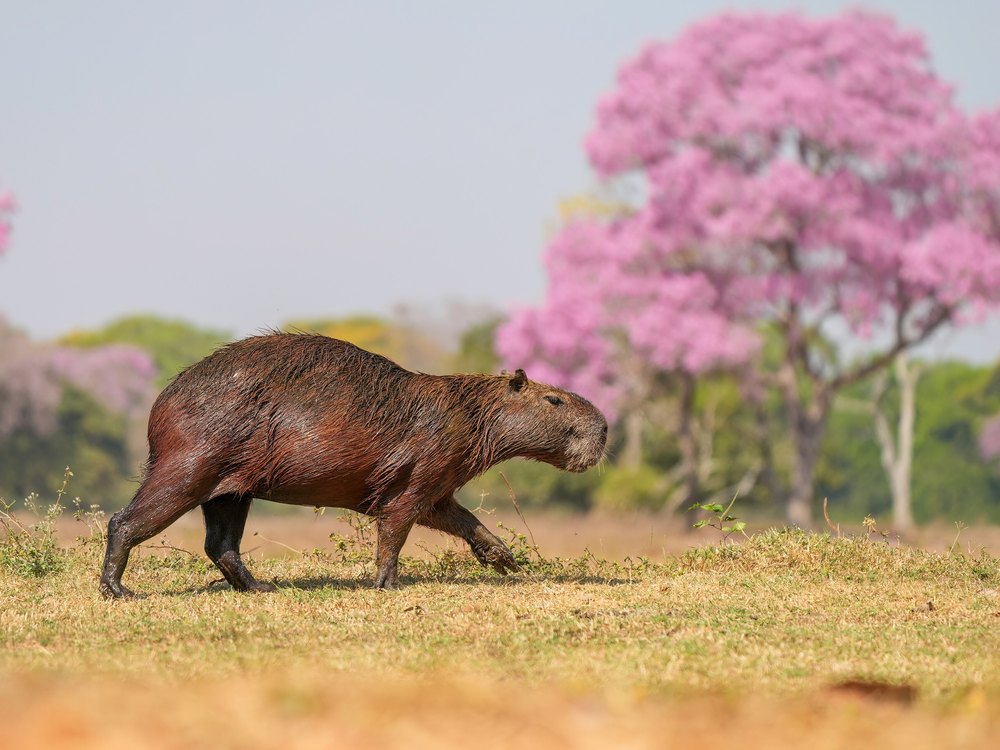
The Capybara has a coarse, thin coat. It is reddish brown over most of the body and yellowish brown on the belly, and the face is sometimes black.[1] The body is barrel-shaped and sturdy, and no tail can be seen.[1]
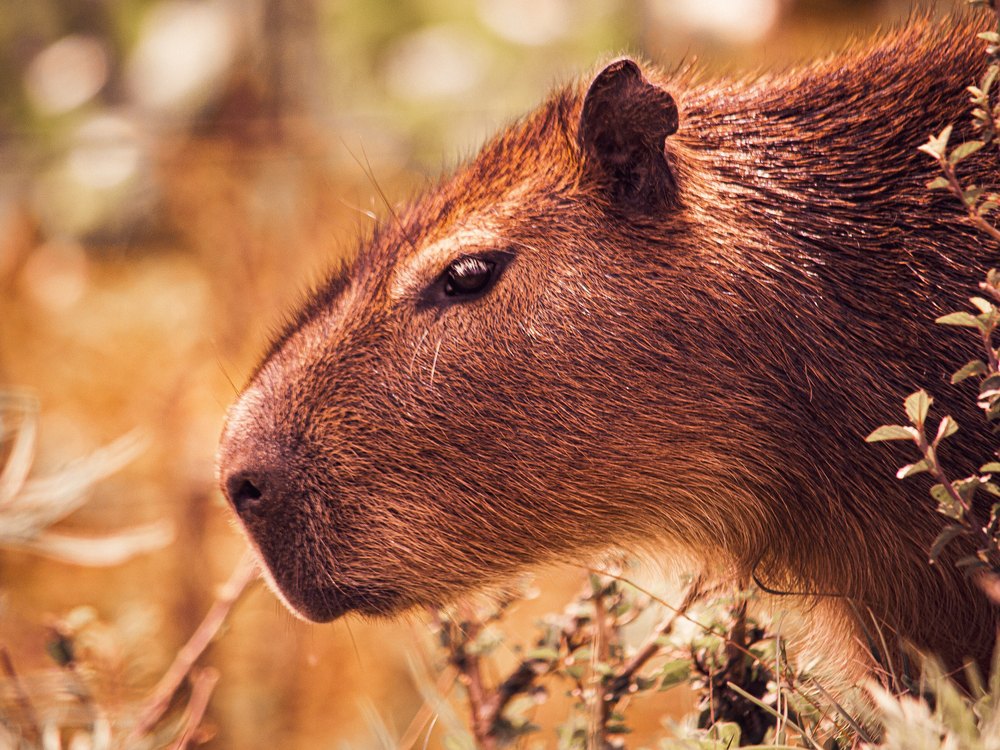

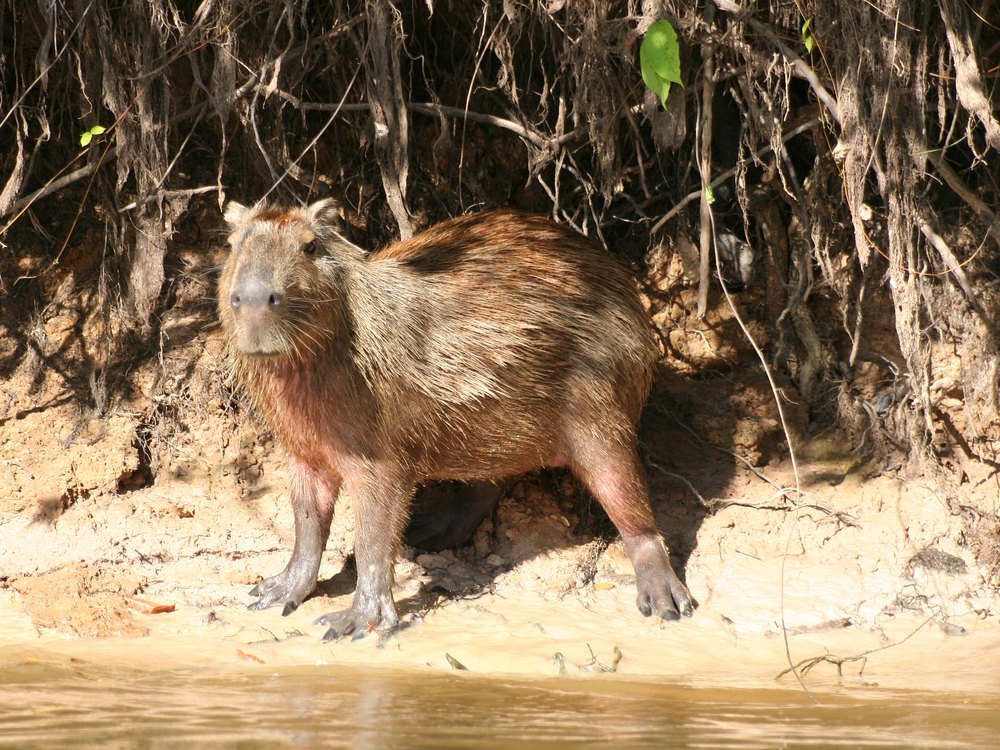

The sexes look alike except for the snout. A male has a bare lump on top of the snout (see Behavior for what it does).[1]
Name
The scientific genus name Hydrochoerus comes from Greek words for “water” and “pig”.[4] Many languages also call it a “water pig”, as the table below shows.[5][6] The smaller Lesser Capybara (Hydrochoerus isthmius) is covered under Forms and variants.
In other languages
| Language | Name | Meaning |
|---|---|---|
| Spanish (Venezuela, Colombia) local | chigüire | — |
| Spanish (Colombia) local | ponche; lancho; roncoso | local names |
| Spanish | capibara; chigüiro (Colombia) | — |
| Portuguese | capivara (Brazil) | — |
| German | Wasserschwein | “water pig” |
| Dutch | waterzwijn | “water pig” |
| French | cabiai (French Guiana); cochon d’eau | cochon d’eau means “water pig” |
| Guarani | kapi’yva | — |
| Afrikaans | watervark | “water pig” |
| Danish | flodsvin | “river pig” |
The Venezuelan and Colombian Spanish names are from the Catalogue of Life and the mammal checklist of Colombia, as listed by GBIF.
Body
Size
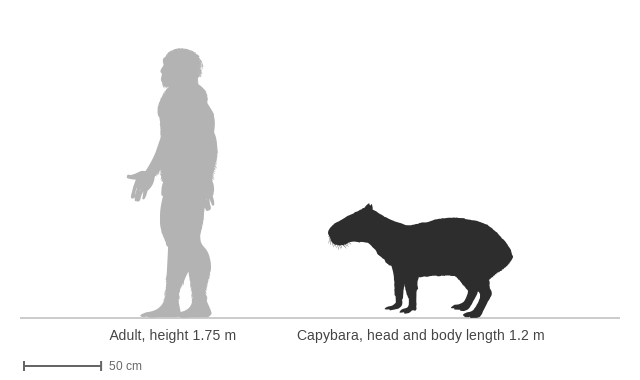
The Capybara is the largest living rodent. Adults weigh 35 to 66 kg, the head and body measure 106 to 134 cm, and the shoulders stand up to about 60 cm above the ground. [1] Females are slightly larger than males. [1]
Weight varies with the place. In a study in Brazil, wild capybaras living in areas changed by people were heavier for their length than those in natural landscapes, possibly because they carried more fat. [7]
| Weight | 35–66 kg |
| Length (head and body) | 106–134 cm |

Built for water
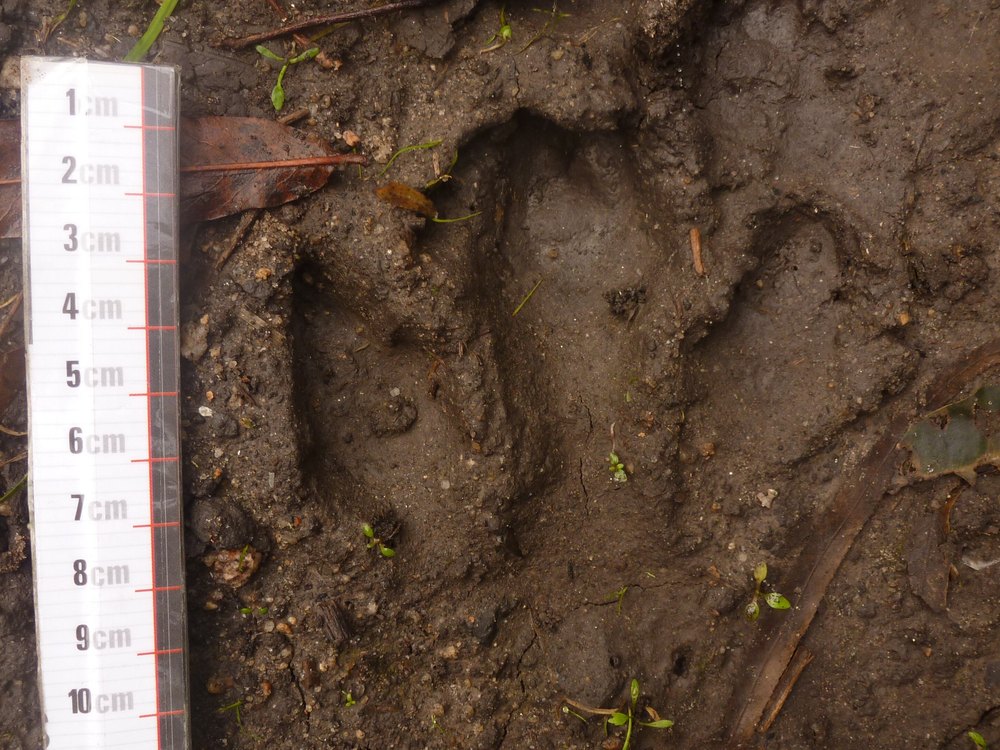
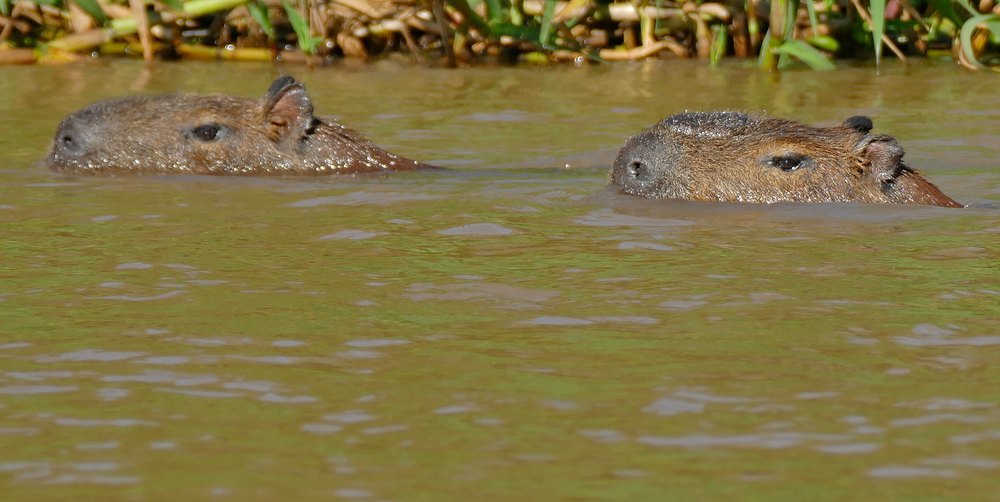
The eyes, ears and nostrils sit high on the head, so the animal can swim with most of its body underwater and still see, hear and breathe.[1] The feet are partly webbed, and the front legs are slightly shorter than the hind legs.[1] A Capybara can stay completely under water for up to five minutes.[1]


Behavior
Groups
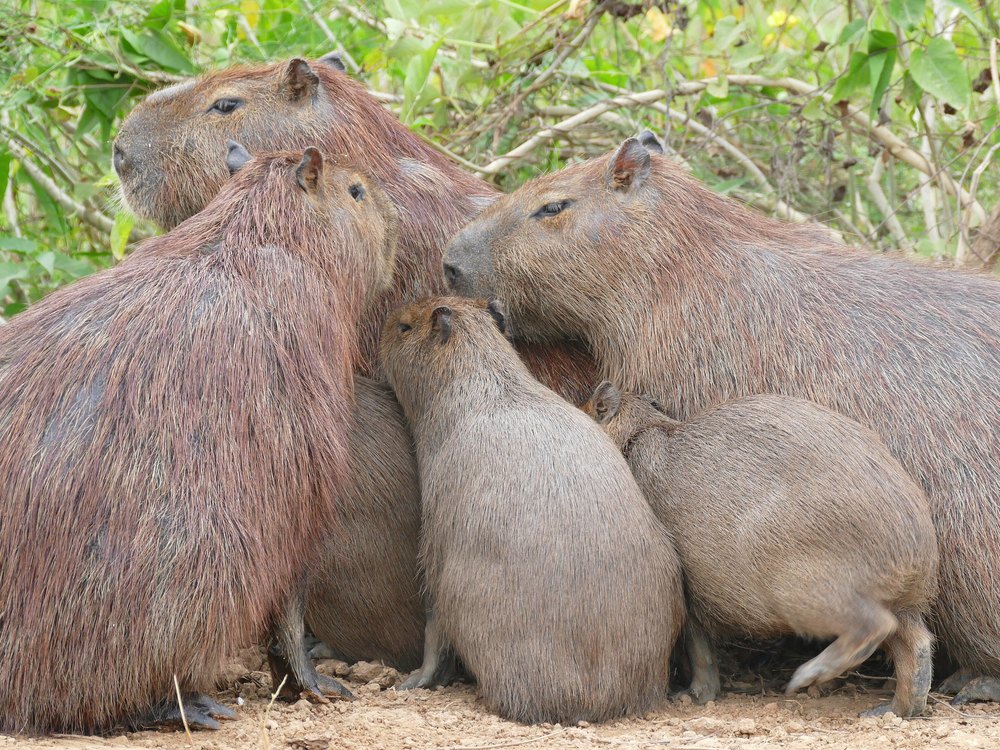
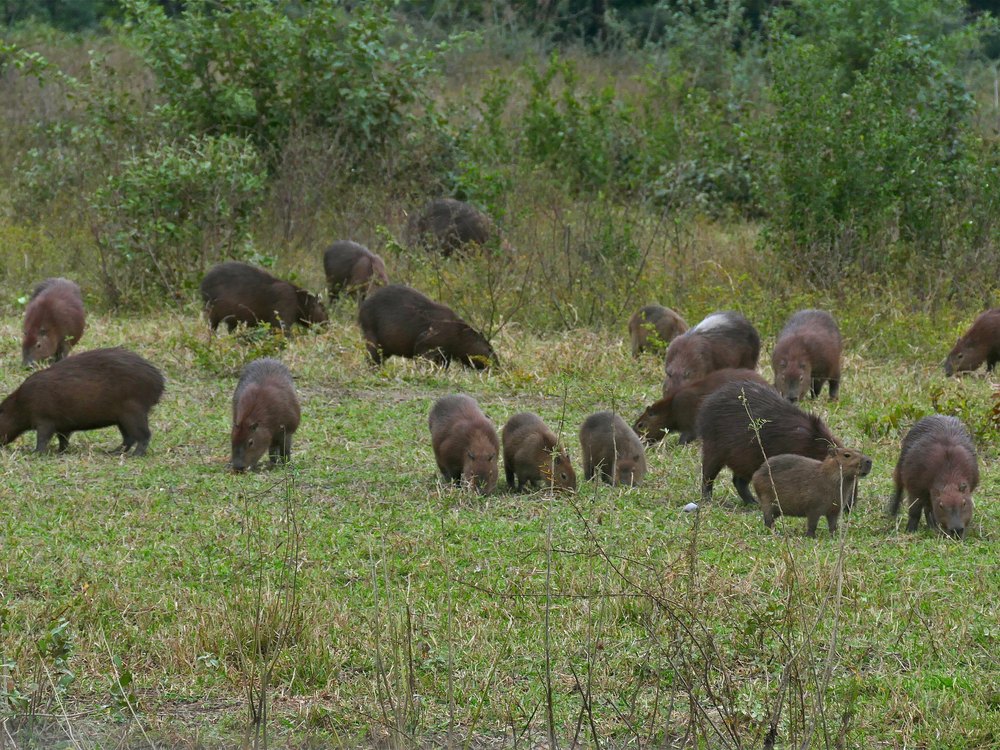
Capybaras live in groups of related animals. IUCN gives group sizes of 2 to 30, with one dominant breeding male.[3] In the Pantanal, groups ranged from 2 to 49 animals, with an average of 9.48.[8] In central Bolivia the groups are small, from 1 to 7 animals.[3] Around Lake Paranoá in Brasília the groups are mostly 1 to 9 animals.[9] In a GPS study in a human-modified landscape in Brazil, one group of 33 to 45 animals split into two groups in 2016 to 2017 and into three by 2019 to 2020.[10]


Among the males there is a strict ranking, kept by chasing and, rarely, by fights.[1]
Mating system
The Capybara has a mating system called resource defence polygyny: males defend access to feeding places beside water, and so to the females that use them.[3] Another source describes mating in the species as polygynous (one male with several females) or promiscuous (many partners), so a dominant male does not always have a single mate.[1] Under natural conditions mating takes place in shallow water; in captivity it happens equally in water or on dry ground.[11]
Activity
The Capybara is active by day or by night, depending on hunting pressure and the season.[3] Another source describes it as mostly active at dusk and dawn, spending the hottest part of the day in the water.[1] In a city park in Campo Grande, Brazil, the animals became more nocturnal, and started later, when people were present.[12]

Movement and home range
A home range (the area an animal uses regularly) covers about 10 hectares (ha) where resources are rich and over 200 ha where they are poor.[3] In Argentina, home ranges averaged 11.3 to 27.6 ha, were larger in autumn and winter than in spring and summer, and were smaller where food was more plentiful.[13] In Campo Grande, urban home ranges were larger than those reported for wild capybaras.[12]
Voice
A study of captive capybaras listed seven call types: whistle, cry, whine, squeal, bark, click and tooth-chattering.[14] The calls are used in contact, alarm, distress and fighting.[14] A bark warns the group of danger.[1] A pup that is separated from its group whistles, and adults respond to the whistles of unrelated pups; the authors conclude that the whistle is the call a separated pup uses to get back to its group.[15]
Scent marking
A bare gland on top of the snout (the morrillo) makes a white, odorous fluid. The animal rubs it on trees and shrubs to mark its area.[1]
Diet
What it eats
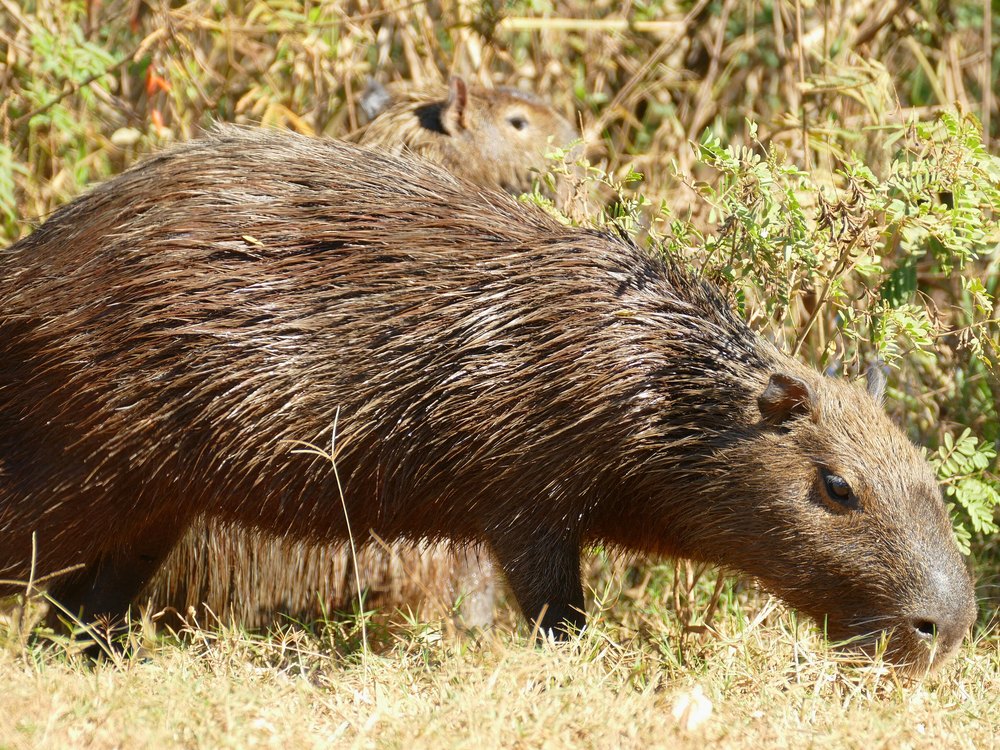
The Capybara is a herbivore that eats mainly grasses and water plants, with bark and fruit only now and then.[1]

Digestion
Plant food is hard to digest, and the Capybara ferments it in a large pouch at the start of the large intestine, the caecum, where bacteria do the work. One study of the gut found 933 kinds of bacteria (OTUs, groups of closely related bacteria) from 182 families.[16] The animal also re-eats its own droppings, spending part of each morning on the previous day's food, so that the grass is digested better a second time.[1]
Life cycle
| Stage | Age / time | Notes |
|---|---|---|
| Pup | Birth to 3 or 4 months | About 1.5 kg at birth[11] |
| Juvenile | 3 to 4 months to maturity | Weaned; stays with the group to about 1 year[1] |
| Adult | From 6 to 18 months | 35 to 66 kg[1][3] |
Birth
Gestation lasts about 150 days.[11][1] The Capybara breeds throughout the year in Venezuela and the Brazilian Pantanal, and the IUCN gives a peak of births in February in the Pantanal.[3] Animal Diversity Web puts the peak of breeding in May and June, at the start of the rains, so the sources differ.[1] A litter averages 4 pups and ranges from 1 to 8.[11][1] In three captive systems in Argentina, females averaged 1.6 to 1.9 litters a year.[11]
Pups
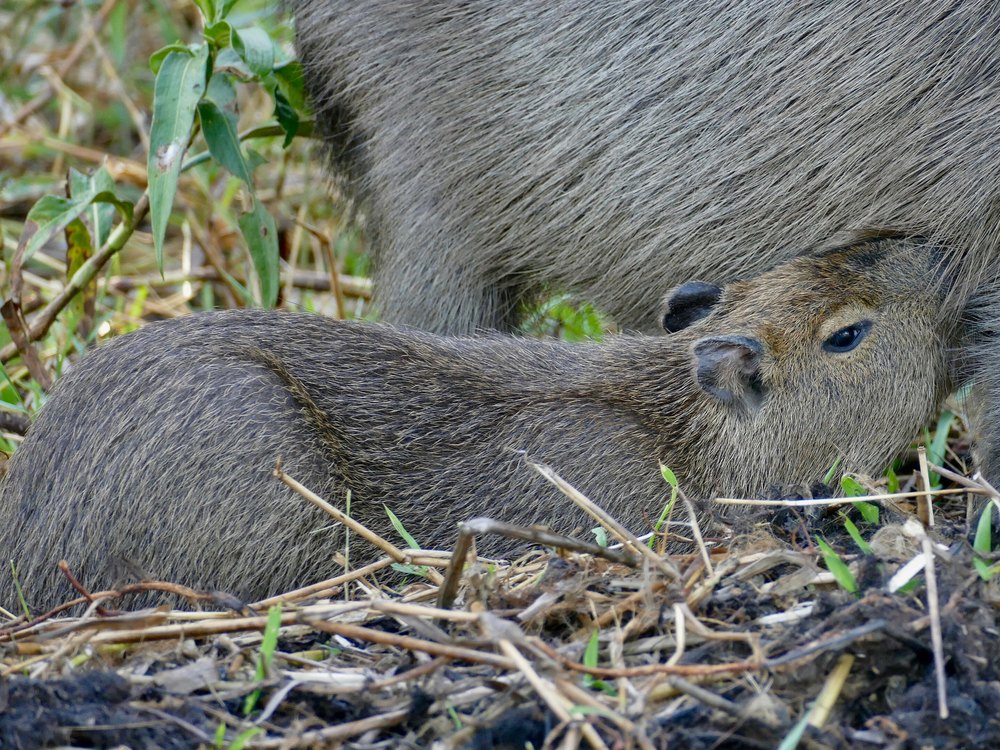
A newborn weighs about 1.5 kg and is highly precocial, which means it is well developed at birth: it is furred and can graze within hours.[11] Pups suckle until 3 to 4 months old.[11][1] In captive groups in Argentina the nursing period was 42 to 45 days in three captive systems, because pens wean the young early as a management practice, so this is not the natural pattern.[11] Young stay with the group to about 1 year.[1]

Growing up
Captive females can reach puberty at 6 to 12 months, while Animal Diversity Web gives about 18 months for both sexes.[11][1]
Lifespan
A captive Capybara can live up to 12 years.[1]
Ecology
Predators
The jaguar (Panthera onca) preys on the Capybara: a 1977 study on a ranch at the western edge of the Pantanal in Brazil described jaguar kills of capybaras. [17]
Parasites and disease
The Capybara is the main host of the tick Amblyomma sculptum, which carries the bacterium that causes Brazilian spotted fever, a serious fever in people. In an experiment, all five Capybaras infected for the first time carried the bacterium in their blood, four fell ill and two of those died. [18] The bacterium comes from the tick, so the Capybara multiplies the bacterium in its blood, and ticks that feed on it can pick it up, but it is not the original source.[18]
A liver fluke (a flatworm, Fasciola hepatica) reduced a group of 21 Capybaras in Brazil to 2 animals over nine months. [19] Gut parasites are common: in a reserve in Argentina, 56 of 57 droppings samples (98%) held parasites. [20] Three groups living near livestock farms in the Orinoco basin of Colombia carried 13 parasite types, two of them able to infect people. [21]
Role in the wetland
Grazing by Capybaras changes the plant cover. In Iberá National Park in Argentina, plots fenced against Capybaras for four years had taller and heavier vegetation than unfenced plots, and fewer common plant species were left. [22]
Habitat and range
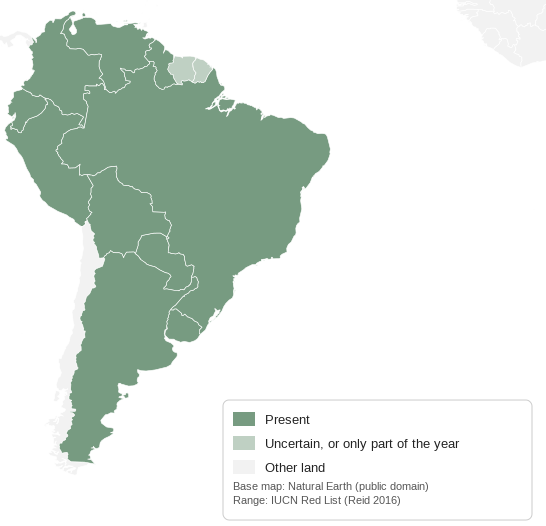
The Capybara lives only close to water, in marshes, estuaries and along rivers and streams. It is recorded in moist lowland forest, moist savanna and inland wetlands such as swamps and bogs. In rainforest, populations are small and stay on open waterside. [3]
Where it lives
Habitats
In Corrientes, Argentina, a habitat model ranked permanent water above temporary water, and gave the highest scores to grassland and sedges under about 1 m tall; dense forest scored lowest. Tall plants or gallery forest (strips of trees along a river) add shelter. Suitability fell with more land parcels and with nearness to roads, and about 13% of the study area (88,000 km²) scored highest. [23]
For home range sizes, see Behavior.
The Capybara also settles in cities (see History and culture). On the shore of Lake Paranoá in Brasília, the density averaged 0.41 animals per hectare. [9]

Evolution
The Capybara belongs to the cavy family, Caviidae, which has three living branches: the cavies and guinea pigs (Caviinae), the maras (Dolichotinae) and the capybaras together with the rock cavies of the genus Kerodon (Hydrochoerinae).[24][25] Capybaras were once placed in a family of their own, Hydrochoeridae. DNA and anatomy now put them inside Caviidae, with the rock cavies as their closest living relatives.[24]
The fossil record of capybara-line animals goes back to the late Miocene. The oldest definite fossils, such as Cardiatherium chasicoense from Argentina, date to the Chasicoan age, which Perez and Pol (2012) put at 6.1 to 9.07 million years ago (Ma).[24][25] These extinct capybaras are relatives of the living species, not shown to be its ancestors. Cerdeño and colleagues (2019) found that the line leading to Cardiatherium and the largest capybaras began at least in the Chasicoan. The largest capybaras, a group that includes the extinct Neochoerus and the living genus Hydrochoerus, gained their size between the Chasicoan and the early Pliocene.[25]
Molecular clocks (estimates of time from DNA differences) give older dates than the fossils. Perez and Pol (2012) estimated that Caviidae began to split about 17 Ma (95% range 10.8 to 24.4), while the oldest caviid fossil is 11.8 to 13.5 million years old.[24] The same study dated the split of the capybara branch from the maras at 12.3 to 14.4 Ma, depending on the settings used, and the split between capybaras and rock cavies at about 8 to 15 Ma.[24]
A 2022 DNA study of 387 sequences from seven countries suggested that the living Capybara arose in the western Amazon and that its populations shrank in the late Pleistocene (the ice ages) and grew again in the Holocene (the last 11,700 years). The authors note that the result rests on a single fragment of mitochondrial DNA, which is passed on by the mother.[26]
Forms and variants
No subspecies of the Capybara are accepted.[2][6][5][3] Five names once used for local forms, notialis, dabbenei, uruguayensis, cololoi and irroratus, are now treated as other names for the same species.[2][6]
The one open question is the Lesser Capybara, Hydrochoerus isthmius, described in 1912 from eastern Panama. The Mammal Diversity Database keeps it as a separate species, tentatively, and GBIF and the Catalogue of Life also list it as a species.[27][6][5] A 2022 DNA study found that a sample from Colombia west of the Andes falls inside one capybara genetic group, and its authors favour a single species.[26]
Conservation
Status
The IUCN Red List lists the Capybara as Least Concern (version 3.1). The assessment was made in March 2016, and the population trend is Stable. [3] The reasons given are its wide distribution, a presumed large population, its occurrence in a number of protected areas, and that it is unlikely to be declining at nearly the rate required for a threatened category. [3] Earlier assessments also found it of low concern: Least Concern in 2008 and Lower Risk/least concern (an older category) in 1996. [3] It is described as locally common and widespread. [3]
Threats
Hunting
Hunting. The primary threat is hunting for meat and leather. Captive populations have reduced the demand, but some local populations have been extirpated (wiped out in one area). [3] Capybara leather is valued in South America, and there is a large internal market for the skins (see History and culture). [3] In Peru and Bolivia some Capybaras are hunted and used as bait. [3]
Protection
The Capybara occurs in many protected areas throughout its range, and conservation sites have been identified over the entire range. [3]
History and culture
Early accounts
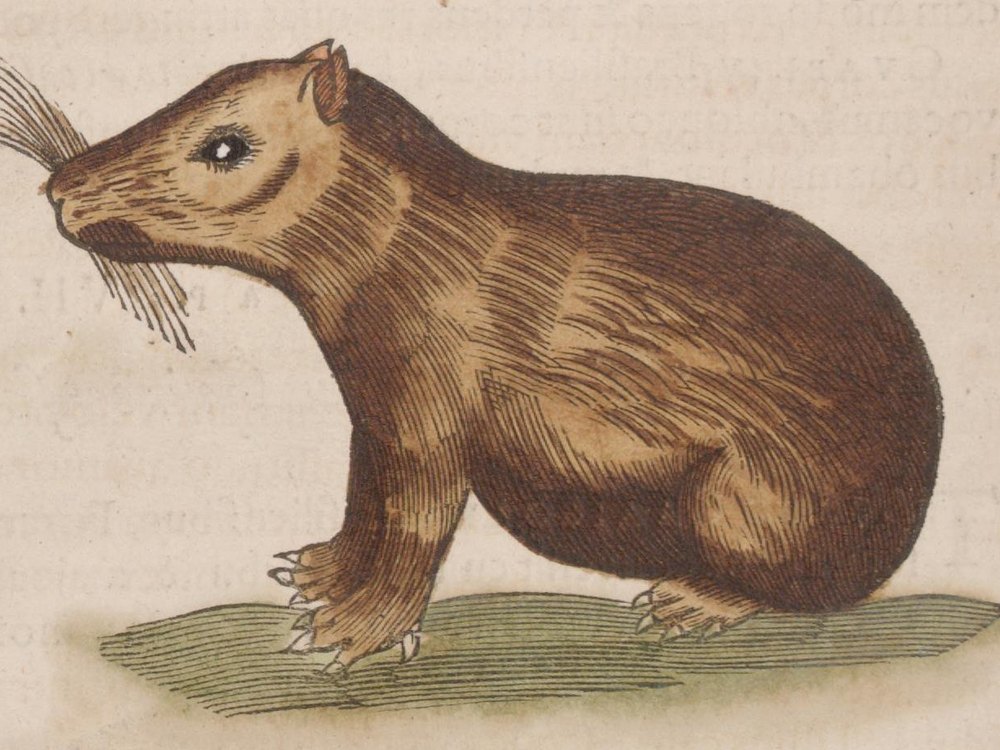
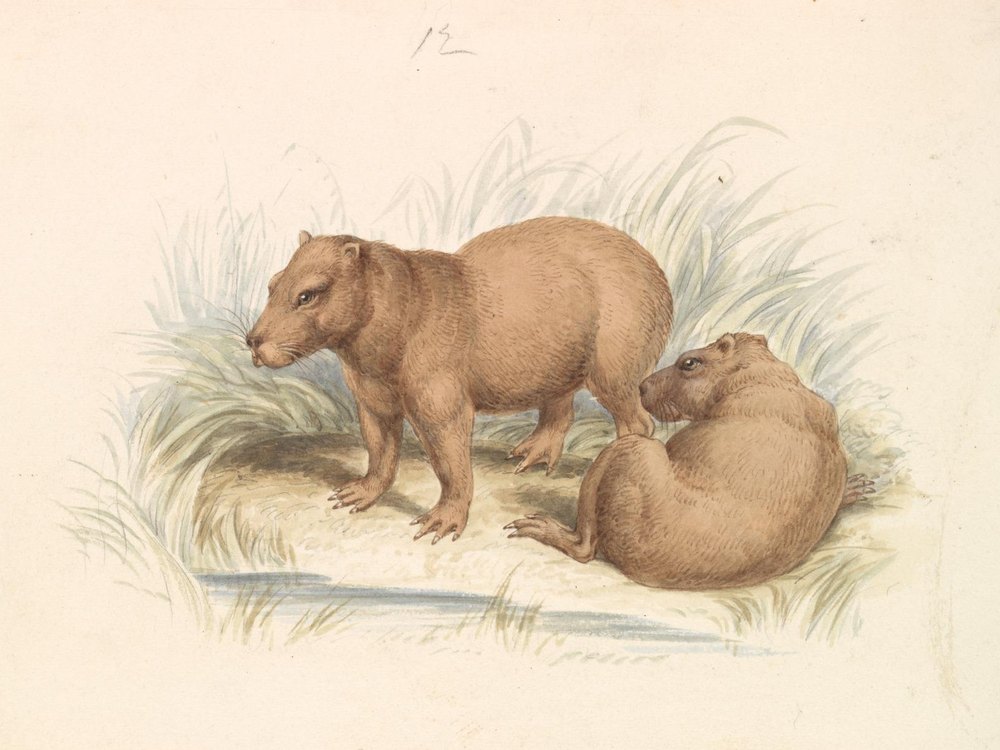
The explorer Alexander von Humboldt, travelling in Venezuela between 1799 and 1804, called the chiguire (the local name, today often spelt chigüiro) the largest of the rodents. [28] He wrote that its flesh smells musky and somewhat disagreeable, yet hams were made of it, which almost justified the name “water-hog” given to it by some older naturalists. [28] He also noted that missionary monks ate these hams during Lent. [28]


Hunting and trade
In the Venezuelan Llanos the Capybara has been hunted commercially for a long time to supply a traditional Holy Week demand for dried, salted meat. [29] Venezuela banned hunting after 1962 and began a management plan in 1968. [29] The licensed harvest was 21,300 animals in 1958, rose to a peak of 88,400 in 1983 and fell to 14,300 in 1986. [29] Skins matter less in Venezuela, where the animal is taken mainly for meat, while Argentina has mainly harvested skins; almost 80,000 skins were exported from Argentina from 1976 to 1979. [29][3]
Capybaras in cities
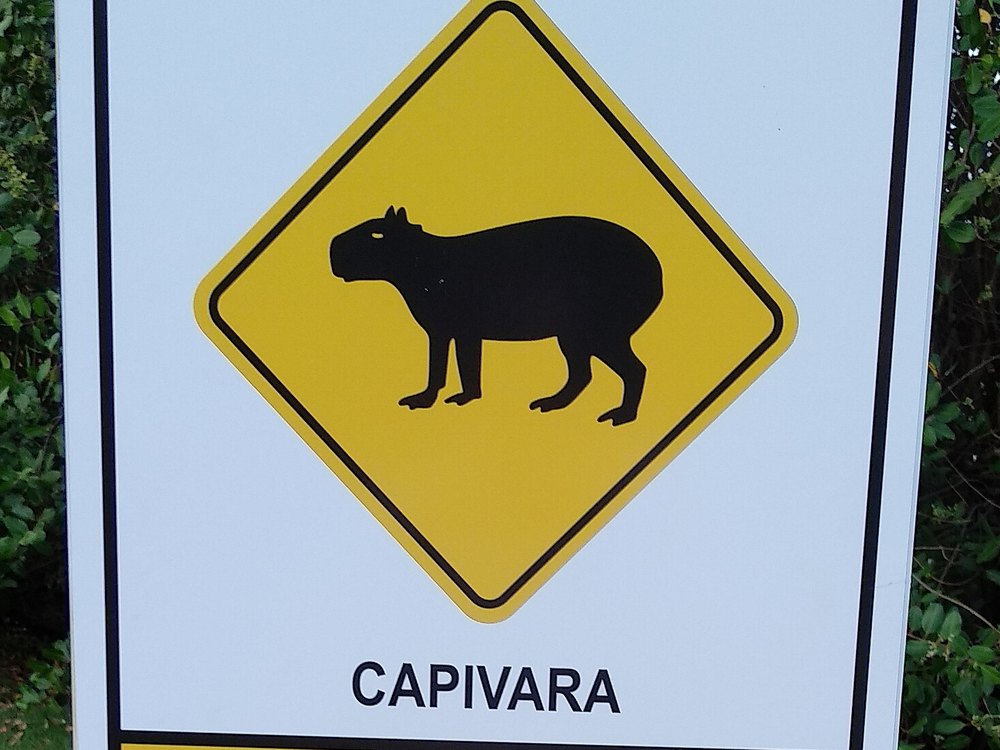
Capybaras now live beside people in several cities. In Florianópolis, Brazil, a survey of 1,505 residents found capybaras reported in all neighbourhoods of the island city, and 70% of those asked agreed to leave them undisturbed. [30] Concern about disease, traffic accidents, pets and gardens rose once residents were given information about the risks. [30]

Taxonomy
| Rank | Name |
|---|---|
| Kingdom | Animalia |
| Phylum | Chordata |
| Subphylum | Vertebrata |
| Superclass | Tetrapoda[33] |
| Class | Mammalia |
| Subclass | Theria[33] |
| Infraclass | Eutheria[33] |
| Order | Rodentia |
| Suborder | Hystricomorpha[33] |
| Infraorder | Hystricognathi[33] |
| Family | Caviidae (cavies)[2][5] |
| Subfamily | Hydrochoerinae (capybaras and rock cavies)[2][5] |
| Genus | Hydrochoerus Brisson, 1762[5] |
| Species | Hydrochoerus hydrochaeris (Linnaeus, 1766)[6][2][31] |
Synonyms (10)
| Name |
|---|
| Cavia capybara (Pallas, 1766) |
| Hydrochaeris hydrochaeris (Linnaeus, 1766) |
| Hydrochaerus capybara (Pallas, 1766) |
| Hydrochoerus capybara (Pallas, 1766) |
| Hydrochoerus hydrochoeris (Linnaeus, 1766) |
| Sus hydrochaeris (Linnaeus, 1766) |
| Capiguara americana (Liais, 1872) |
| Hydrochoerus irroratus (Ameghino, 1889) |
| Hydrochoerus uruguayensis (Ameghino & Rovereto, 1914) |
| Hydrochoerus cololoi (Berro, 1968) |
From the GBIF backbone.[32]
Higher classification
The Capybara is a rodent in the cavy family, Caviidae, and the subfamily Hydrochoerinae. [2][5] Caviidae also holds guinea pigs, cavies and the maras of Patagonia. The Mammal Diversity Database and the Catalogue of Life list two living species in the genus Hydrochoerus, the Capybara and the Lesser Capybara. [2][5]
Spelling and family
The name is spelt three ways in books and papers: Hydrochoerus, Hydrochaeris and Hydrochoeris. The IUCN notes all three, and the databases above use Hydrochoerus. [3][6] Some older books and a few GBIF source lists still use the old family Hydrochoeridae. [6][24] The Lesser Capybara, Hydrochoerus isthmius, is covered under Forms and variants.
Sources
- Animal Diversity Web, Hydrochoerus hydrochaeris
- Mammal Diversity Database, Hydrochoerus hydrochaeris
- Reid 2016, IUCN Red List assessment of Hydrochoerus hydrochaeris
- Wiktionary, Hydrochoerus (etymology)
- Catalogue of Life, Hydrochoerus
- GBIF Backbone Taxonomy, Hydrochoerus hydrochaeris
- Benatti et al. 2021, Veterinary Sciences 8: 165
- Alho & Rondon 1987, Revista Brasileira de Zoologia 4: 139–149
- Santos et al. 2025, Biotropica 57: e70039
- Labruna et al. 2023, Oecologia Australis 27: 58–72
- Alvarez & Kravetz 2006, Animal Research 55: 153–164
- Serra-Medeiros et al. 2021, Journal of Mammalogy 102: 814–825
- Corriale et al. 2013, Journal of Mammalogy 94: 19–28
- Barros et al. 2011, Ethology 117: 83–94
- Dos Santos et al. 2014, Brazilian Journal of Biology 74: S171–S176
- García-Amado et al. 2012, Microbial Ecology 63: 719–725
- Schaller & Vasconcelos 1978, Jaguar predation on capybara, Zeitschrift für Säugetierkunde 43: 296–301
- Ramírez-Hernández et al. 2020, Scientific Reports 10: 924
- Labruna et al. 2018, Lethal fascioliasis in capybaras in Brazil, Journal of Parasitology 104: 173–176
- Tietze et al. 2023, Journal of Helminthology 97: e97
- Uribe et al. 2021, Pathogens 10: 1152
- Avila et al. 2025, Applied Vegetation Science 28: e70017
- Schivo et al. 2015, Tropical Conservation Science 8: 150–168
- Pérez & Pol 2012, PLoS ONE 7: e48380
- Cerdeño et al. 2019, Acta Palaeontologica Polonica 64: 199–212
- Byrne, Ruiz-García & Túñez 2022, Journal of Mammalian Evolution 29: 191–206
- Mammal Diversity Database, Hydrochoerus isthmius
- Humboldt, Personal Narrative of Travels to the Equinoctial Regions of America, 1799–1804, vol. 2 (Project Gutenberg)
- FAO Conservation Guide, capybara in Venezuela and Argentina
- Nunes Sayn et al. 2025, Animals 16: 113
- ITIS, Hydrochoerus hydrochaeris (TSN 825303)
- GBIF backbone, Hydrochoerus hydrochaeris, synonyms
- ITIS, Hydrochoerus hydrochaeris, classification