The Basenji is a lightly built, short-coated dog from Central Africa, used for hunting and as a companion. The FCI calls it “barkless but not mute”.[1]
The breed standard
The FCI standard describes a finely boned, high-legged dog with a wrinkled head, pricked ears and a tightly curled tail. The ideal height at the withers is 43 cm for males and 40 cm for females, and the ideal weight is 11 kg for males and 9.5 kg for females. The coat is short, sleek and very fine. Accepted colours are black and white, red and white, black and tan, tricolour (black, tan and white), black, tan and white, and brindle, with white on the feet, chest and tail tip.[1] Instead of barking the dog makes its own sound, which the standard calls a mixture of a chortle and a yodel. It describes the temperament as intelligent, independent, affectionate and alert, and sometimes aloof with strangers.[1]
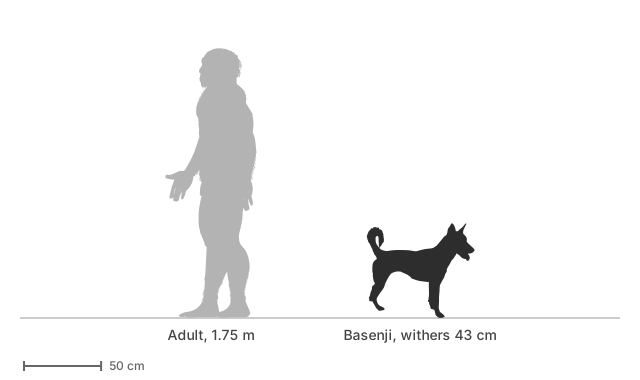
Name and origin
The FCI standard gives Central Africa as the origin and Great Britain as the patronage country, but prints no history.[1] A genome study reported by UNSW Sydney found that the Basenji sits at the base of the dog breed family tree. The university describes it as an ancient African breed that still lives and hunts with tribesmen in the Congo.[2] The AKC recognised the Basenji in 1944.[3]
Health and lifespan
Fanconi syndrome, an inherited kidney disorder, is known in the breed. In a US owner survey published in 1990, 10% of the Basenjis reported (96 of 959) had it, and half of the affected dogs were 4–8 years old.[4] That was a self-selected survey and a prevalence of its time, not a current one. A 2024 study found a deletion in the FAN1 gene in affected dogs, inherited as a recessive trait; 78 dogs tested showed almost complete agreement between the deletion and the disease.[5] No lifespan figure was found from a published study.
Popularity
The Basenji ranked 92nd on the AKC’s list of most popular breeds in 2025.[6]
Sources
- FCI breed standard 43, Basenji
- UNSW Sydney news, 1 June 2021 (Basenji genome, published in BMC Genomics)
- American Kennel Club, breeds by year recognized
- Noonan & Kay 1990, Journal of the American Veterinary Medical Association 197: 345–349 (Fanconi syndrome in Basenjis)
- “FAN1 deletion variant in Basenji dogs with Fanconi syndrome”, Genes 2024, 15(11): 1469
- American Kennel Club, most popular dog breeds of 2025