The Wild Turkey (Meleagris gallopavo) is a large ground-living bird of North America. The adult male is called a gobbler or tom and the adult female a hen.[1][2] It is the same species as the domestic turkey,[3][4] and, despite its size, it can fly.[1] The IUCN rates the species Least Concern.[5]
Quick facts
Description
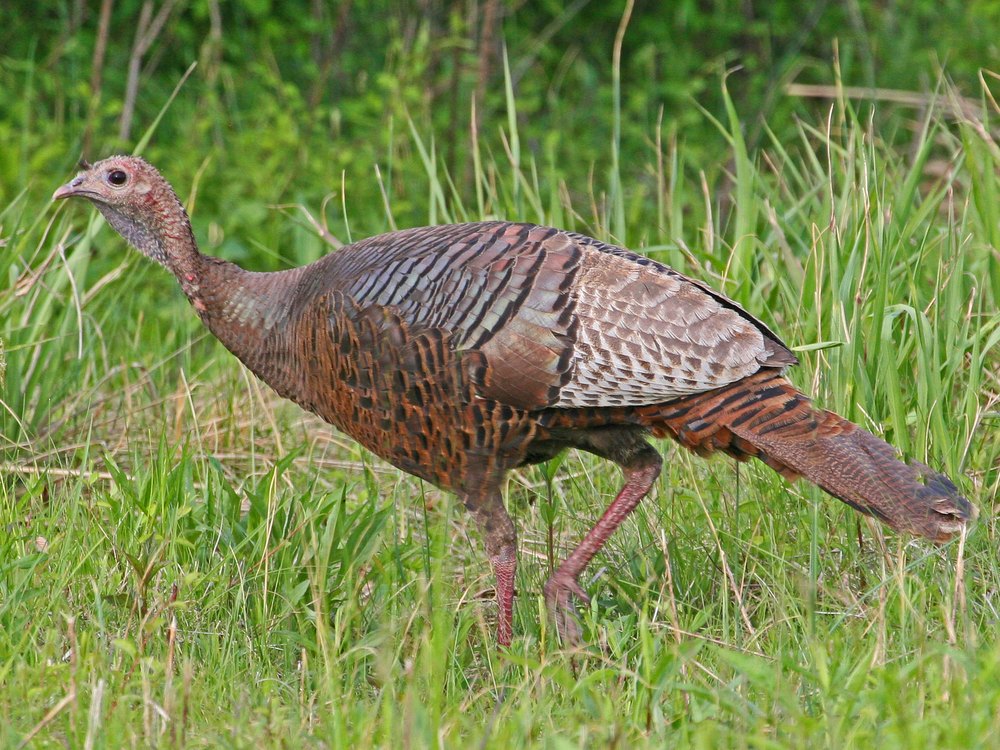
The Wild Turkey is a large, heavy-bodied ground bird with a small head, a long neck, long legs and a broad tail. Seen from a distance the adult looks dark. In sunlight the plumage (the bird’s feathers) shows copper, bronze, red, gold, green and blue highlights, and in shade it looks brown or black.[2][6] The scaled legs and feet change from a dull, horn-like colour in young birds to pink or red with age.[6]
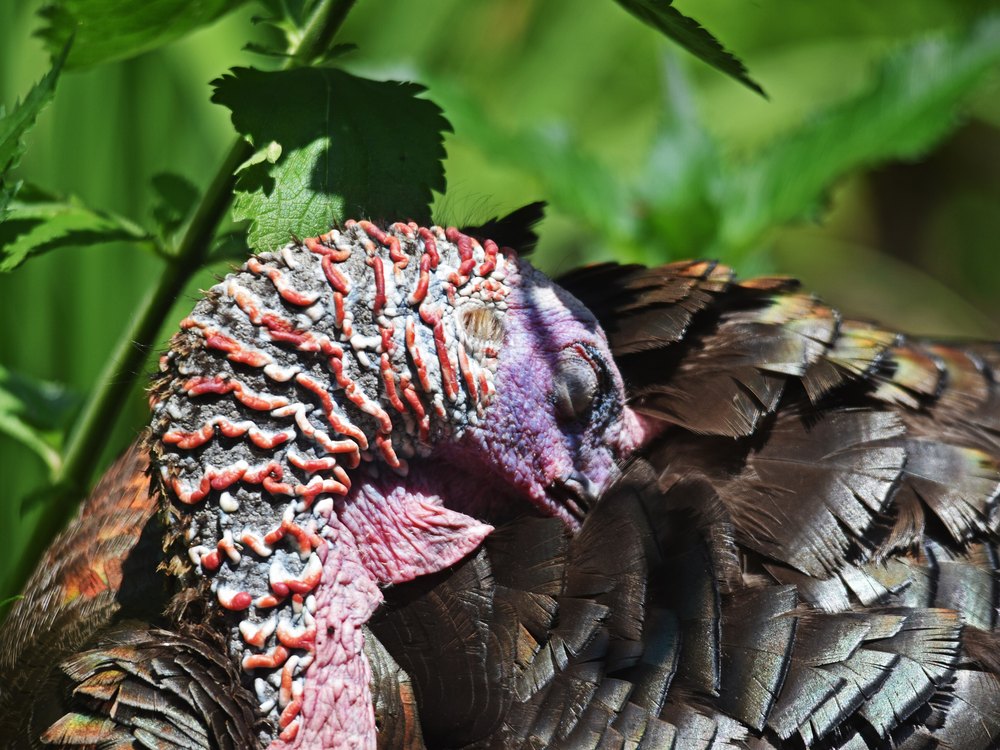
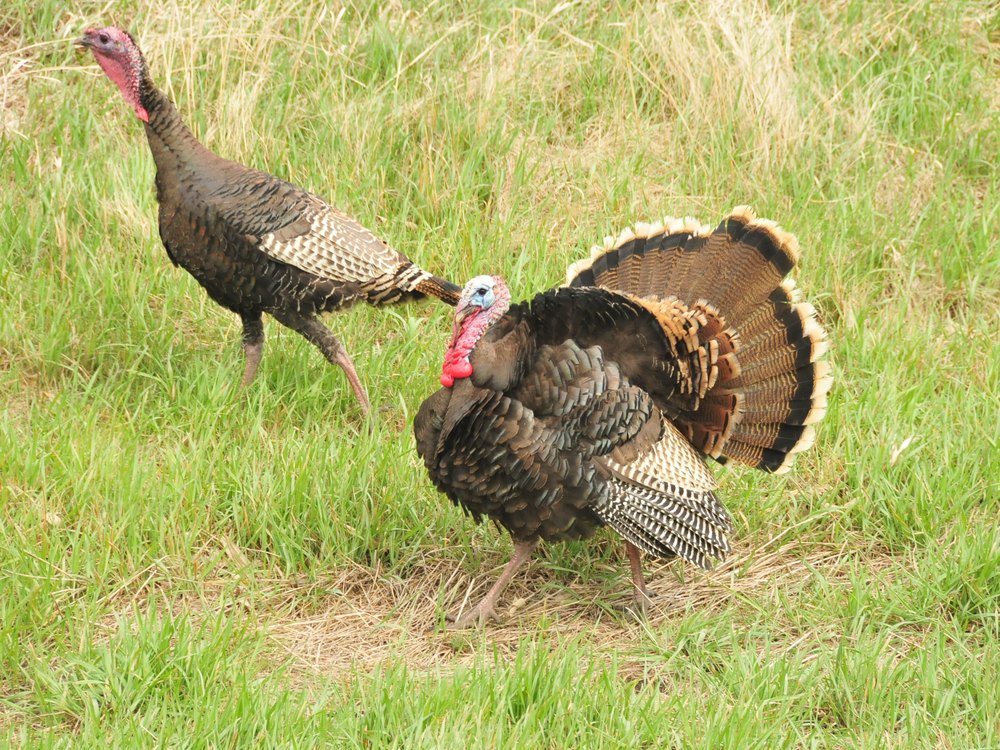
The adult male is called a gobbler or tom. His body feathers are dark and glossy, and the breast feathers end in a black tip.[1][2] The head and upper neck are almost bare. The skin is pink to red.[2] A fleshy, finger-like snood hangs between the eyes, and the bird also has a red wattle (a loose fold of skin) and a bumpy caruncle (a fleshy growth) on the forehead.[1][2] A tuft of coarse black bristles, called the beard, sticks out from the middle of the breast. It is not made of true feathers.[6] On each leg, low down, there is a bony spur. In a young male it is a rounded bump, and with age it grows into a sharp point.[6]
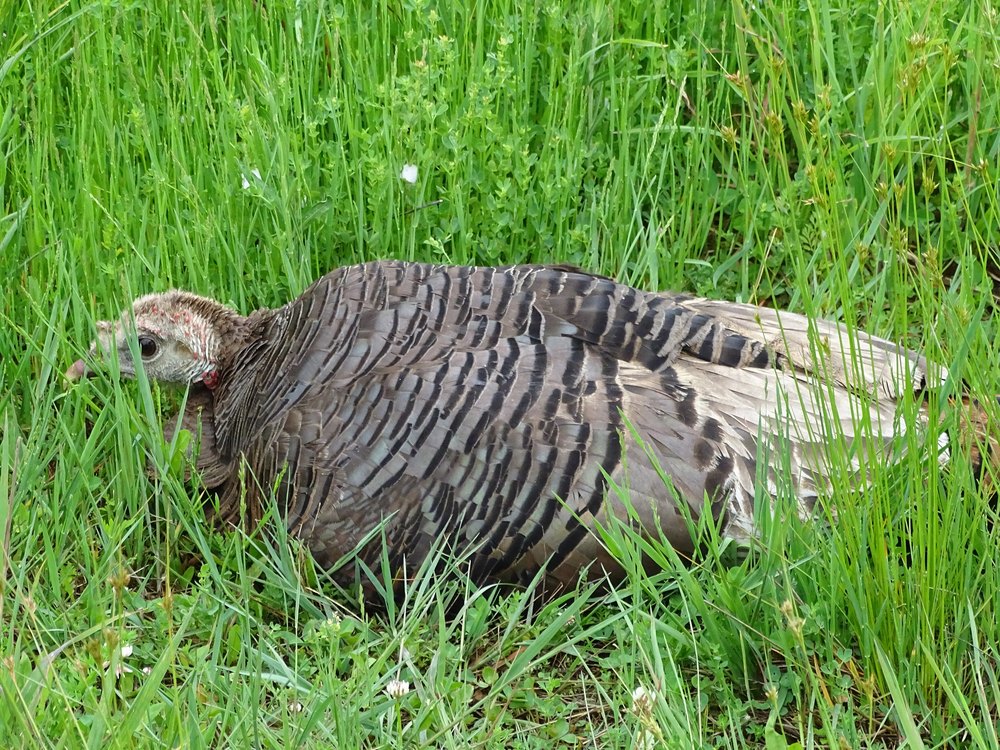
The adult female, called a hen, is smaller and plainer. Her feathers are duller and browner, the breast feathers end in a brown or buff band, and her head is bluish-grey with only a little bare skin.[2][6] Some hens also carry a thin beard.[2][6]
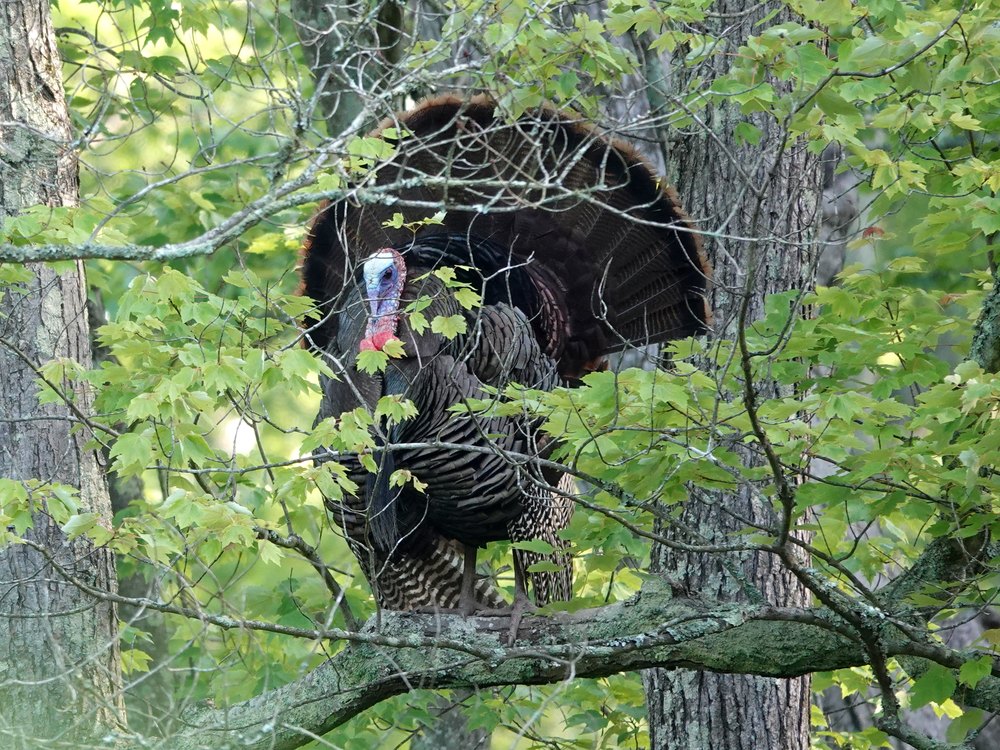
When a gobbler displays, he lifts the tail feathers into a wide fan. The tips are chestnut brown in the Eastern Wild Turkey and buff or tan in the Rio Grande Wild Turkey.[2][6]
Chicks, called poults, hatch covered in fine brownish down. They have long necks and long legs.[2]
Name
The bird took the name “turkey” by the 1550s from the place name Turkey, a word that in the 1500s was used loosely for Asia or the Ottoman lands. The name had already been given to the guineafowl, an African bird that reached England by way of Ottoman trade. When the American bird arrived, it was called by the same name. The country is not named after the bird.[7] The Online Etymology Dictionary, quoting the Oxford English Dictionary, says the name was kept for the American bird by mistake, in place of the African one.[7]
The scientific name works the same way. Meleagris was the ancient Greek name for the guineafowl, and Linnaeus gave it to the American bird in 1758.[3][7]
An adult male is called a gobbler, a word recorded in 1737 that comes from “gobble”, an imitation of the sound he makes.[7] A chick is called a poult, from Middle English pulte, a short form of polete, meaning a young chicken.[7] Wildlife agencies call young males jakes and young females jennies, from about 8 weeks old until about 18 months.[6]
In other languages
| Language | Name | Meaning |
|---|---|---|
| English local | Wild Turkey | — |
| Spanish local | guajolote norteño; guajolote gallipavo; pavo salvaje | guajolote, the Mexican word for turkey, comes from Nahuatl huexolotl |
| French local | dindon sauvage | “wild turkey”; dinde is a contraction of poulet d’Inde, “chicken of India” |
| Nahuatl local | huexolotl | glossed as “gallo” (fowl) by Molina in 1571 and as “turkey” by Karttunen |
| German | Truthuhn | — |
| Dutch | Kalkoen | — |
| Italian | tacchino selvatico | — |
| Portuguese | peru-selvagem | — |
| Polish | indyk dziki | — |
| Turkish | yabani hindi | hindi means “from India” |
| Chinese | 火鸡 (huoji) | “fire chicken” |
| Japanese | シチメンチョウ (shichimencho) | — |
English names come from the IOC World Bird List; Spanish and French names from ITIS and the Catalogue of Life; the Nahuatl entry from an online Nahuatl dictionary based on Molina (1571) and Karttunen (1992); the other names from the Catalogue of Life.[4][7][8][9][10]
Body
Size and weight
Cornell Lab of Ornithology gives a length of 110–115 cm, a wingspan of 125–144 cm and a weight of 2.5 to 10.8 kg for the species, both sexes together.[11] Animal Diversity Web gives 6.8 to 11 kg for males and 3.6 to 5.4 kg for hens.[1]
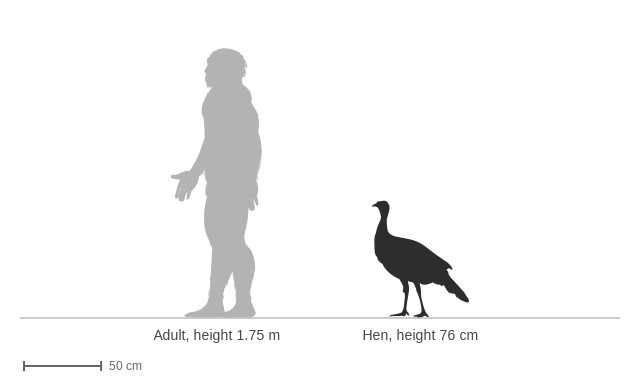
The Pennsylvania Game Commission describes gobblers as 91–122 cm long (3 to 4 feet) and 76–91 cm tall (2½ to 3 feet). It gives an average of about 7.3 kg (16 pounds) for gobblers, up to 11.3 kg (25 pounds), and 4.1 to 4.5 kg (9 to 10 pounds) for hens. A hen is about a third shorter and about half the weight of a gobbler.[2] In Texas, Texas Parks and Wildlife and Texas A&M AgriLife Extension give 7.7 to 9.5 kg (17 to 21 pounds) for Eastern gobblers and 3.6 to 5.0 kg (8 to 11 pounds) for hens. Gobblers stand about 102 cm (40 inches) tall and hens about 76 cm (30 inches).[6] The same weights are given for the Rio Grande Wild Turkey.[12]
A Wild Turkey carries 5,000 to 6,000 feathers. The Pennsylvania Game Commission counts 10 primary and 18 or 19 secondary feathers in each wing and 18 large tail feathers.[2][6] A young turkey moults, replacing its feathers, in stages as it grows. Adults moult once a year and do not lose the ability to fly.[6]
| Female | Male | |
|---|---|---|
| Weight | 3.6–5.4 kg | 6.8–11 kg |
| Length | 110–115 cm | |
Beard, spurs and snood
The beard is a tuft of black bristles on the breast. It does not moult and grows for life, about 8 to 13 cm (3 to 5 inches) a year. It first shows at 6 to 7 months, and the tips wear away.[6] Beard length is not a reliable sign of age. Spur length is.[2][6]
The two agencies disagree on bearded hens: the Pennsylvania Game Commission says about 10 percent of adult hens have one, and Texas Parks and Wildlife says 1 to 5 percent.[2][6]
Spurs are bony points on the lower leg. They grow up to 5 cm (2 inches) according to Texas Parks and Wildlife, and as long as 3.2 cm according to Animal Diversity Web.[1][6] About one gobbler in a thousand has more than one spur on a leg.[2] The skin of the head and neck changes colour with the bird’s mood.[13]
Senses
Wild Turkeys have keen eyesight and see colour. They notice movement from far off, but see poorly at night. Their eyes sit on the sides of the head, so a slight turn of the head gives a very wide view.[2][6] Hearing is keen. Smell and taste are poorly developed.[2][6]
Flight and running
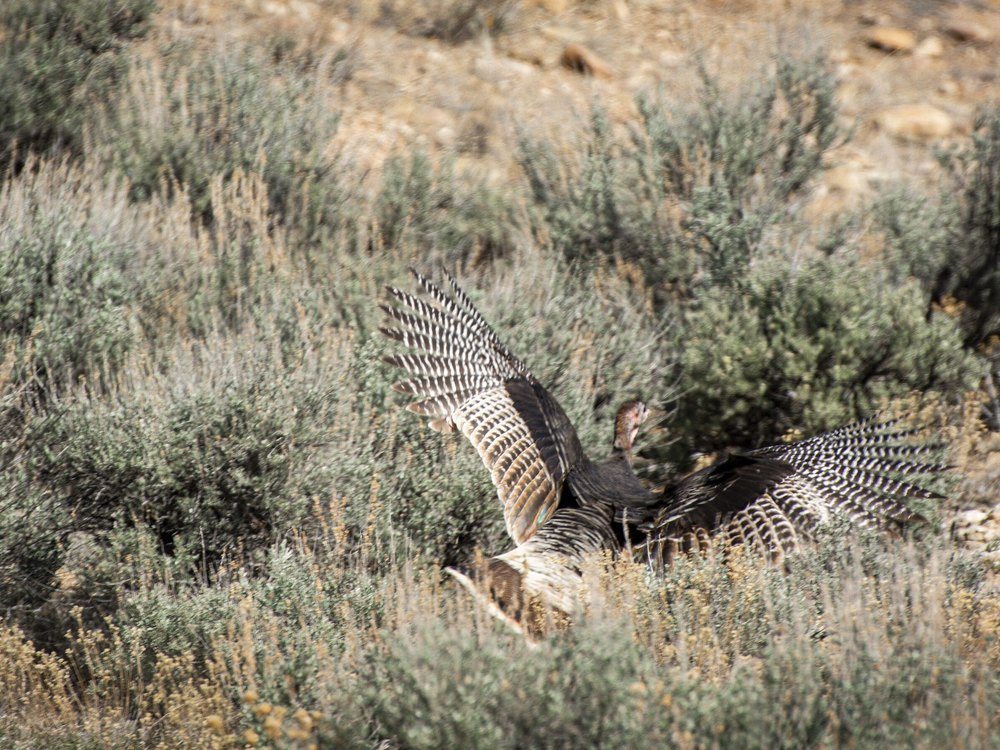
Wild Turkeys fly well over short distances. Animal Diversity Web records a flight speed of 88.5 kph (55 mph), and the Pennsylvania Game Commission estimates 64 to 89 kph (40 to 55 mph). Flights usually cover 180 m to 1.6 km.[1][2][6]
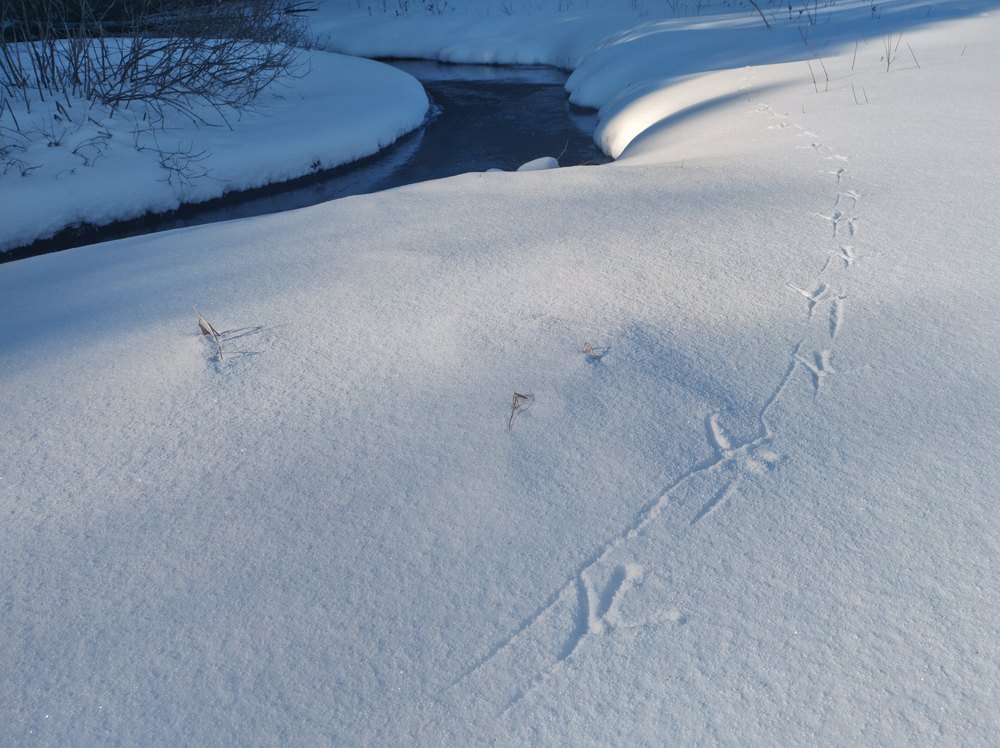
When alarmed, a turkey often runs first. Texas Parks and Wildlife and the Pennsylvania Game Commission’s FAQ give about 19 kph (12 mph); the Pennsylvania species profile estimates 29 kph (18 mph).[2][6] Turkeys also swim.[2]
Behavior
Flocks and roosting
The Wild Turkey is active by day and sleeps in trees at night. A sleeping place of this kind is called a roost.[1] Flocks of 6 to 40 birds may share one tree or neighbouring trees. In the morning they glide down, call to each other and regroup.[2] Most feeding happens in the 2 to 3 hours after dawn and before dusk.[1]
Flock make-up changes through the year. In autumn, flocks sometimes total 40 or more birds, made up of hens with their young and some hens without young. Old gobblers stay apart in pairs or trios. In early winter the family groups break up into separate flocks of hens, young males and old males.[2] In winter, bands may also develop a ranking order, and some bands defend a territory.[1]
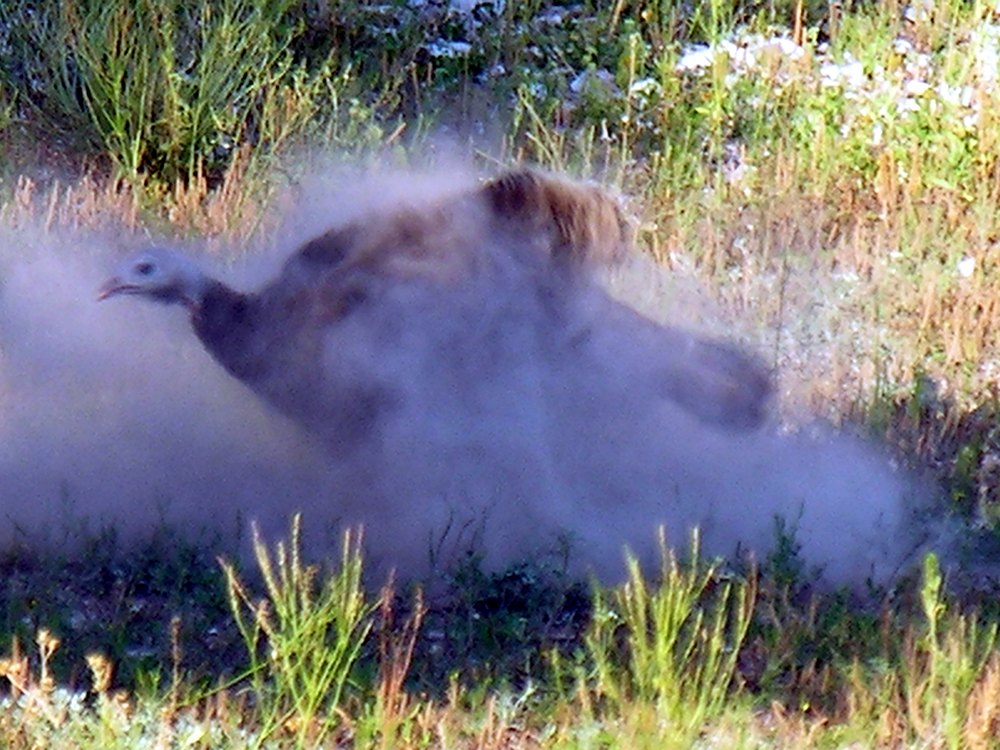
A study of hens in Maryland found 30 social groups with an average of 7 females each, ranging from 2 to 15.[14] Males and females keep separate ranking orders.[14]


Display and mating
Gobblers attract hens by gobbling and strutting. The gobble can be heard from a long way off, while the strut, a visual display, works only at close range.[6] Animal Diversity Web says the gobble carries more than 1.5 km.[1] A gobbler may strut for hours until a hen signals that she is ready to mate.[6] The colour of a male’s head and neck shifts with his excitement.[13]
The mating system is one in which a few dominant males do most of the breeding. Lower-ranking and young males seldom breed.[14] The Pennsylvania Game Commission says a dominant gobbler may mate with 8 to 12 or more hens.[2] Males give no parental care.[14]
Some males display in teams. A study by Krakauer, published in 2005, found that the partners in these teams were mostly brothers or half-brothers, and that only the dominant male of a team fathered the young.[15]

Voice
The Wild Turkey has at least 15 different calls.[1] The best known is the gobble, the loud call of the male, which carries a long way.[1][6]
Diet
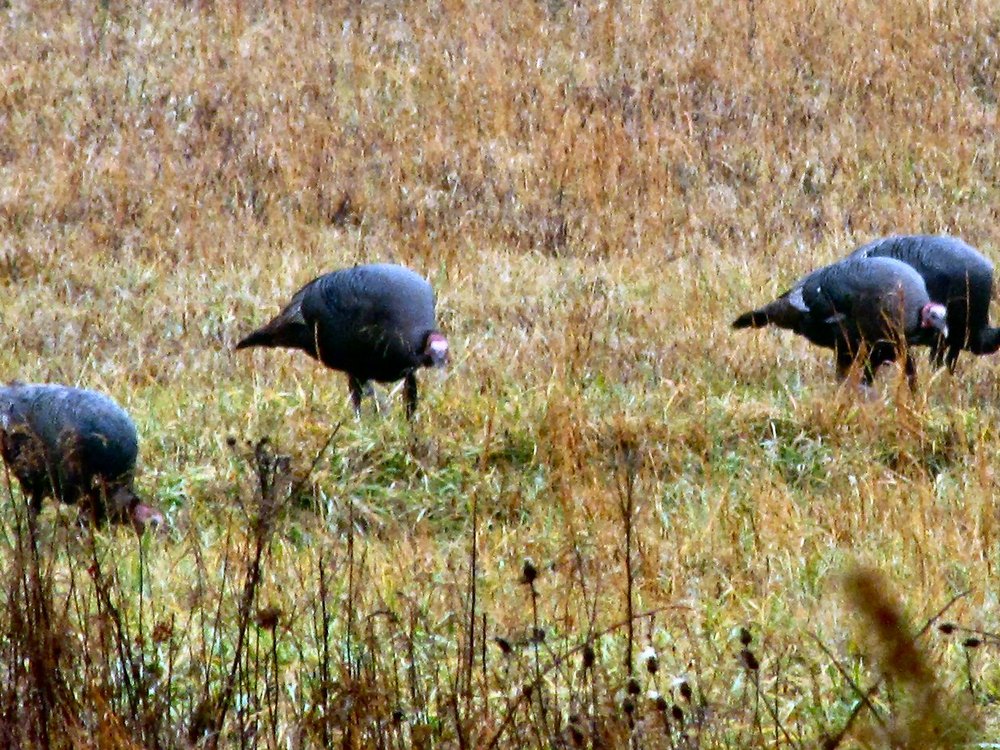
The Wild Turkey is an omnivore: it eats both plants and animals.[1] Most of the food is plant matter. Animal Diversity Web puts insects and salamanders at about 10 percent of the diet, while the Pennsylvania Game Commission says young and adult birds get 15 to 25 percent of their food from animal matter.[1][2]
The menu follows the seasons.[2] In spring, turkeys eat tender greens, shoots, tubers, leftover nuts and early insects. In summer the diet is mostly plant matter plus insects. In autumn they turn to mast, the acorns and nuts that fall from trees, together with fruits and seeds. In winter they live on leftover seeds and nuts and on greens, and they find crustaceans and insect larvae at spring seeps.[2]
Hard mast is the main autumn and winter food. Cornell Lab of Ornithology lists the acorns of red, white, chestnut and black oaks, American beech nuts, pecans, hickory nuts, wild black cherries and white ash seeds as foods from autumn to early spring.[11]
Poults eat mainly insects for their first weeks.[2] A poult needs 9 to 12 g of invertebrates a day, which is roughly 50 to 100 grasshoppers, and its diet widens after 2 to 4 weeks.[6] Water is not usually a limit on where turkeys can live, because they also take in water with their food.[6]
In one Canadian study at Point Pelee National Park, wild turkeys ate prickly pear cactus seeds and spread them in their droppings.[16]

Life cycle
| Stage | Age / time | Notes |
|---|---|---|
| Egg | About 28 days of incubation | The Pennsylvania Game Commission and Texas Parks and Wildlife give about 28 days; Animal Diversity Web gives 25 to 31 days.[1][2][6] |
| Poult | Hatching to about 8 weeks | A poult weighs about 57 g (about 2 oz) at hatching.[6][12] |
| Jake or jenny | About 8 weeks to 1.5 years | Males weigh 4.1 to 5 kg (9 to 11 lb) at 5 to 6 months.[6] |
| Adult | About 1 year | The Pennsylvania Game Commission says gobblers mature at one year; Animal Diversity Web says both sexes mature at about 10 months.[1][2] |
Nesting and eggs
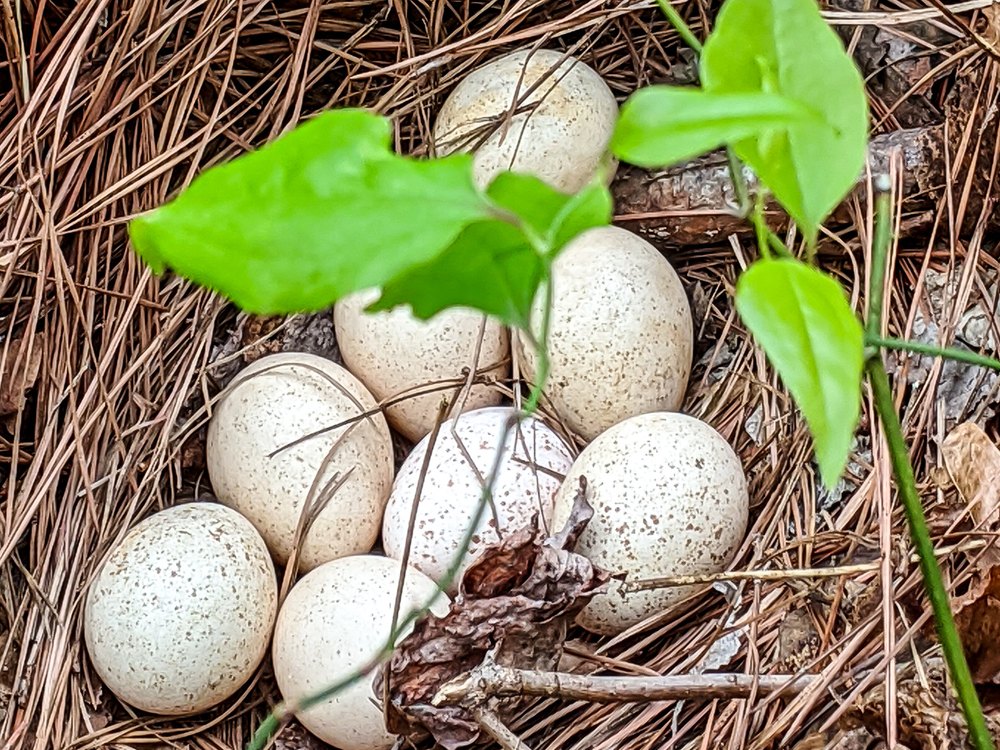
The breeding season runs from March to June, depending on the region.[2][6] The hen nests alone on the ground, in a shallow hollow lined with leaves.[2][6] A clutch holds 4 to 17 eggs, usually 8 to 15, and averages 11 in Animal Diversity Web.[1][11] The Pennsylvania Game Commission gives an average of 12 and Texas Parks and Wildlife about 10.[2][6] The hen lays about one egg a day.[2][6] One mating can fertilise a whole clutch, because the hen stores sperm for up to four weeks.[2]
An egg is 4.9 to 6.9 cm long and 4.1 to 4.7 cm wide, pale buff with reddish-brown spots.[11] Incubation takes about 28 days.[2][6] The hen sits on the nest almost all day, leaving only for short breaks.[6]
Many nests fail. In Pennsylvania 31 to 45 percent of nests succeed,[2] and in Texas more than half of nests are lost.[6] A hen that loses her nest can nest again.[2][6]

Poults
A poult takes about 24 hours to break out of the shell, and leaves the nest 12 to 24 hours later.[6] It can walk and feed itself within a day of hatching.[1] The hen broods the poults at night for at least two weeks.[2] They begin to roost in trees at 10 to 14 days,[6] and make short flights within 10 days to two weeks.[2]
The first weeks are the most dangerous. The Pennsylvania Game Commission puts poult deaths at 53 to 76 percent, mostly in the first two weeks.[2] Texas Parks and Wildlife says fewer than half of poults survive past a month.[6]

Growth and survival
Young turkeys gain just over 0.45 kg (a pound) a month at first.[2] By 7 months young gobblers weigh about 5.7 kg (12.5 lb) and young hens about 3.6 kg (8 lb).[2] Texas Parks and Wildlife gives 4.1 to 5 kg (9 to 11 lb) for males at 5 to 6 months.[6] Young birds become independent at 4 to 10 months.[1]
In Pennsylvania, 54 to 62 percent of turkeys survive each year.[2] For average life expectancy, Animal Diversity Web gives 1.3 to 1.6 years, while the Pennsylvania Game Commission gives about three years.[1][2] The longest-lived wild birds recorded are a banded hen that reached 13 years and a gobbler in Massachusetts that reached 15 years.[2] Animal Diversity Web gives at least 13 years.[1]
Ecology
Predators
Humans are the main predator of adult Wild Turkeys. Other animals that take adults include coyotes, bobcats, raccoons, mountain lions, golden eagles and great horned owls.[1]
Eggs and nestlings are eaten by raccoons, opossums, skunks, grey foxes, rat snakes and bull snakes, among others.[1]
In New Zealand, where the birds are feral (living wild after escaping or being released), chicks are probably taken by cats, ferrets, pukeko (a marsh bird) and swamp harriers (a hawk). Dogs kill many birds there too.[17]
Parasites and disease
A Wild Turkey can host at least 60 kinds of parasites. They include 9 single-celled protozoans, 11 trematodes (flukes), 10 cestodes (tapeworms), 1 acanthocephalan (a spiny-headed worm), 17 nematodes (roundworms) and 12 arthropods, such as ticks, mites and lice.[1] Most birds are healthy enough to carry a normal load of these parasites.[18]
Avian pox is a virus spread by mosquitoes and other biting insects. In the south-eastern United States it made up nearly a quarter of the diagnoses in sick or dying turkeys that were examined. It can kill a bird, but it is not a major threat to the population.[18] Blackhead is a disease caused by a protozoan. Earthworms can carry its eggs, and chickens and pheasants can carry the disease. It can kill wild turkeys very quickly.[18] Mycoplasma, a bacterium also found in poultry, has been recorded in wild turkeys in Georgia, California and Colorado. Two of the three cases involved contact with domestic poultry.[18]
Lymphoproliferative disease virus is a virus that can cause tumours. In a study published in 2015, 564 of 1,164 turkeys shot by hunters in 17 states carried it (47 percent). The share ranged from 26 percent in Oklahoma to 83 percent in New Hampshire. Of 39 infected birds examined under the microscope, 6 had the disease. The study reports the first detection in an adult wild turkey in North America, in Arkansas in 2009.[19]
The National Wild Turkey Federation says disease generally does not limit turkey populations.[18]
Role in the forest
The Wild Turkey is food for the predators listed above. It also eats large numbers of acorns and other nuts that fall to the ground (hard mast),[11] and by eating seeds and nuts it affects the plants that grow from them.[1]
Habitat and range
Habitat
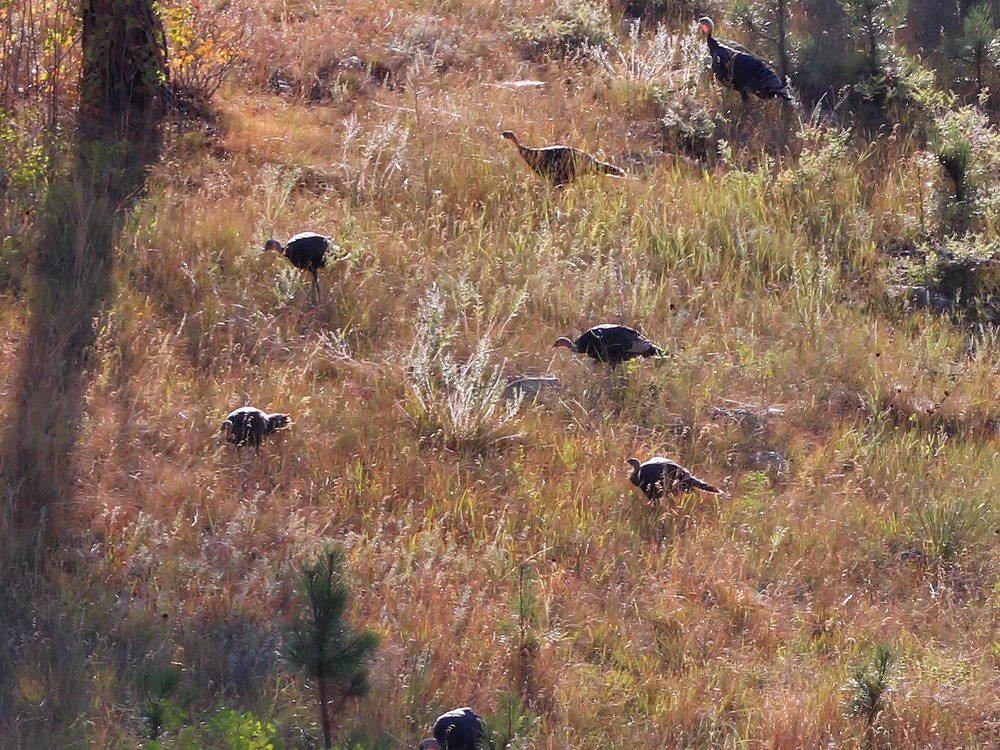
The Wild Turkey lives in hardwood forests and mixed forests of conifers and broad-leaved trees, where there are scattered openings. It also uses pastures, fields, orchards and seasonal marshes.[1] The Cornell Lab describes its home as open forest with clearings.[11] The IUCN lists forest, dry savanna, shrubland, temperate grassland, farmland and pasture as suitable, at elevations from 300 to 2,500 m. It does not migrate.[5]
How far a turkey roams depends on the place and the season. In a study of Rio Grande Wild Turkeys in the Texas Panhandle and south-western Kansas, from 2000 to 2004, the average yearly home range was 1,908 hectares (ha) for females and 1,578 ha for males.[22] In central Mississippi, Eastern Wild Turkey hens used 97 to 542 ha, depending on the season, and gobblers used 607 to 810 ha.[23]
Merriam’s Wild Turkeys in Colorado live mostly in high foothills. They may move to higher ground in summer and travel up to 40 miles (64 km) between summer and winter areas.[24]

Range
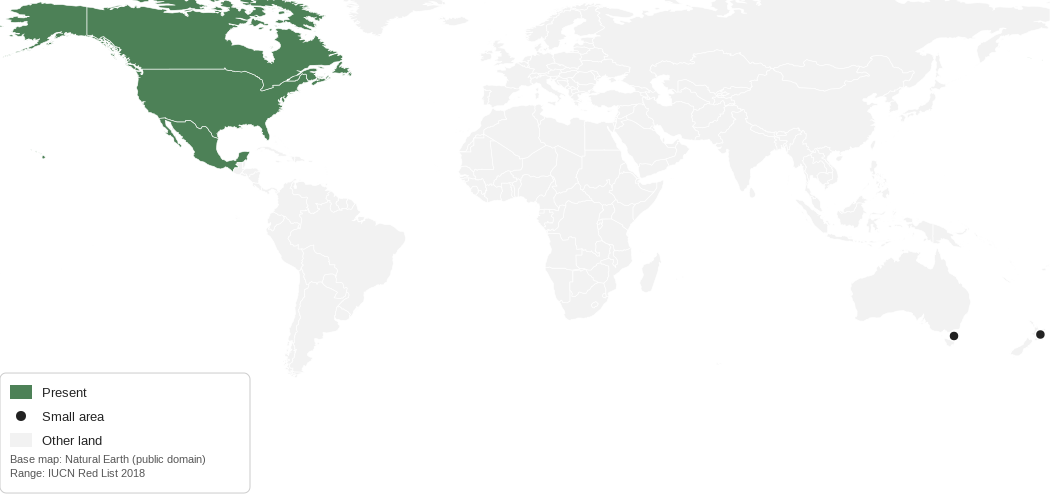
The IUCN lists the Wild Turkey as a native resident of Canada and Mexico and a native breeder in the United States. Its extent of occurrence is 11.3 million km².[5] The Cornell Lab says it lives year-round in 49 US states (every state except Alaska), parts of Mexico, and parts of southern Alberta, Ontario, Manitoba and Saskatchewan.[11] The range of each form is given in Forms and variants.
Introduced populations
In New Zealand, turkeys were released or escaped from farms many times from the 1860s on, and the earliest recorded release was on Kawau Island.[17][21] Feral birds now live on the North Island, in the Marlborough Sounds and in parts of the eastern South Island.[17]
The dates for Hawaii differ by source. The state of Hawaii’s birding trails page and its Department of Land and Natural Resources say the species was first introduced in 1815 from North America as a game bird.[25][26] The National Wild Turkey Federation says records suggest turkeys arrived in 1788 from China.[27] The same organisation says about 450 Rio Grande Wild Turkeys came from Texas in 1961 to 1963: 122 birds in 1961, 224 in 1962 and 102 in 1963.[27]
In Australia, the birds on offshore islands came from domestic stock. They were on Prime Seal Island in the Furneaux Group before 1950, and good numbers were recorded on Flinders Island in 1985.[21] The Clements checklist lists Kangaroo, King and Flinders islands.[20]
In Europe, domestic turkeys have been kept since the 1500s,[7] but no wild population is known to have become established.[21]
Evolution
Fossils and relatives
The closest relatives of turkeys are the grouse. Studies of mitochondrial genomes and of dated family trees show that the two groups are each other’s closest relatives inside the pheasant family, Phasianidae.[28][29] Stein and colleagues put the split between the turkey line and the grouse line at 26.7 million years ago (the average of their estimates). That date rests partly on a fossil used to fix a date on the tree, Rhegminornis calobates, a small turkey-like bird from the Early Miocene.[29] The whole pheasant family, Phasianidae, is dated to about 35.4 million years ago (30.3 to 40.6) in the study by Chen and colleagues.[30]
One study of Mexican turkeys dated the common ancestor of the turkey genus Meleagris and the chicken genus Gallus to 33.66 million years ago. It used mitochondrial DNA only.[31] The same study dated the split between the Wild Turkey and its only living relative, the Ocellated Turkey, to 5.35 million years ago, with a wide range of uncertainty (2.72 to 10.17 million years).[31]
The Ocellated Turkey (Meleagris ocellata) lives on the Yucatán Peninsula and nearby lowlands. The IOC list gives south-eastern Mexico, Belize and Guatemala. It is a separate species in the IOC and GBIF lists.[3][8] Together with the Wild Turkey it makes up the genus Meleagris, the only two living turkeys.[3][8]
Domestication
People kept turkeys long before Europeans arrived, and the birds were domesticated at least twice. Studies of ancient DNA use mitochondrial DNA, a small piece of genetic material that a bird inherits only from its mother. Scientists sort it into haplogroups, which are families of closely related types. Birds in the same haplogroup share a maternal ancestor.
In 2010 Speller and colleagues read the mitochondrial DNA of 149 bones and 29 droppings that had turned to stone (coprolites) from 38 sites in the United States and Mexico, dating from about 200 BC to AD 1800. They found a domestic lineage in the American Southwest that came from outside the region, and concluded that turkeys were domesticated at least twice in North America before European contact. In Mexico, domestic flocks were present by at least AD 180 in the Tehuacán valley.[32]
At El Mirador in Guatemala, turkey bones from 300 BC to AD 100 are the earliest in the Maya region. The birds were brought in from outside their natural range, and their bones suggest they were kept in captivity.[33] A 2018 study of 55 turkey bones from Mexico found separate Mesoamerican and Southwestern lineages. It dates the earliest confirmed captive rearing, again at El Mirador, to 327 BC to AD 54.[34]
Scientists disagree about which wild population the domestic turkeys came from. Speller and colleagues linked the Mesoamerican birds to the South Mexican Wild Turkey and ruled out Merriam’s Wild Turkey as the ancestor of the Southwestern birds.[32] Padilla-Jacobo and colleagues found the DNA types of domestic birds inside the largest of three mitochondrial groups of wild birds, and concluded that domestic birds do not come from an extinct wild South Mexican form.[31]
Forms and variants
Subspecies
The IOC World Bird List (version 15.2), the eBird/Clements checklist (2025) and the AviList checklist (2025) each list six subspecies of the Wild Turkey, and GBIF lists the same six.[3][8][20][35] They are the Eastern, Osceola, Rio Grande, Gould’s, Merriam’s and South Mexican Wild Turkeys. A seventh name, onusta (Moore, 1938), was given to the large dark birds of the western slope of the Sierra Madre. The IOC list includes it in Gould’s Wild Turkey (mexicana), and it does not appear in Clements or AviList.[8][20][35]
Genetic work gives a mixed picture. A study of birds across the historical range found that the subspecies based on looks were generally supported. The Eastern and Osceola birds acted as one unit, and Gould’s Wild Turkey was the most different and the least varied.[36] A later study of 612 mitochondrial sequences found three genetic groups and no clear division into subspecies. Domestic birds fell inside the largest group.[31]
The Eastern and Osceola forms are tagged Debated because one study found they acted as one unit. The Rio Grande, Gould’s and Merriam’s forms are tagged Accepted, because all four lists name them, and each has its own page: Rio Grande Wild Turkey, Gould’s Wild Turkey and Merriam’s Wild Turkey. The South Mexican Wild Turkey is tagged Debated: three lists name it, but Mexican authors treat the name as meaning domestic birds only, and the National Wild Turkey Federation says it is thought to be extinct.[3][8][20][37][38]
The Rio Grande name has a tangled history. Sennett first used the name intermedia in 1879, but only as a possible variety, and he described the form properly in 1892 under the name ellioti. The lists still credit the name to Sennett, 1879.[39][40][41]
Domestic breeds
The domestic turkey is the same species as the Wild Turkey. GBIF has no separate name for it, and the eBird/Clements checklist lists it as a “Domestic type” of the Wild Turkey.[3][20] Domestic birds reached Europe in the early 1500s (see History and culture).[7]
A breed means a domestic turkey variety kept by breeders. The American Poultry Association lists eight in its Standard of Perfection, and the Livestock Conservancy also counts others that the Standard does not list.[42] Several came from crosses between the turkeys that colonists brought to America and Eastern Wild Turkeys, as the Bronze and the Narragansett did.[42]
See all 10 domestic breedsConservation
Population
The IUCN rates the Wild Turkey as Least Concern. BirdLife International made the assessment on 9 August 2018 and lists the trend as increasing. The range and the population are both extremely large. In North America, the Breeding Bird Survey and the Christmas Bird Count show an increase of 18,700 percent over 40 years, equal to 270 percent a decade.[5] The species is not listed by CITES (the treaty on trade in wild animals and plants). It is not federally protected in the United States, and the states regulate it as a game bird.[1]
The bird was once far more common. A population history hosted by the National Wild Turkey Federation (NWTF) says the original number was about 10 million. By 1920 the Wild Turkey had disappeared from 18 of the 39 states it first lived in.[38] The nationwide low point is disputed. A figure of 30,000 is often quoted, but the same document says about 200,000 is more likely, based on unpublished data.[38] The NWTF reports that Pennsylvania fell to an estimated 30,000 birds by the 1930s.[43]
Releases of pen-raised birds failed. Trapping wild birds and moving them to new places worked.[43] In all, 146,170 wild turkeys were released at more than 7,000 sites in the United States and Canada.[38] The NWTF was founded in 1973.[38] Missouri had more than 250,000 turkeys in the mid-1800s and fewer than 2,500 by 1950.[43] Oklahoma began restocking in 1948, when 21 Rio Grande turkeys were moved to Harper County.[44]
The same document gives these national estimates for the United States and Canada: 320,000 birds in 1951, 1.4 million in 1974, over 1.8 million in 1979, 4.2 million in 1994, 5.4 million in 1999 and 6.2 million in 2014.[38] Audubon (2025) puts the figure at roughly 5 to 6 million birds today.[45] The NWTF gives these state estimates: Texas more than 500,000, Missouri more than 300,000, Georgia 250,000 to 300,000, North Carolina 270,000 and Michigan 200,000.[43]
Gould’s Wild Turkey was listed as threatened in New Mexico in 1974. Recovery goals had been met by 2021, and on 15 October 2022 the state Game Commission voted to remove it from the list.[46][47] Arizona released Gould’s turkeys captured in Mexico between 1983 and 2006.[48]
Hunting and management
In 1994 there were an estimated 2.1 million turkey hunters in the United States and Canada, and the harvest was 654,000 birds.[38] States set the seasons and the rules. The IUCN lists the bird as used for food and sport hunting.[5]
Threats
Habitat loss. Habitat loss and over-hunting caused the old decline.[1] The IUCN lists forest, shrubland, grassland, farmland and pasture as suitable habitat (see Habitat and range).[5]
Hunting. Over-hunting was the other cause of the old decline.[1] Hunting is now regulated: the states set the seasons and the rules, and the IUCN lists the bird as used for food and sport hunting (see Hunting and management).[5][38]
Disease. Avian pox made up nearly a quarter of the diagnoses in sick or dying turkeys examined in the south-eastern United States, but the NWTF says disease generally does not limit turkey numbers.[18] A 2015 study found lymphoproliferative disease virus in 47 percent of 1,164 turkeys shot by hunters in 17 states (see Ecology).[19]
History and culture
First description
Carl Linnaeus described the Wild Turkey in the 10th edition of Systema Naturae in 1758.[3] He used the genus name Meleagris (see Name). The tame bird was taken to Europe from Mexico in the early 1500s: it reached Spain by 1523 and England by 1524 at the earliest estimate, and by 1573 it was a usual Christmas dish in England.[7]
Thanksgiving
Only two writers describe the autumn of 1621 at Plymouth. Edward Winslow wrote in a letter that the governor sent four men fowling, and that in one day they killed enough “fowl” to serve the colony almost a week. He added that guests killed five deer. He does not name the turkey.[49] William Bradford wrote later that there was “great store of wild turkeys” and that the colonists took many.[49] Pilgrim Hall Museum says these are the only two primary sources.[50]
The national holiday came much later. Sarah Josepha Hale, a magazine editor, had campaigned for a national day of thanksgiving since 1846. On 3 October 1863 President Abraham Lincoln proclaimed it for the last Thursday of November.[51] In 1939 Franklin D. Roosevelt moved the holiday to the third Thursday of November. After protests, the House of Representatives passed a resolution on 6 October 1941 for the last Thursday, and the Senate changed it to the fourth Thursday.[51][52]
Franklin and the national bird
On 26 January 1784 Benjamin Franklin wrote from Passy, France, to his daughter Sarah Bache. He wrote that he wished the Bald Eagle had not been chosen to represent the country, and called the turkey “in Comparison a much more respectable Bird, and withal a true original Native of America.”[53] The letter was private and was about the badge of the Society of the Cincinnati. It was never a proposal for the national seal.[53]
The presidential pardon
The White House Historical Association says Lincoln’s kindness to a turkey in 1863, in an 1865 report by Noah Brooks, is often named as the origin of the pardon. Gifts of turkeys to the president date from the 1870s, when the poultry dealer Horace Vose began sending birds. In 1948 Harry Truman accepted two turkeys and said they would “come in handy” for Christmas dinner, so there was no pardon. In 1963 John F. Kennedy said of a turkey, “Let’s keep him going.” The formal pardon had taken shape by 1989, under George H. W. Bush.[54]
Taxonomy
| Rank | Name |
|---|---|
| Kingdom | Animalia |
| Phylum | Chordata |
| Subphylum | Vertebrata |
| Superclass | Tetrapoda[55] |
| Class | Aves (birds) |
| Order | Galliformes |
| Family | Phasianidae |
| Genus | Meleagris Linnaeus, 1758 |
| Species | Meleagris gallopavo (Linnaeus, 1758) |
Higher classification
The Wild Turkey belongs to the pheasant family, Phasianidae, in the order Galliformes (fowl-like birds).[3][8] Stein and colleagues place the turkeys in the subfamily Meleagridinae.[29] Older work gave them a family of their own, Meleagrididae.[28] The genus Meleagris has two living species, the Wild Turkey and the Ocellated Turkey.[3][8]
Relationships and open questions
Turkeys are the sister group of the grouse.[28][29] The order of the branches inside the large group that holds pheasants, partridges, tragopans, grouse and turkeys is not settled, because the family spread out quickly and the studies disagree.[28][30] Genetic work also questions some of the six listed subspecies.[8][31] Wild and domestic turkeys are one species.[3][20]
Sources
- Animal Diversity Web. Meleagris gallopavo (Wild Turkey). University of Michigan Museum of Zoology
- Pennsylvania Game Commission. Wild Turkey (species profile)
- Meleagris gallopavo Linnaeus, 1758. GBIF Backbone Taxonomy
- Meleagris gallopavo Linnaeus, 1758. Catalogue of Life (ChecklistBank)
- BirdLife International. 2018. Meleagris gallopavo. The IUCN Red List of Threatened Species 2018: e.T22679525A132051953
- Texas Parks and Wildlife Department and Texas A&M AgriLife Extension. Eastern Wild Turkeys in Texas: Biology and Management
- Online Etymology Dictionary. turkey, gobbler, poult (quoting the Oxford English Dictionary)
- IOC World Bird List, version 15.2. Order Galliformes, family Phasianidae, Meleagris gallopavo
- Integrated Taxonomic Information System. Meleagris gallopavo Linnaeus, 1758
- Wired Humanities Projects. Online Nahuatl Dictionary: huexolotl (after Molina 1571 and Karttunen 1992)
- Cornell Lab of Ornithology. All About Birds: Wild Turkey (identification and life history)
- Cathey, J. C. 2007. Rio Grande wild turkey in Texas: biology and management. Texas A&M AgriLife Extension B-6198
- North Carolina Wildlife Resources Commission. Wild Turkey (species page)
- Ulrey, E., Chamberlain, M. and Collier, B. 2023. Reproductive asynchrony within social groups of female eastern wild turkeys. Ecology and Evolution 13: e10171
- Krakauer, A. H. 2005. Kin selection and cooperative courtship in wild turkeys. Nature 434: 69–72
- Huynh, M. 2023. Tracking the dispersal of the endangered Eastern Prickly Pear Cactus (Opuntia cespitosa) by animal vectors in Canada. MSc thesis, York University
- New Zealand Birds Online. Wild Turkey
- National Wild Turkey Federation. What’s ailing wild turkeys?
- Thomas, J. M. et al. 2015. Molecular surveillance for lymphoproliferative disease virus in wild turkeys (Meleagris gallopavo) from the eastern United States. PLOS ONE 10: e0122644
- Clements, J. F. et al. The eBird/Clements checklist of birds of the world, v2025: Meleagris gallopavo and subspecies
- Marchant, S. and Higgins, P. J. (eds) 1993. Handbook of Australian, New Zealand and Antarctic Birds, vol. 2: Meleagris gallopavo, Feral Turkey
- Hall, G. I. et al. 2006. Rio Grande wild turkey home ranges in the southern Great Plains. Proceedings of the Southeastern Association of Fish and Wildlife Agencies
- Miller, D. A., Leopold, B. D. and Hurst, G. A. Seasonal home ranges of wild turkeys in central Mississippi. Proceedings of the Southeastern Association of Fish and Wildlife Agencies 51: 414–425
- Colorado Parks and Wildlife. Turkey (species page)
- Hawaii Birding Trails. Wild Turkey
- Hawaii Department of Land and Natural Resources. Game birds
- National Wild Turkey Federation. The unique history of Hawaii’s wild turkey
- Shen, Y.-Y. et al. 2010. A mitogenomic perspective on the ancient, rapid radiation in the Galliformes with an emphasis on the Phasianidae. BMC Evolutionary Biology 10: 132
- Stein, R. W., Brown, J. W. and Mooers, A. Ø. 2015. A molecular genetic time scale demonstrates Cretaceous origins and multiple diversification rate shifts within the order Galliformes (Aves). Molecular Phylogenetics and Evolution 92: 155–164
- Chen, D. et al. 2021. Divergence time estimation of Galliformes based on the best gene shopping scheme of ultraconserved elements. BMC Ecology and Evolution 21: 209
- Padilla-Jacobo, G. et al. 2018. Evolutionary history of Mexican domesticated and wild Meleagris gallopavo. Genetics Selection Evolution 50: 19
- Speller, C. F. et al. 2010. Ancient mitochondrial DNA analysis reveals complexity of indigenous North American turkey domestication. Proceedings of the National Academy of Sciences 107: 2807–2812
- Thornton, E. K. et al. 2012. Earliest Mexican turkeys (Meleagris gallopavo) in the Maya region: implications for pre-Hispanic animal trade and the timing of turkey domestication. PLoS ONE 7: e42630
- Manin, A. et al. 2018. Diversity of management strategies in Mesoamerican turkeys: archaeological, isotopic and genetic evidence. Royal Society Open Science 5: 171613
- AviList: the global avian checklist, v2025
- Mock, K. E., Theimer, T. C., Rhodes, O. E., Greenberg, D. L. and Keim, P. 2002. Genetic variation across the historical range of the wild turkey (Meleagris gallopavo). Molecular Ecology 11: 643–657
- Pérez-Arteaga, A., Zalapa, S. and Guerrero-Vázquez, S. 2019. Evidencia fotográfica del guajolote norteño (Meleagris gallopavo) en La Primavera, Jalisco. Huitzil 20(2): e511
- National Wild Turkey Federation. Wild turkey population history and overview (cites Mosby 1975, Kennamer et al. 1992, Tapley et al. 2007, Eriksen et al. 2015)
- Sennett, G. B. 1879. Further notes on the ornithology of the lower Rio Grande of Texas. Bulletin of the U.S. Geological and Geographical Survey of the Territories 5(3)
- Sennett, G. B. 1892. Description of a new turkey. The Auk 9: 167–169
- Coues, E. 1894. The turkey question. The Auk
- Hawes, R. O., Christman, C. J., Bender, M. and Beranger, J. 2007. How to Raise Heritage Turkeys on Pasture, chapter 1: Choosing a Variety and Obtaining Poults. American Livestock Breeds Conservancy (now The Livestock Conservancy)
- National Wild Turkey Federation. State by state: America’s wild turkey comeback
- Oklahoma Department of Wildlife Conservation. Turkey history
- Audubon. Fall 2025. The wild turkey is a comeback bird we can’t take for granted
- New Mexico Department of Game and Fish. 2021. Public comments sought on potential delisting of Gould’s wild turkey
- New Mexico Political Report. 15 October 2022. Game Commission votes to delist Gould’s turkey
- Arizona Game and Fish Department. Arizona Wildlife Conservation Strategy: Gould’s turkey reintroduction in Mexico and Arizona
- Pilgrim Hall Museum. Primary sources for “The First Thanksgiving” at Plymouth (Winslow 1621; Bradford)
- Pilgrim Hall Museum. The First Thanksgiving
- U.S. National Archives. 2020. Lincoln’s Thanksgiving Proclamation
- U.S. National Archives, Center for Legislative Archives. Thanksgiving
- U.S. National Archives, Records of the Founders. 2020. Talking turkey
- White House Historical Association. Pardoning the Thanksgiving turkey
- ITIS, Meleagris gallopavo, classification